One Dog At A Time.

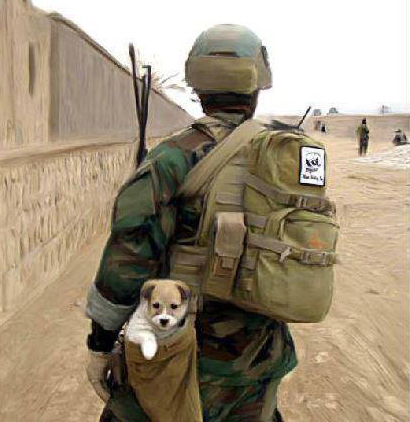
In 2006, during a tour of duty in the Afghanistan town of Now Zad, Royal Marine Sergeant Pen Farthing helped break up a dogfight. Located in Helmand Province, this was an area once described as the most dangerous place on Earth. Pen could not resist the soulful eyes of one of the street dogs he saved, whose ears had been cut off for fighting. He ended up befriending the dog and named him Nowzad.

Pen_Nowzad
Pen Farthing and Nowzad.

After his tour of duty ended, Pen went through a difficult process to bring Nowzad home to the UK. He quickly realized that he wasn’t the only one hoping to do the same. Pen founded NOWZAD, and soon began the process of reuniting dogs with the soldiers who had befriended them in war zones around the world, including Afghanistan, Iraq, Ukraine, Kuwait and Libya. Through donations, happy homecoming destinations have included USA, UK, Australia, Belgium, Canada, Germany, Holland, Italy, Spain, Jordan and South Africa.

Seven of the rescued street dogs have become fully fledged service dogs in the United States. The dogs are a much valued and loved lifeline to their veterans who have been diagnosed with PTSD. That these dogs endured a war zone like their handlers only strengthens the connection and understanding.

Service dog Hannah with Nate
Nate, reunited with Hannah through the efforts of NOWZAD. Hannah is now Nate’s service dog.

“As the troop sergeant in Afghanistan, I was there to motivate the guys and get them fired up again to go out and do the job. But no one was doing that for me,” said Pen. “My time with this dog was a way of de-stressing, collecting my thoughts and popping my head back in the game.”

KIA_TNB
Lexi, moments after being rescued. Sadly, Staff Sergeant David P. Day, 26 of Gaylord, MI, later gave his life in service with Fox Company, 2nd Marine Special Operations Battalion, during combat operations in Badges Province, Afghanistan, April 24, 2011.

Hope For Animals In A War-Tone Region. The charitable organization has reunited more than 900 dogs and cats with the soldiers. NOWZAD also runs the only animal shelter and clinic of its kind in all of Afghanistan. Currently, it is home to around 150 dogs, 40 cats and six donkeys. The modern veterinary clinic is staffed by a team of Afghan nationals. In addition to animal welfare education, NOWZAD’s mission at the clinic is the prevention of the spread of rabies. They are also implementing a humane trap, neuter, vaccinate and return program in Kabul for cats.

Who Rescued Whom? Often, the brave men and women serving their countries in war zones around the world, find themselves adopting a stray dog or cat struggling to survive. The animals end up providing a respite from war; a moment of peace, home and love. Leaving them behind, after their tour of duty is over, is unthinkable for many of these soldiers. NOWZAD arranges for the dog or cat to safely get to the Nowzad clinic where shelter and care are provided. They spay/neuter all rescues and provide any other required medical attention as well as vaccinations. Then, they carry out all necessary checks and paperwork to ensure the animal will arrive to its final destination, back in the arms of its loving warrior.

NOWZAD’s Policy Statement On The Import Of Dogs. There has been an increase of press speculation in reference to the irresponsible importation of dogs in the UK and the US. “It has been reported that more than 30,000 dogs were brought into the UK from the EU alone, with the majority coming from Romania, Bulgaria and Lithuania; many of which are via puppy traffickers or negligent organizations that do not adhere to the strict regulations that are required to import a dog or cat into the UK. Irresponsible dog importation poses a health and safety threat not only to the dog itself, but to other dogs and humans it may come into contact with. Many of the dogs imported are not a typical domesticated dog that easily integrates into a household environment; a fact not always communicated fully to a new owner,” states NOWZAD on its website.  While there have been numerous calls to prevent this international rehoming as standard practice, NOWZAD adds. “Whilst a complete ban would be unfavorable to us as it would prevent us reuniting soldiers with the dogs or cats, we strongly advocate the need for tighter regulations to prevent rogue importers who are detrimental to the hard work of reputable and responsible animal charities like ourselves.”

Cathy Kangas, who sits on the Board of NOWZAD says of Pen, “He has shown that one person can have an amazing impact, bringing good to an environment written off by many. NOWZAD is demonstrating what can be achieved when people from all walks of life and cultures cast differences aside and work toward a common goal.”

Adam_Freedom_2011
November, 2011/JFK Airport. With the help of American Dog Rescue, NOWZAD was able to make this emotional reunion possible between Adam and his battle buddy Freedom.

The New Barker dog magazine was first introduced to Pen Farthing and NOWZAD in 2011 by Florida’s own Arthur Benjamin of American Dog Rescue. Pen has written the bestseller “One Dog at a Time, Saving the Strays of Helmand.” The NOWZAD charity has support from animal lovers all over the world, including Ricky Gervais, who  donated the profits from one of his warm-up gigs, earlier this year. The warm-ups took place ahead of Gervais’ national tour of his stand-up show, appropriately called Humanity.

Why Do We Need National Dog Fighting Awareness Day?


dog_fighting_signs_A

Today, April 8, 2017,  is National Dog Fighting Awareness Day. The activity may seem out of place in our society, where dogs are considered family members. It’s also a felony offense in all 50 states.

Dog fighters often have dark and violent pasts, even though they may come from diverse social and economic backgrounds, investigators say. Doctors, lawyers, teachers and professional athletes have been arrested in federal animal-fighting busts in recent years. One characteristic all of these people have in common is a love for brutality and money.

Florida has a reputation for having a “prevalent” dog fighting problem even though detailed statistics don’t exist. It’s such a covert operation that it’s hard to measure. What is known, for sure, is that big money drives the industry, especially in breeding “bloodthirsty” bloodlines. Buyers in large operations pay between $5,000 and $10,000 for puppies in a champion bloodline. Of course, there is also money in the fight itself. Dog fighters are also motivated by power, according to Mark Winton, a criminal-justice lecturer at the University of Central Florida.

National Dog Fighting Awareness Day isn’t just another way to fill a calendar box; it’s a necessary measure to help stop one of the most horrific forms of animal abuse imaginable.

The following is an excerpt from a journalist’s account, who went undercover during a dog fight: “The crowd’s roar dulled to a hum as the next two fighters appeared. The previous match had been short, as one contestant quickly outmatched his opponent, mauling him badly and tearing off an ear. But this final fight matched two highly respected and feared combatants. They eyed each other warily as their handlers finished corner preparations. Spectators came to the edge of their seats, and fathers lifted children to their shoulders for a better view as the judge stepped to the center, called the dogs to their scratch lines and yelled, “Let ’em go!” A cheer arose as the dogs charged across the pit and violently slammed into each other, teeth flashing as they sought a vulnerable target.

The dogs came apart once, when the brindle appeared to give up, and turned for a moment. They were returned to their scratch lines and held. Both dogs were breathing hard and bleeding. “Let ’em go,” the judge called again. If the brindle failed to attack now, he would lose. But he was a game dog, and responded to an instinct bred into him over generations and nurtured through training. As the brindle charged across his line, his opponent’s handler released him with the encouragement, “Finish him, Bo.”

Tired and weakened by his wounds, the brindle was slow to meet Bo’s ferocious attacks. Bo grabbed the brindle’s right front leg in powerful jaws, bit and twisted. The “snap” of breaking bone was heard as the brindle was flipped onto his back, while Bo sought a better grip on his opponent’s throat. Remarkably, as the judge ordered the handlers to break the dogs, the brindle tried to crawl after Bo, still intent on fighting. His handler gently wrapped him in a blanket, saying, “No more, boy. It’s over.”

Writer Matthew Bershadker wrote in a Huffington Post blog, three years ago: “It’s not enough to see dog fighting as just a crime. Society discourages, yet tolerates a number of crimes – some are even glorified. But dog fighting is a deep stain on our national character, a cultural embarrassment we should all feel. This is not about just locking up bad guys; this is about doing everything we can to bring this nightmarish practice to an end. We can’t rest until it does. That’s why National Dog Fighting Awareness Day isn’t just another way to fill a calendar box; it’s a necessary measure to help stop one of the most horrific forms of animal abuse imaginable.”

To report dogfighting, call the following tip line: 1.877.TIP.HSUS

Here is a link for possible signs of dog fighting:

Dog_Fighting_Awareness_A

“If You See A Risk And Walk Away…

Then hope you never have to say, I could have saved a life that day, But I chose to look the other way.” From a poem by Don Merrill, “I Chose To Look The Other Way.”

by Anna Cooke, Editor-in-Chief of The New Barker dog magazine.

We have a problem in this state. Call it whatever you want: pet overpopulation. Blame it on the irresponsible public, if you’d like. It has reached epic proportions in Miami-Dade. Law enforcement and government officials are turning the other way, saying it’s not their job, not in their pay grade, not in their circle of knowledge.

Small bands of animal advocates are stepping in, but it’s only a bandaid. The problem is growing, and dogs are dying as a result.

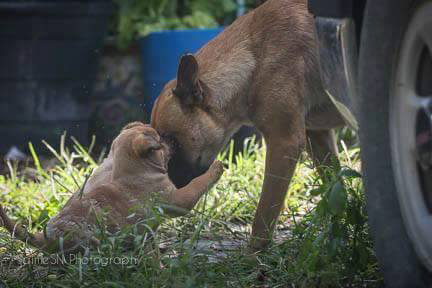
Dogs are being dumped in an area known as the Redland Rock Pit. Volunteers with organizations like the Redland Rock Pit Abandoned Dog Project are trying to help the dogs by either capturing or feeding them have witnessed cars driving up, doors opening to let a dog out, then driving away. In one heartbreaking scene that played out just last week, a German Shepherd Dog chased after his owner’s car. The dog stood on the corner as the white car took off. A volunteer with Racing 4 Rescues coaxed the dog, now named Brady, safely into her car. Racing 4 Rescues volunteers were already in the area with the goal of pulling a momma (another German Shepherd Dog) and her two pups to safety.

momma_looking
Momma and her two pups in the Redland Rock Pit area. Photography by Jaime Wald Seymour-Newton of JSN Photo/Animal Rescue.


momma_two_pups
Her puppies were pulled. But, momma eluded volunteers with Racing 4 Rescues.

Miami-Dade Animal Services is crowded – at capacity. Same story, different town. This, in spite of a grand opening in June 2016 of the brand new Miami-Dade Animal Services Pet Adoption and Protection Center. “The new Pet Adoption and Protection center is a significant accomplishment for our pet loving community and will help Animal Services continue to save lives,” said Miami-Dade Mayor Carlos Gimenez. “We built the best facility to help ensure every pet gets adopted, offer more low-cost spay/neuter services and enrich our life-saving programs,” he added.

Yet, in a response to the Redland Rock Pit problem, the Mayor sent this email last year, around the same time: “The shelter has rescued over 1100 strays from the Redlands/Homestead/Florida City area in this time period (three years). ASD continues to stand ready to respond to any issues identified by volunteers and asks all individuals to provide specific addresses and locations so that they can respond and follow-up on stray animals or cruelty issues.”

Mayor Gimenez, emails and phone calls are going unanswered. The dumped dogs, many of whom are unaltered, are left to fend for themselves. They are breeding, adding to the problem. Cruelty issues include dogs being sacrificed in Santeria rituals. Death by poisoning, or from being hit by cars. Starving to death.  Have you seen some of the cruelties, Mayor?

Welcome to Miami, Florida (warning – graphic images within this video)

Meanwhile, people and businesses from outside your community are coming in to help, donating time, services and food. Resources that could be used to help shelter pets and the pet overpopulation problems in their own communities.

food_pfw
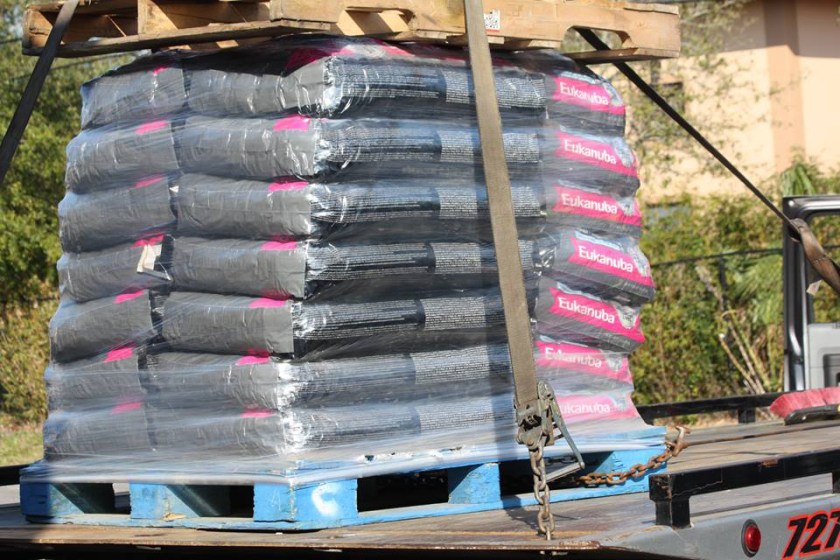
Food, donated by Pet Food Warehouse of St. Petersburg, is loaded onto a truck bound for Miami.
more_food
Yoho Automotive & Towing, owned by Danielle Yoho – also the founder and president of Racing 4 Rescues.

But, your situation, Mayor Gimenez, has moved people to want to help, because it is a problem that belongs to all of us. And yet – no word from anyone in your offices, Miami-Dade Animal Services or law enforcement. Tell us, please, what should your constituents do? What can we, as concerned Florida animal advocates, do? We would love to speak with you. We’d love to hear your take on the situation. It is only going to get worse. My email address is anna@thenewbarker.com

Contact the office of Mayor Carlos A. Gimenez: mayor@miamidade.gov Call 305.375.1880.

Miami-Dade Board of County Commissioners:

District 1 – Commissioner Barbara J. Jordan: district1@miamidade.gov; 305.375.5694

District 2 – Commissioner Jean Monestime: district2@miamidade.gov; 305.375.4833

District 3 – Vice Chairwoman Audrey M. Edmonson: district3@miamidade.gov; 305.375.5393

District 4 – Commissioner Sally A Heyman: district4@miamidade.gov; 305.375.5128

District 5 – Commissioner Bruno A. Barreiro: district5@miamidade.gov; 305.643.8525

District 6 – Commissioner Rebeca Sosa: district6@miamidade.gov; 305.375.5696

District 7 – Commissioner Xavier L. Suarez: district7@miamidade.gov; 305.669.4003

District 8 – Commissioner Daniella Levine Cava: district8@miamidade.gov; 305.375.5218

District 9 – Commissioner Dennis C. Moss: DennisMoss@miamidade.gov; 305.375.4832

District 10 – Commissioner Javier D. Souto: district10@miamidade.gov; 305.375.4835

District 11 – Commissioner Joe A. Martinez: district11@miamidade.gov; 305.375.5511

District 12 – Commissioner Jose “Pepe” Diaz: district12@miamidade.gov; 305.375.4343

District 13 – Chairman Esteban L. Bovo, Jr.: district13@miamidade.gov; 305.375.4831

brady
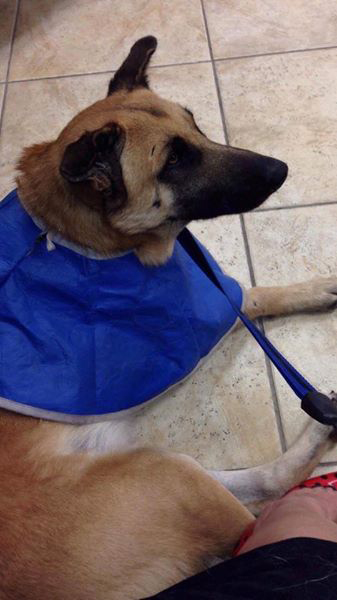
Brady, the dog left behind in front of witnesses at Redland Rock Pit, is in the caring hands of volunteers at Racing 4 Rescues. He has tested HW negative and is receiving treatment for skin issues.

What’s So Super About Sunday?

This Sunday in America is Super Bowl Sunday. It’s the New England Patriots vs. the Atlanta Falcons. Earlier this year, Michael Vick made a triumphant return to the Georgia Dome, riding onto the field in a convertible to a raucous ovation. According to a story in USA Today, Vick received by far the loudest ovation from the sellout crowd of 70,835 during a ceremony honoring the final regular-season game at the team’s home of 25 years. This, despite an online campaign calling for the Falcons to revoke their invitation over a 2007 dogfighting case that sent Vick to prison for nearly two years. A decade after his final game with Atlanta, the animosity that Vick’s name once stirred among Atlanta fans appeared to have turned to forgiveness. Not one boo or jeer was heard from the crowd.

The End Of An Era? “There are a lot of people who forgave me,” said Vick before the game. “It gives me another opportunity to show a different side of myself. I’m just thankful I have a lot of supporters.”

And this from Arthur Blank, Falcons owner, “Mike obviously has a great history with us, a great history with the franchise, an important player in our history. Michael represented an important part of my ownership period. I think our fans, based on the response I saw and felt, I think our fans were excited to have him as well.”

Gone But Never Forgotten. Two dogs from Vick’s dogfighting ring Bad Newz Kennels passed away  this month. Best Friends reported that Denzel died on January 10, 2017, nine years after he came to live at the sanctuary.

denzel-dr-patti-vicktory-dog-1468
Denzel with Best Friend veterinarian Dr. Patricia Patterson.
alyssa-denzel-vicktory-dog-1629mw
Dogtown caregiver Paul Lindley with Denzel.


From Denzel’s obituary, Best Friends wrote: “Denzel was a fighter, but not in the way that NFL player Michael Vick wanted him to be. This brave dog fought against the trauma of his past to find happiness and friendship at Best Friends Animal Sanctuary. He also fought against serious health issues that threatened to take him down, time and again. He suffered from a strain of the blood parasite babesia, which is spread among dogs forced to fight by way of bites. It can be managed but not cured, and each bout takes an increasing toll.”

oscaradoption
Oscar and Rachel Johnson.

Another Victory Dog rescued from Bad Newz Kennels in 2007, passed away on January 15. Oscar lived with Rachel Johnson since 2012. This was posted on Oscar’s Facebook page: “Friends, on Sunday, I let Oscar go. I’ve watched his bad days start to overshadow the good. So Sunday, we had breakfast in bed, read and cuddled, went to the drive-thru for cheesy burgers…” Oscar’s Facebook page is here.

Michael Vick’s playing days are over. “I’m very content with my career and what I’ve been able to accomplish. I’m ready to move forward in life.” Vick has recently expressed an interest in coaching.


Every Dog Happens For A Reason.

angel_2091-copyMeet Angel, the newest addition to The New Barker staff. Like Bailey, the dog in the movie A Dog’s Purpose,  we’re clueless as to what Angel’s purpose is at the moment. We’re not even certain what compelled us to adopt a puppy at this stage in our lives. It’s been 18 years since we’ve raised one, and evidently our memory bank was devoid of all that is involved. Maybe it has something to do with her name, given to her before we adopted her from VIP Rescue Florida in Clearwater. Divine intervention for two broken hearts?

Our home, over the last 10 years, was complete with four dogs. As editor of The New Barker dog magazine, there are many opportunities for dogs to cross my path, increasing the odds of falling in love, over and over again. In A Dog’s Purpose, Bailey falls in love over and over again with a different human. Without love, after all, what is the purpose of life?

While attending this year’s Florida Gulf Coast Classic Clusters dog show with a dear friend, she mentioned why she enjoyed coming to the show so much. “I love watching you interact with the dogs, because every dog you see, it’s as if it’s the first time you’ve ever seen a dog.”

Over the course of eight months during this past year, we lost our two Cockapoos, Zoe and Chloe. They had been a big part of our lives for 18 years, and boom, just like that, we were a family of four – two humans and two canines.

One of the reasons it’s so difficult getting over the loss of a dog is the simple fact that they are so dependent on us. They won’t “grow up” and develop a new circle of friends, go off to college, establish a career and start families. They leave us only when their time is up, whenever or however that may be. Their departure opens a space in the heart that may never be filled. But, what if, having known that one dog, a place is opened in the heart to make room for more love, compassion, faith and hope? Room for another dog, whose purpose may not be clear at first.

With it’s cool soundtrack, A Dog’s Purpose is not just a story about dogs. It’s as much a story about humans, with our foibles, our loneliness and our ability to forgive and love again. Yes, it’s a love story that will make you laugh and cry, then laugh again, which is exactly what dogs do.

While Angel’s purpose may not be clear to us, for now, she is helping to mend a pair of broken hearts. And, at present, that’s all we can ask of a nine-week old puppy.

adogspurpose-poster-2

Angel’s Adventures will be a weekly feature of The New Barker blog, so be sure to sign up. Follow The New Barker on Facebook, Twitter, Instagram and Pinterest for a cuteness overload of Angel as we follow her growth and discover just what her purpose in our lives will be.

angel_2446


Treat Me Right.

Rawhide is a dangerous treat, given unknowingly by pet parents to their dogs. It is not, as many folks believe, the by-product of the beef industry nor is it made of dehydrated meat. It is actually the by-product of the leather industry. Producing rawhide begins with the splitting of an animal hide, usually from cattle. The top grain is generally tanned and made into leather products, while the inner portion, in its “raw” state, goes to the dogs. Harmful chemicals, glue and paint are added to the product. A brief 4-step explanation below this illustration describes how the actual process transforms the hide to the dangerous chew stick. And, below the explanation, we’ve included some safer, healthier treat option suggestions (vegetarian option as well).

deadliest_chew_toy

STEP 1: Normally, cattle hides are shipped to tanneries for processing. The hides are treated with a chemical bath to help “preserve” the product during transport to help prevent spoilage.

Once at the tannery, the hides are soaked and treated with either an ash-lye solution or a highly toxic recipe of sodium sulphide liming. This process will help strip the hair and fat that maybe attached to the hides themselves.

The hides are then treated with chemicals that help “puff” the hide, making it easier to split into layers. The outer layer of the hide is used for goods like car seats, clothing, shoes, purses, etc. But, it’s the inner layer that is needed to make the rawhide, and other things like gelatin, cosmetics, and glue.

STEP 2: The post-tannery stage: Hides are washed and whitened using a solution of hydrogen peroxide and/or bleach; this will also help remove the smell of the rotten or putrid leather. (Research also shows that other chemicals maybe used to help the whitening process if the bleach isn’t strong enough.)

STEP 3: Now it’s time to make these whitened sheets of this “leathery by-product” look delicious. So, here is where the artistic painting process comes in.

Basted, smoked, and decoratively tinted products might be any color (or odor) underneath the coating of (often artificial) dyes and flavors. They can even be painted with a coating of titanium oxide to make them appear white and pretty on the pet store shelves.

The Material Safety Data Sheet reveals a toxic confection containing the carcinogen FD&C Red 40, along with preservatives like sodium benzoate. Tracking the effects of chemical exposure is nearly impossible when it’s a matter of slow, low-dose poisoning.

STEP 4: How does it last forever? Because the FDA does not consider these chews to be food, it’s a free for all when it comes to the manufacturers of these leather strips, and the products they may want to add to these chews, to get them to last forever. Any sort of glue may be added here to help ensure they never come apart.

When tested: Lead, arsenic, mercury, chromium salts, formaldehyde, and other toxic chemicals have been detected in raw hides.

Finally, it’s time to package and attach all the glorious marketing labels to the product. The fine print warning is attached with some rawhide products:  “Choking or blockages. If your dog swallows large pieces of rawhide, the rawhide can get stuck in the esophagus or other parts of the digestive tract. Sometimes, abdominal surgery is needed to remove them from the stomach or intestines. If it isn’t resolved, a blockage can lead to death.“

How do proactive veterinarians feel about these chews? This is what world-renowned veterinarian Doctor Karen Becker has to say on the matter:

“The name ‘rawhide’ is technically incorrect. A more accurate name would be processed-hide, because the skin isn’t raw at all. But the term “rawhide” has stuck. Rawhide chews start out hard, but as your dog works the chew it becomes softer, and eventually he can unknot the knots on each end and the chew takes on the consistency of a slimy piece of taffy or bubble gum. And by that time your dog cannot stop working it — it becomes almost addictive.At this point, there’s no longer any dental benefit to the chew because it has turned soft and gooey, and, in fact, it has become a choking and intestinal obstruction hazard.“

An investigation by Humane Society International stated in their report, “In a particularly grisly twist, the skins of brutally slaughtered dogs in Thailand are mixed with other bits of skin to produce rawhide chew toys for pet dogs. Manufacturers told investigators that these chew toys are regularly exported to and sold in U.S. stores.”

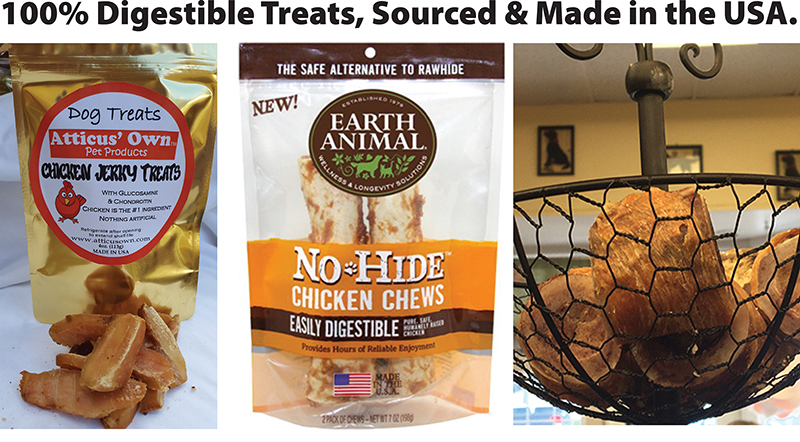
Healthy, Safer & Delicious Treat Alternatives, as Suggested by THE NEW BARKER dog magazine.

Treat_Trio

  1. Atticus’ Own Pet Products – a variety of delicious treats, chock full of all things healthy, like glucosamine and chondroitin. A super treat to keep you dog’s hips and joints healthy. The jerky is made from USDA-certified, all-natural chicken breast from family farms right here in the USA. In fact, Atticus’ Own Pet Products is headquartered right here in Florida. Grain free. No wheat, corn, soy or additives. In addition to the chicken jerky, Atticus’ Own offers Fish Jerky treats “like heaven in a bag…” A great source of omega-3’s. For dogs and cats. Follow the adventures of Atticus’ Own Gibbs and Sunshine at Atticus’ Own Pet Products. Better yet, order up some treats at http://www.atticusown.com
  2. Earth Animal No-Hide Chicken Chews – 100% USA-sourced chicken, made in the USA.  The chicken has been carefully rolled, cooked and uniquely dried for a one-of-a-kind chew. No hormones or additives. Also available: Beef and Salmon. You’ll find these delicious dog treats at fine Florida dog stores such as Dog Mania & Cats in Dade City.
  3. Al CaBONES – We’ve watched customers load up on these treats, as their dogs just love them. The treats are actually beef marrow bones wrapped in chicken. No additives, preservatives or fillers. All goodness, sourced and made in the USA. Bada bing, bada boom. Trust us. This is a treat your dog can’t refuse. Available at fine independent pet retail stores including Fluffy Puppies in Clearwater and Pet Food Warehouse in St. Petersburg. einsteinpets_ilovelucy
  4. Einstein Pets – What about an alternative for the vegetarian lover?  Einstein Pets uses only ingredients that matter. Ingredients like oats, rich in nutrients. Veggie Time dog treats are made with real carrots, turmeric and chia which promotes heart and liver health. This Sarasota, FL company is turning heads in the pet treat industry with awards from Pet Product News and the Best Brand award from American Choice Awards. You’ll find them at fine independent pet retail stores including Wet Noses, Sarasota; Bark Life, Seminole; Downtown Dogs, Tampa’s Hyde Park; The Modern Paws, Tampa; Wag Natural Pet Market, Tampa’s Davis Island; Earthwise Pet Supply in Gainesville, Valrico, Naples and Jacksonville Beach.

Finally – always supervise your pet when giving any chew treats. It’s also a good idea to check with your veterinarian, especially if your dog is on a special diet.

Sources: Pet nutrition blogger Rodney Habib, Planet Paws, The Whole Dog Journal and The Bark.

THE NEW BARKER dog magazine, established in 2006, publishes quarterly. Each cover of THE NEW BARKER dog magazine features an original work of art by a different Florida artist. For more information, visit http://www.TheNewBarker.com


A Christmas Miracle.

The holidays may be over, but the spirit of the season of giving and hope lives on in this dog story.

macho
Macho. Photograph, courtesy of Feeling Fine Canine and Equine Rescue.

Miami-Dade Animal Services (MDAS) is a loud place, often crowded with more dogs than space. Macho was one of the lucky ones. On December 12, volunteers from a West Palm Beach rescue group, Feeling Fine Canine and Equine Rescue, pulled Macho. He was emaciated, very weak and looked as if he had lost his will to live.

He was immediately taken to Gardens Animal Hospital for tests. Along with a diagnosis of pancreatitis, high levels of calcium in his blood indicated Macho had cancer. Tracey Godin, founder and operator of Feeling Fine Canine and Equine Rescue, said that Macho was able to spend Christmas with her family. Caela, Godin’s daughter, hand-fed Macho and slept on the floor with him. Macho must have known he was loved. Just 18 days after he was pulled from MDAS, Macho peacefully passed away.

macho2
Caela and Macho. Photograph, courtesy of Feeling Fine Canine and Equine Rescue.

The following day, Godin’s mother was scheduled for surgery that would require her to be under anesthesia for four hours. Prior to her mom’s surgery, Godin said a prayer, asking everyone she knew in Heaven to keep her mother safe.

“After surgery, my mom told my aunt that she spoke to my father, who had passed away last February,” said Godin. “In the hospital room, I said to mom, ‘so I hear dad visited you?’ And mom answered, ‘Dad has Macho…’ She repeated it several times. The crazy thing is, mom had only met Macho one time for about 10 minutes.”

Do dogs go to Heaven? In the 18 days Macho was with Godin and her family, he managed to touch the hearts of many. Why, out of all the dogs at MDAS, was Macho pulled by this rescue group? Some people believe there are no coincidences in life. There seems to be a guardian angel watching over a family who gave their hearts to him for a short period of time. Peace, Macho.


Belle Of The Ball.

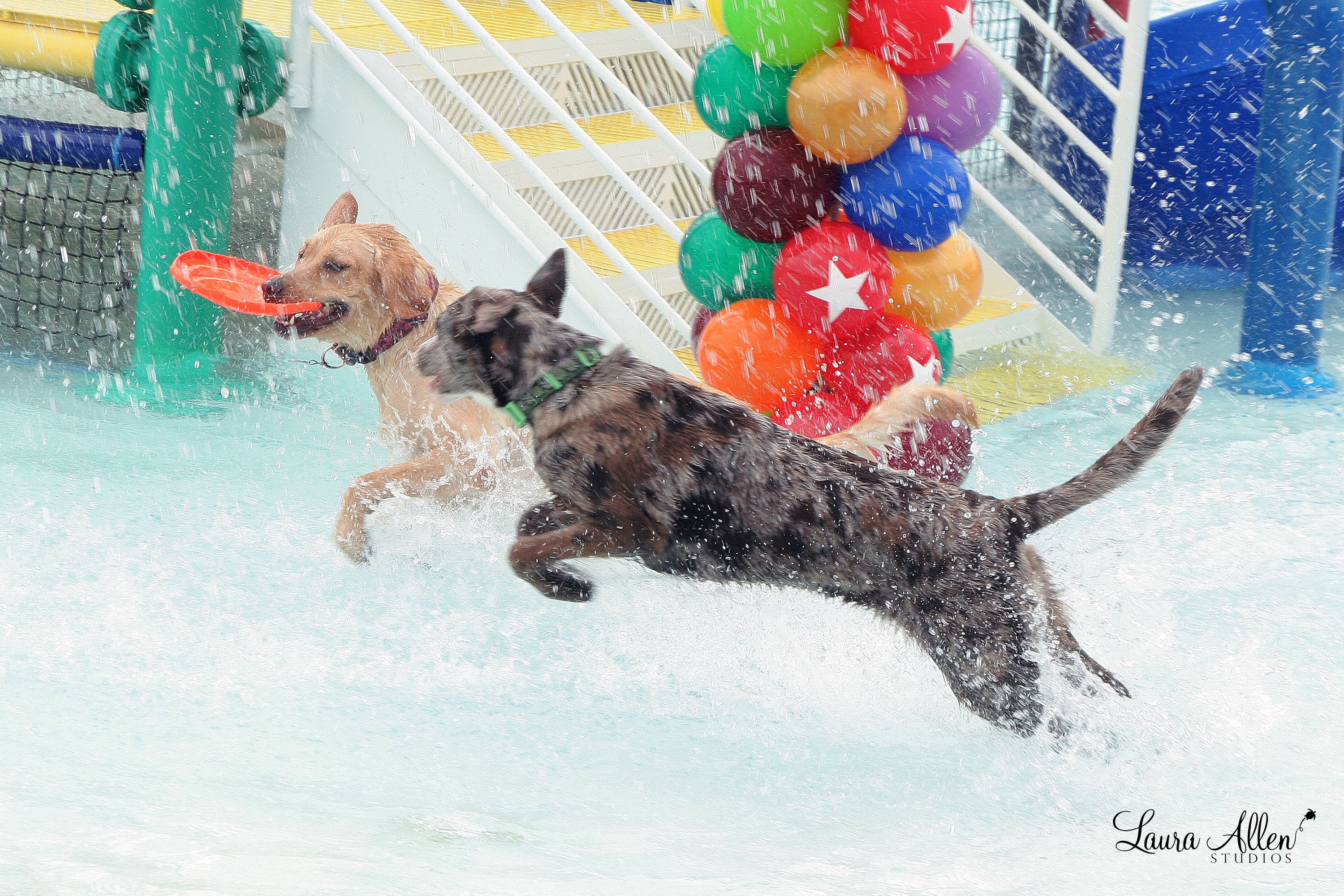
As Laura drives down the road that leads up to the Aquatic Center, Lucy is already jumping around in the car.

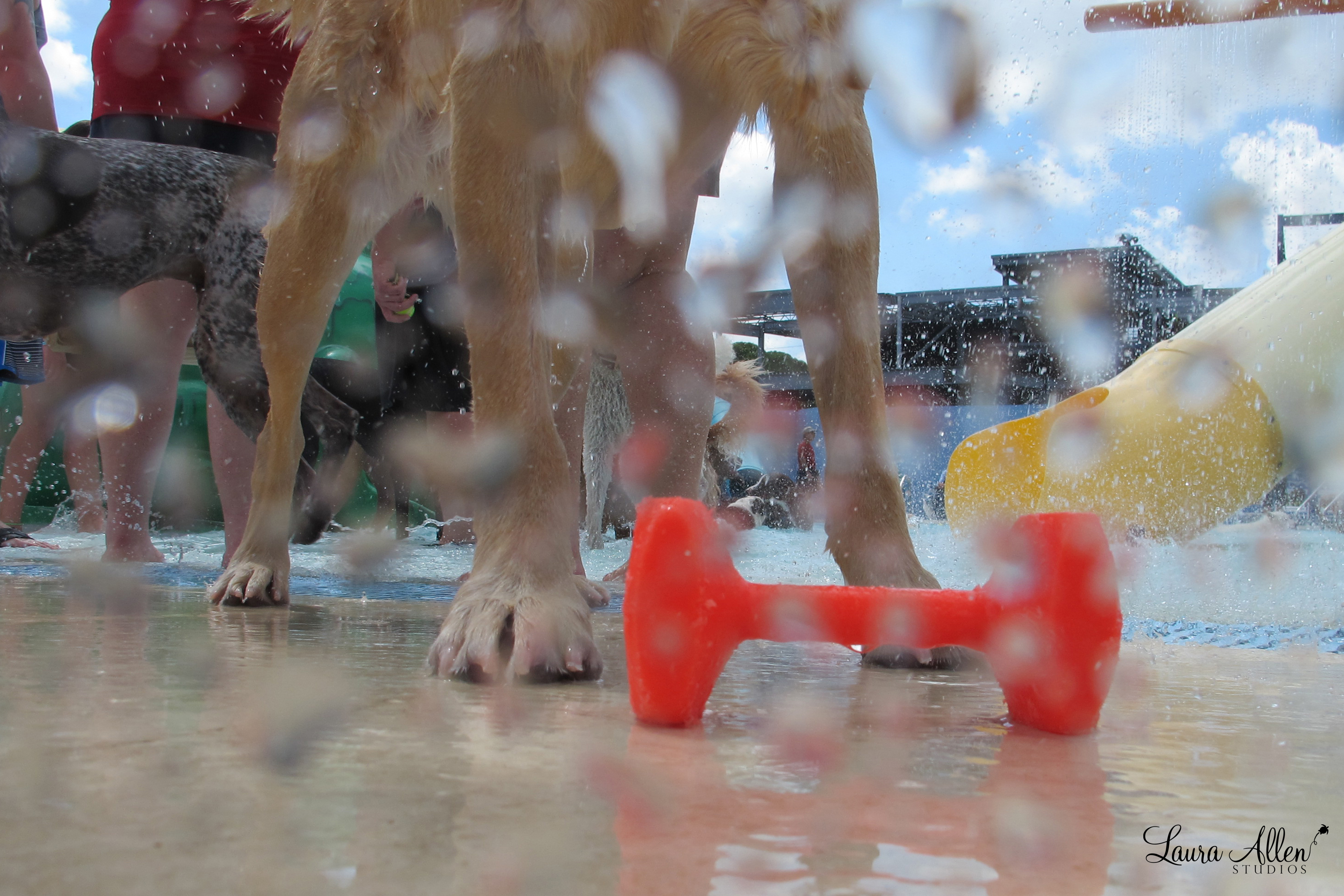
Florida municipalities, hip on the dog revolution, open up their public pools for dog swims at the end of their swim seasons. Public pools in Fort Lauderdale, Largo, St. Petersburg and Tampa have been doing it for several years now, much to the delight of their canine citizens. On Saturday, November 5, the City of Tampa hosts Drool In The Pool Doggie Paddle at Copeland Park Pool in North Tampa (11001 North 15th Street). There is a $5 per dog charge. Humans enter free (but no humans are allowed in the pool). Next Saturday at Largo’s Highland Family Aquatic Center, the annual Soggy Doggy Splash Party will be from 11a-1p (400 Highland Avenue). There is a bonus day on Sunday from Noon-3p. Again, this is strictly a dog swim. No humans are allowed in the pools.

Lucy, a Labrador Retriever who lives with her human Laura Allen, loves the Soggy Doggy Splash Party. The following is an excerpt from a feature that appeared in the Fall 2012 edition of The New Barker dog magazine.

As Laura drives down the road that leads up to the Aquatic Center, before even seeing the other dogs or the pool, Lucy is already jumping around in the car.  When the gates to the pool open, this dog is ready for some serious play time. She takes off with the other dogs, barely looking back at Laura. Occasionally, Lucy will look up and around for Laura, just to make sure. She gives Laura a reassuring smile before going back to playing.

Oliver and his human drive from South Tampa each year to attend Largo's Soggy Doggy Splash Day. Photograph by Laura Allen Studios.
Lucy and Oliver. Oliver and his human drive from South Tampa each year to attend Largo’s Soggy Doggy Splash Party. Photograph by Laura Allen Studios for The New Barker dog magazine.

Lucy is the life of any party and has never met another dog she didn’t like. One moment she is relentlessly flirting with her best friend, Catahoula mix Oliver, adopted from the Humane Society of Tampa Bay. The next moment, she’s taking her toy to another human she doesn’t even know, coaxing him to throw it. No one can resist Lucy’s charm or her invitation to play ball. No one. She will continue to pick up and drop the toy in front of a stranger, until he finally picks it up to throw it into the pool. Mission accomplished, and off she runs.

"I don't know you. But, throw my toy and we will be BFF," coaxes Lucy to a stranger. Photograph by Laura Allen Studios.
Throw My Toy. Now. “I don’t know you. But, throw my toy and we will be BFF,” coaxed Lucy to a stranger. Photograph by Laura Allen Studios.

Toy-driven and focused, Lucy will dive down three to five feet in the water to retrieve a toy. She loves swimming with Laura in the Gulf or in a swimming pool, so she has definitely honed her aquatic skills. That came in handy during the 25-yard swim, another event held during the Soggy Doggy Day Splash Party. On this particular day, there was a massive start at the relay, as the dogs all jumped in the water at the same time. Every dog was swimming in all directions. Every dog, that is, except Lucy. With an almost inaudible whistle from Laura, Lucy quickly spotted her mark at the other end of the pool, and was soon cutting through the water like an arrow. Of course it didn’t hurt that Laura held one of Lucy’s toys in her hand. Advantage: Team Lucy, winner of the 2013 Soggy Doggy Splash Party 25-yard swim.

Lucy checks out how far down her toy is before diving in after it. Photograph by Laura Allen Studios.
Should I Stay Or Should I Go? Lucy checks out how far down her toy is before diving in after it. Photograph by Laura Allen Studios for The New Barker dog magazine.

Lucy embodies the complete and utter joy of a dog, and Laura brings the best of that out in her. They go almost everywhere together when Laura is not working on location or on assignment as a professional photographer. Laura, who completely appreciates our domestication of dogs as a society, also believes dogs should be allowed to be dogs. Like children, dogs sometimes like to get dirty, and roll around in the grass, or mud.  Laura believes in taking it all in stride.

“If I know we’re going to a place where Lucy will get dirty, I just make it a bath day. I try to live in the moment, just like Lucy does, and to not stress about the little things,” said Laura.

Lucy. The Belle of the Ball. Photograph by Laura Allen Studios for The New Barker Dog Magazine.


The Occupational Hazard Of Working With Animals.

Society is disrespectful toward not only the animals, but shelter workers as well. Most often, animal caregivers leave shelter work, beaten down and disillusioned. The ones who stay, grow the proverbial “thick skin” in order to deal with the negativity they face, day in and day out.

Anna Cooke, Editor, The New Barker Dog magazine.

Compassion fatigue is also known as “secondary-traumatic stress disorder (STSD).” The symptoms of STSD are similar to those of PTSD. As with PTSD, compassion fatigue can lead to depression and thoughts of suicide. “Animal care professionals are some of the most pain-saturated people I have ever worked with,” said Psychotherapist J. Eric Gentry. “The very thing that makes them great at their work, their empathy and dedication and love for animals, makes them vulnerable.”

2010getrescuedthenewbarker
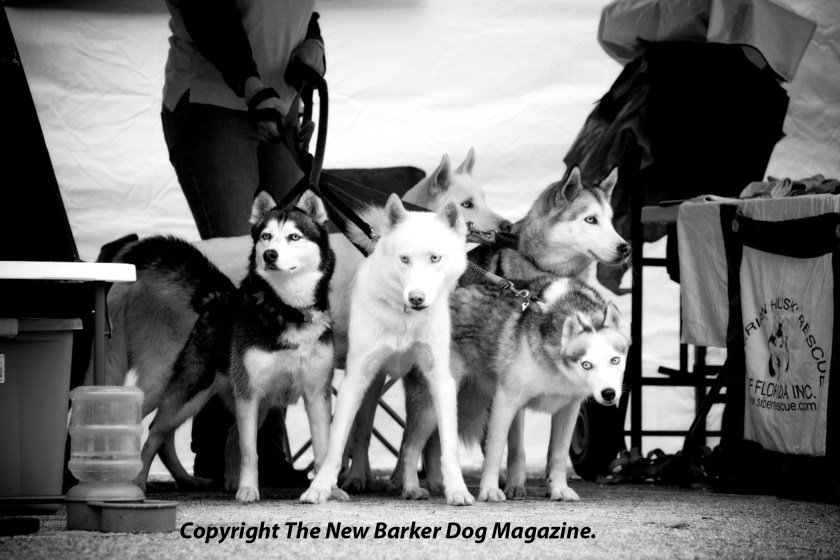
Siberian Husky Rescue of Florida. 2010 Get Rescued In Gulfport. The New Barker.

Most animal caregivers go into the work, either professionally or as a volunteer, carrying a true love for animals in their hearts. They certainly don’t choose the work because of the extraordinary benefits or high salaries. Patricia Smith, founder of the Compassion Fatigue Awareness Project believes that those who work in animal welfare face different challenges than those in other areas of care (i.e. – nurses, social workers, EMTs).

“I found in my work as training and development manager at a shelter that people enter this field very idealistic, really hoping to make a difference in the way animals are cared for and treated,” said Smith. “Unfortunately, it doesn’t take long for that bubble to burst.”

In other helping professions such as health care, teaching or firefighting, the workers are respected and even idealized. This is not the case with shelter workers. Most people believe shelter workers are part of the problem especially at shelters where the dogs and cats are euthanized.

“Society is disrespectful toward not only the animals, but shelter workers as well,” said Smith. “Most often, animal caregivers leave shelter work, beaten down and disillusioned. The ones who stay grow the proverbial “thick skin” in order to deal with the negativity they face, day in and day out.”

When the majority of workers/volunteers in an organization suffer the symptoms of compassion fatigue, the organization itself takes on the symptoms of organizational compassion fatigue. The result is high Worker’s Comp claims, absenteeism, inability of staff and management to collaborate, inability of staff to follow rules and regulations and lack of flexibility and adaptability among workers. Rescue groups experience a high turnover rate with volunteers.

Eventually, this all affects the bottom line and lack of funds creates another layer of challenges: paying decent wages and benefits, lack of quality care the animals receive, inability to retain talented workers. The list is endless.

“Turning around a shelter environment that is plagued with compassion-fatigued workers is the job of management,” said Smith.

As a caregiver, whether as a professional or as a volunteer, self-care is the only answer to healthy caregiving, especially in animal welfare. It takes hard work to become “self directed” Smith explained. “Self direction means that we have personal boundaries, we are able to say “no” without feeling guilty. We know our limitations and we honor them. We practice self-care daily. We need to heal our deep hurts and not allow ourselves to be re-traumitzied by the work we choose to do,” she added.

Compassion Fatigue is not the same as burnout, but they can co-exist. Burnout can happen to anyone in any profession. It’s a cumulative process marked by emotional exhaustion and withdrawal associated with increased workload and institutional stress. It is not trauma-related. Compassion Fatigue is specific to those who are working with a traumatized or suffering population.

“Stress is too much: too much work, too much pressure, too many deadlines. Burnout is not enough: not enough time, not enough resources, not enough energy.  When you add compassion fatigue to that mixture, you have a crippled individual in body, mind and spirit.” –Patricia Smith, founder of the Compassion Fatigue Awareness Project.

“I truly believe the number one thing we can do to reduce stress and avoid burnout is to be self aware. What causes our stress? What are the triggers? How do we manage our stress? Self awareness begins with education. Not only learning about stress, burnout and compassion fatigue, but learning about ourselves,” said Smith. “Create a Personal Mission statement (what is my promise to myself?) and follow up with a Self-Care plan (start with one goal and make yourself accountable). We can begin the path to healing that will make it possible to continue to make a difference in the lives of animals.”


This Thursday, October 27, the Tampa location of The Pet Loss Center is hosting a Compassion Fatigue Seminar. It is free and open to all who are in animal care: veterinarians, vet techs, shelter employees and volunteers, rescue organization volunteers. The doors will open a 6p with refreshments served. The seminar is from 6:30p – 7:30p followed by networking. Pets are welcome.The Pet Loss Center will donate $5 for every attendee that comes to the Open House+Seminar on behalf of a local shelter or rescue organization. The rescue whose organization has the most attendees represented during the Open House will receive a $500 donation from The Pet Loss Center.

The Pet Loss Center, Tampa: 6091 Johns Road, Suite 5 33634. 813.999.4040.

Penelope

Dog Is The Subject.

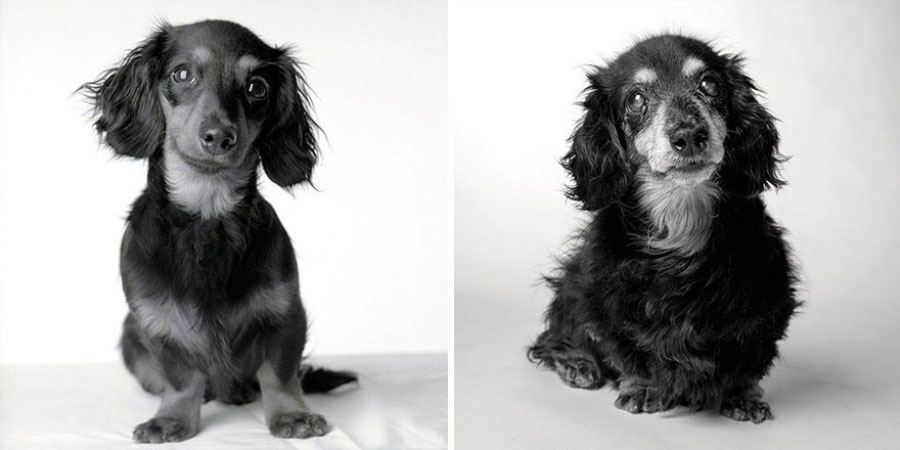
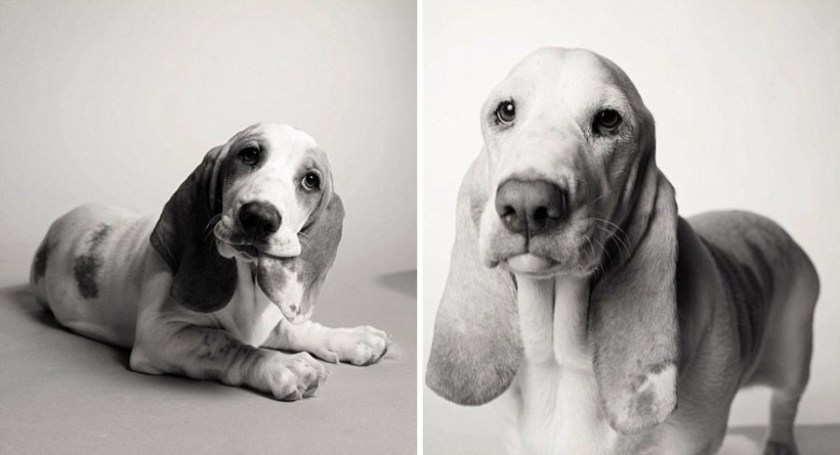
The mind of a photographer never rests. In Michael Freeman’s book, The Photographer’s Eye, he states that design is the single most important factor in creating a successful photograph. He also states that the ability to see the potential for a strong picture is equally important. The following photos are part of a 20-year project created by photographer Amanda Jones. She had the foresight and the discipline to photograph, compile and create a book that features the lifespan of a dog.

Lily_8_Mos_15_Years
Lily at 8 months (left) and 15 years (right). Photography by Amanda Jones.


The book, “Dog Years.Faithful Friends, Then & Now,” is a beautiful look at the lives and stories of 30 dogs. Of course, many people make it a practice to chronicle their dogs’  lives over the years through the use of professional photography. So, perhaps Amanda’s book came more as a result of opportunity. She saw the lives of her clients’ dogs transform before her in the prints and digital files she had amassed over a 20-year span.


Corbet_2And11Yrs
Corbet at 2 years (left) and 11 years (right). Photographs by Amanda Jones.
Poppy_1_AND_7Yrs
Poppy at 1 year (left) and 7 years (right). Photographs by Amanda Jones.


Audrey_3_AND_12Yrs
Audrey at 3 years (left) and 12 years (right). Photographs by Amanda Jones.

Photography is an art that also requires the photographer to have some extra special people and animal skills.

HOW’D THEY DO THAT?

15UleleDogsLAS 007c
Yes, this is one photograph. The amazing work of Laura Allen, photographed outside Ulele Restaurant in Tampa, Florida. The dogs, all adopted, belong to two members of Ulele staff.
Stephaniellen_UpDog
Obe Wan, the most awesome Pittie ever, at the UpDog Challenge in Brooksville, Florida.

Not only do our photographers have the artistic talent and social skills needed to do their job, they have heart and compassion. They are animal advocates and givers, always donating their time, skill and talent to their communities.

Peanut bw2
Peanut loves the camera, and her human, Brian Kalish. Riverview, Florida.

We have had the opportunity to work with some of the industry’s most talented photographers here at The New Barker over the last 10 years. How much do our photographers love dogs? One of them (who shall remain unnamed) sent us a note the other day. “Do you know what I like about people? Their dogs.” True that.

Briscoe_1_AND_10
Briscoe at 1 year (left) and 10 years (right). Photographs by Amanda Jones.

Laura Allen.  Tina K. VaLant. Stephanie Hayes.  Brian Kalish.  Joyce McCombs. Jacqui Silla.