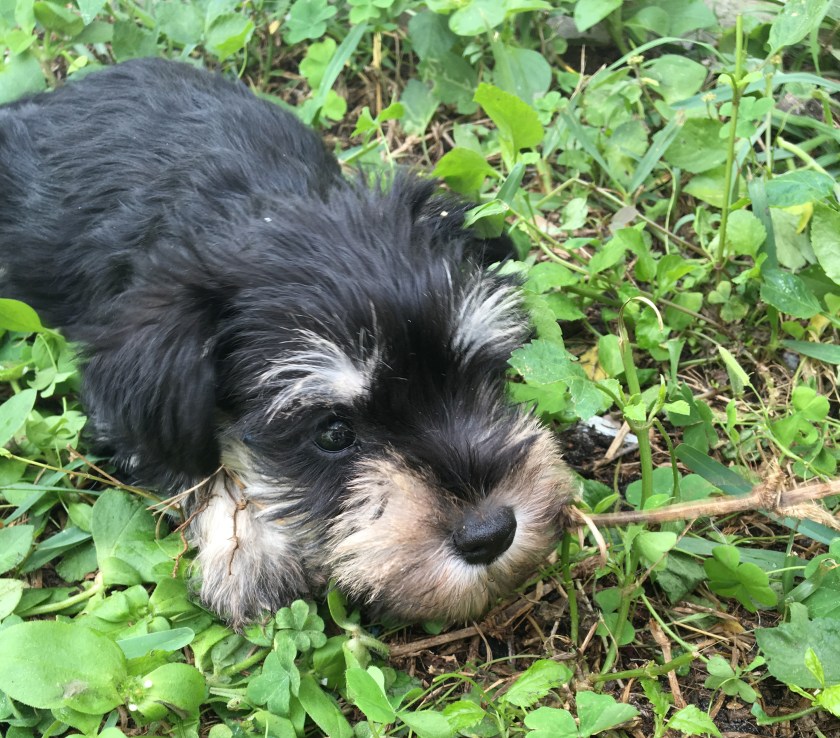
Meet Angel, the newest addition to The New Barker staff. Like Bailey, the dog in the movie A Dog’s Purpose, we’re clueless as to what Angel’s purpose is at the moment. We’re not even certain what compelled us to adopt a puppy at this stage in our lives. It’s been 18 years since we’ve raised one, and evidently our memory bank was devoid of all that is involved. Maybe it has something to do with her name, given to her before we adopted her from VIP Rescue Florida in Clearwater. Divine intervention for two broken hearts?
Our home, over the last 10 years, was complete with four dogs. As editor of The New Barker dog magazine, there are many opportunities for dogs to cross my path, increasing the odds of falling in love, over and over again. In A Dog’s Purpose, Bailey falls in love over and over again with a different human. Without love, after all, what is the purpose of life?
While attending this year’s Florida Gulf Coast Classic Clusters dog show with a dear friend, she mentioned why she enjoyed coming to the show so much. “I love watching you interact with the dogs, because every dog you see, it’s as if it’s the first time you’ve ever seen a dog.”
Over the course of eight months during this past year, we lost our two Cockapoos, Zoe and Chloe. They had been a big part of our lives for 18 years, and boom, just like that, we were a family of four – two humans and two canines.
One of the reasons it’s so difficult getting over the loss of a dog is the simple fact that they are so dependent on us. They won’t “grow up” and develop a new circle of friends, go off to college, establish a career and start families. They leave us only when their time is up, whenever or however that may be. Their departure opens a space in the heart that may never be filled. But, what if, having known that one dog, a place is opened in the heart to make room for more love, compassion, faith and hope? Room for another dog, whose purpose may not be clear at first.
With it’s cool soundtrack, A Dog’s Purpose is not just a story about dogs. It’s as much a story about humans, with our foibles, our loneliness and our ability to forgive and love again. Yes, it’s a love story that will make you laugh and cry, then laugh again, which is exactly what dogs do.
While Angel’s purpose may not be clear to us, for now, she is helping to mend a pair of broken hearts. And, at present, that’s all we can ask of a nine-week old puppy.
Angel’s Adventures will be a weekly feature of The New Barker blog, so be sure to sign up. Follow The New Barker on Facebook, Twitter,Instagram and Pinterest for a cuteness overload of Angel as we follow her growth and discover just what her purpose in our lives will be.
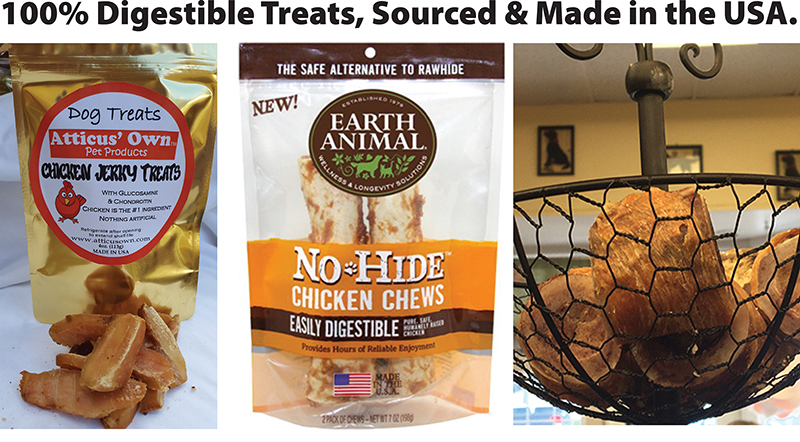
Rawhide is a dangerous treat, given unknowingly by pet parents to their dogs. It is not, as many folks believe, the by-product of the beef industry nor is it made of dehydrated meat. It is actually the by-product of the leather industry. Producing rawhide begins with the splitting of an animal hide, usually from cattle. The top grain is generally tanned and made into leather products, while the inner portion, in its “raw” state, goes to the dogs. Harmful chemicals, glue and paint are added to the product. A brief 4-step explanation below this illustration describes how the actual process transforms the hide to the dangerous chew stick. And, below the explanation, we’ve included some safer, healthier treat option suggestions (vegetarian option as well).
STEP 1: Normally, cattle hides are shipped to tanneries for processing. The hides are treated with a chemical bath to help “preserve” the product during transport to help prevent spoilage.
Once at the tannery, the hides are soaked and treated with either an ash-lye solution or a highly toxic recipe of sodium sulphide liming. This process will help strip the hair and fat that maybe attached to the hides themselves.
The hides are then treated with chemicals that help “puff” the hide, making it easier to split into layers. The outer layer of the hide is used for goods like car seats, clothing, shoes, purses, etc. But, it’s the inner layer that is needed to make the rawhide, and other things like gelatin, cosmetics, and glue.
STEP 2: The post-tannery stage: Hides are washed and whitened using a solution of hydrogen peroxide and/or bleach; this will also help remove the smell of the rotten or putrid leather. (Research also shows that other chemicals maybe used to help the whitening process if the bleach isn’t strong enough.)
STEP 3: Now it’s time to make these whitened sheets of this “leathery by-product” look delicious. So, here is where the artistic painting process comes in.
Basted, smoked, and decoratively tinted products might be any color (or odor) underneath the coating of (often artificial) dyes and flavors. They can even be painted with a coating of titanium oxide to make them appear white and pretty on the pet store shelves.
The Material Safety Data Sheet reveals a toxic confection containing the carcinogen FD&C Red 40, along with preservatives like sodium benzoate. Tracking the effects of chemical exposure is nearly impossible when it’s a matter of slow, low-dose poisoning.
STEP 4: How does it last forever? Because the FDA does not consider these chews to be food, it’s a free for all when it comes to the manufacturers of these leather strips, and the products they may want to add to these chews, to get them to last forever. Any sort of glue may be added here to help ensure they never come apart.
When tested: Lead, arsenic, mercury, chromium salts, formaldehyde, and other toxic chemicals have been detected in raw hides.
Finally, it’s time to package and attach all the glorious marketing labels to the product. The fine print warning is attached with some rawhide products: “Choking or blockages. If your dog swallows large pieces of rawhide, the rawhide can get stuck in the esophagus or other parts of the digestive tract. Sometimes, abdominal surgery is needed to remove them from the stomach or intestines. If it isn’t resolved, a blockage can lead to death.“
How do proactive veterinarians feel about these chews? This is what world-renowned veterinarian Doctor Karen Becker has to say on the matter:
“The name ‘rawhide’ is technically incorrect. A more accurate name would be processed-hide, because the skin isn’t raw at all. But the term “rawhide” has stuck. Rawhide chews start out hard, but as your dog works the chew it becomes softer, and eventually he can unknot the knots on each end and the chew takes on the consistency of a slimy piece of taffy or bubble gum. And by that time your dog cannot stop working it — it becomes almost addictive.At this point, there’s no longer any dental benefit to the chew because it has turned soft and gooey, and, in fact, it has become a choking and intestinal obstruction hazard.“
An investigation by Humane Society International stated in their report, “In a particularly grisly twist, the skins of brutally slaughtered dogs in Thailand are mixed with other bits of skin to produce rawhide chew toys for pet dogs. Manufacturers told investigators that these chew toys are regularly exported to and sold in U.S. stores.”
Healthy, Safer & Delicious Treat Alternatives, as Suggested by THE NEW BARKER dog magazine.
Atticus’ Own Pet Products – a variety of delicious treats, chock full of all things healthy, like glucosamine and chondroitin. A super treat to keep you dog’s hips and joints healthy. The jerky is made from USDA-certified, all-natural chicken breast from family farms right here in the USA. In fact, Atticus’ Own Pet Products is headquartered right here in Florida. Grain free. No wheat, corn, soy or additives. In addition to the chicken jerky, Atticus’ Own offers Fish Jerky treats “like heaven in a bag…” A great source of omega-3’s. For dogs and cats. Follow the adventures of Atticus’ Own Gibbs and Sunshine at Atticus’ Own Pet Products. Better yet, order up some treats at http://www.atticusown.com
Earth Animal No-Hide Chicken Chews – 100% USA-sourced chicken, made in the USA. The chicken has been carefully rolled, cooked and uniquely dried for a one-of-a-kind chew. No hormones or additives. Also available: Beef and Salmon. You’ll find these delicious dog treats at fine Florida dog stores such as Dog Mania & Cats in Dade City.
Al CaBONES – We’ve watched customers load up on these treats, as their dogs just love them. The treats are actually beef marrow bones wrapped in chicken. No additives, preservatives or fillers. All goodness, sourced and made in the USA. Bada bing, bada boom. Trust us. This is a treat your dog can’t refuse. Available at fine independent pet retail stores including Fluffy Puppies in Clearwater and Pet Food Warehouse in St. Petersburg.
Einstein Pets – What about an alternative for the vegetarian lover? Einstein Pets uses only ingredients that matter. Ingredients like oats, rich in nutrients. Veggie Time dog treats are made with real carrots, turmeric and chia which promotes heart and liver health. This Sarasota, FL company is turning heads in the pet treat industry with awards from Pet Product News and the Best Brand award from American Choice Awards. You’ll find them at fine independent pet retail stores including Wet Noses, Sarasota;Bark Life, Seminole; Downtown Dogs, Tampa’s Hyde Park; The Modern Paws, Tampa; Wag Natural Pet Market, Tampa’s Davis Island; Earthwise Pet Supply in Gainesville, Valrico,Naples and Jacksonville Beach.
Finally – always supervise your pet when giving any chew treats. It’s also a good idea to check with your veterinarian, especially if your dog is on a special diet.
Sources: Pet nutrition blogger Rodney Habib, Planet Paws, The Whole Dog Journal and The Bark.
THE NEW BARKER dog magazine, established in 2006, publishes quarterly. Each cover of THE NEW BARKER dog magazine features an original work of art by a different Florida artist. For more information, visit http://www.TheNewBarker.com
The holidays may be over, but the spirit of the season of giving and hope lives on in this dog story.
Macho. Photograph, courtesy of Feeling Fine Canine and Equine Rescue.
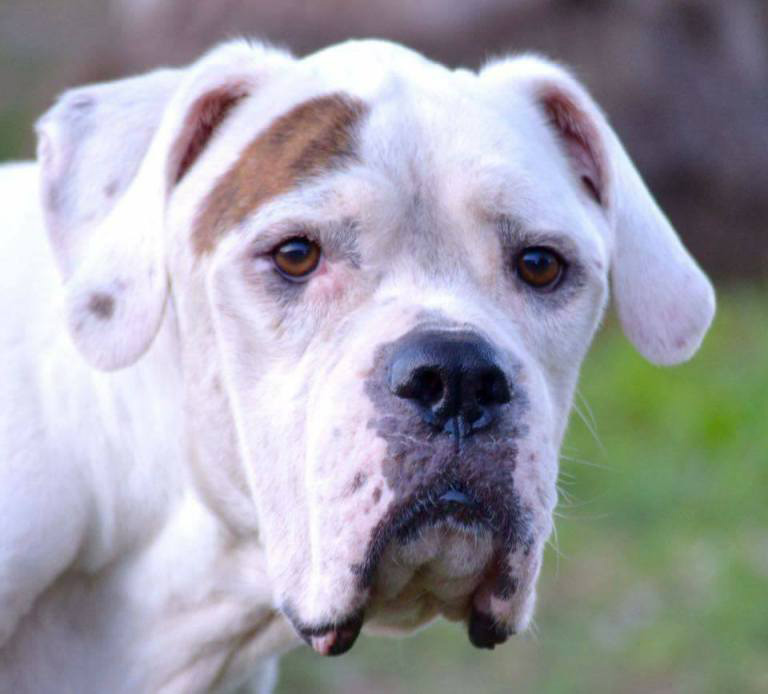
Miami-Dade Animal Services (MDAS) is a loud place, often crowded with more dogs than space. Macho was one of the lucky ones. On December 12, volunteers from a West Palm Beach rescue group, Feeling Fine Canine and Equine Rescue, pulled Macho. He was emaciated, very weak and looked as if he had lost his will to live.
He was immediately taken to Gardens Animal Hospital for tests. Along with a diagnosis of pancreatitis, high levels of calcium in his blood indicated Macho had cancer. Tracey Godin, founder and operator of Feeling Fine Canine and Equine Rescue, said that Macho was able to spend Christmas with her family. Caela, Godin’s daughter, hand-fed Macho and slept on the floor with him. Macho must have known he was loved. Just 18 days after he was pulled from MDAS, Macho peacefully passed away.
Caela and Macho. Photograph, courtesy of Feeling Fine Canine and Equine Rescue.
The following day, Godin’s mother was scheduled for surgery that would require her to be under anesthesia for four hours. Prior to her mom’s surgery, Godin said a prayer, asking everyone she knew in Heaven to keep her mother safe.
“After surgery, my mom told my aunt that she spoke to my father, who had passed away last February,” said Godin. “In the hospital room, I said to mom, ‘so I hear dad visited you?’ And mom answered, ‘Dad has Macho…’ She repeated it several times. The crazy thing is, mom had only met Macho one time for about 10 minutes.”
Do dogs go to Heaven? In the 18 days Macho was with Godin and her family, he managed to touch the hearts of many. Why, out of all the dogs at MDAS, was Macho pulled by this rescue group? Some people believe there are no coincidences in life. There seems to be a guardian angel watching over a family who gave their hearts to him for a short period of time. Peace, Macho.
As Laura drives down the road that leads up to the Aquatic Center, Lucy is already jumping around in the car.
Florida municipalities, hip on the dog revolution, open up their public pools for dog swims at the end of their swim seasons. Public pools in Fort Lauderdale, Largo, St. Petersburg and Tampa have been doing it for several years now, much to the delight of their canine citizens. On Saturday, November 5, the City of Tampa hosts Drool In The Pool Doggie Paddle at Copeland Park Pool in North Tampa (11001 North 15th Street). There is a $5 per dog charge. Humans enter free (but no humans are allowed in the pool). Next Saturday at Largo’s Highland Family Aquatic Center, the annual Soggy Doggy Splash Party will be from 11a-1p (400 Highland Avenue). There is a bonus day on Sunday from Noon-3p. Again, this is strictly a dog swim. No humans are allowed in the pools.
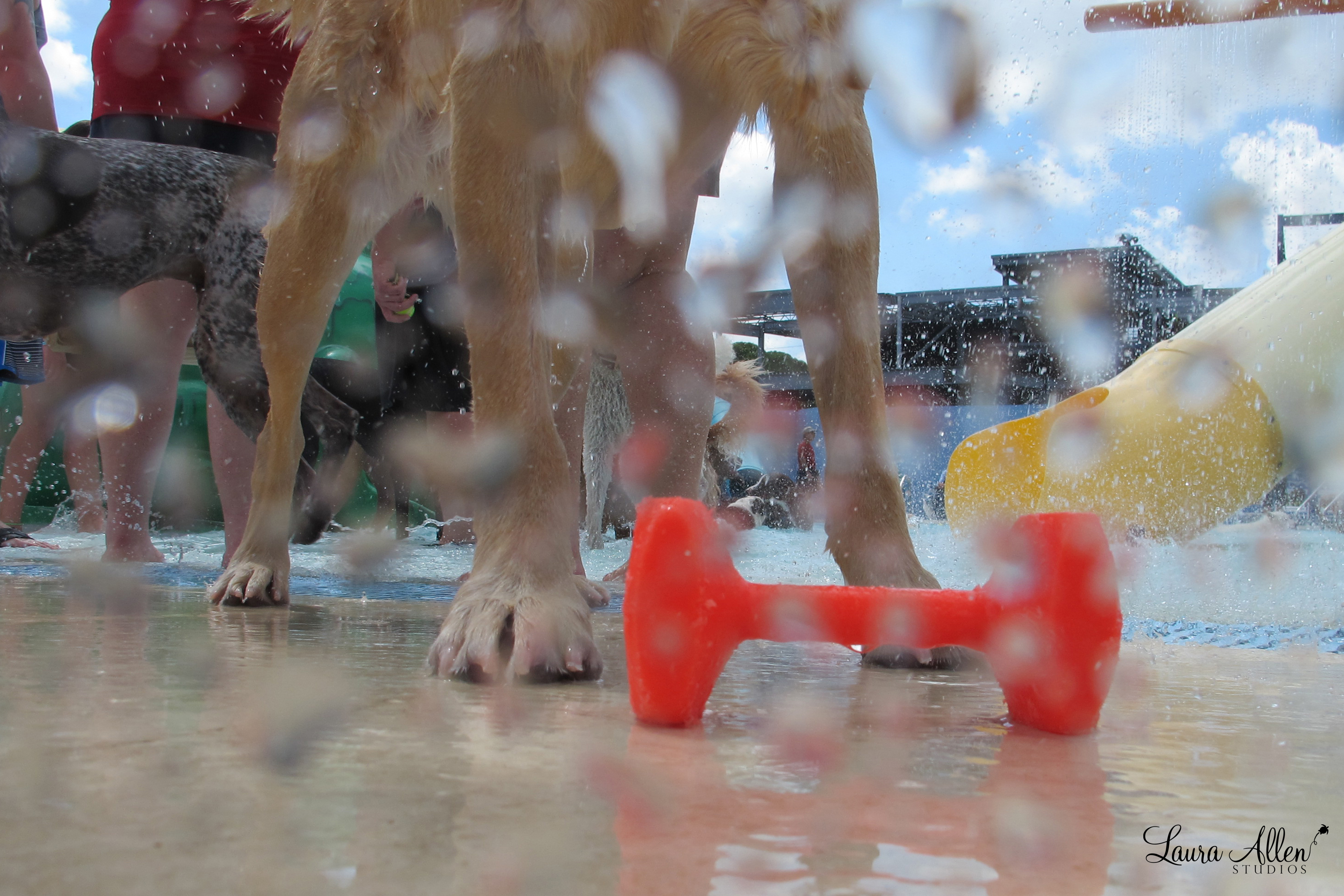
Lucy, a Labrador Retriever who lives with her human Laura Allen, loves the Soggy Doggy Splash Party. The following is an excerpt from a feature that appeared in the Fall 2012 edition of The New Barker dog magazine.
As Laura drives down the road that leads up to the Aquatic Center, before even seeing the other dogs or the pool, Lucy is already jumping around in the car. When the gates to the pool open, this dog is ready for some serious play time. She takes off with the other dogs, barely looking back at Laura. Occasionally, Lucy will look up and around for Laura, just to make sure. She gives Laura a reassuring smile before going back to playing.
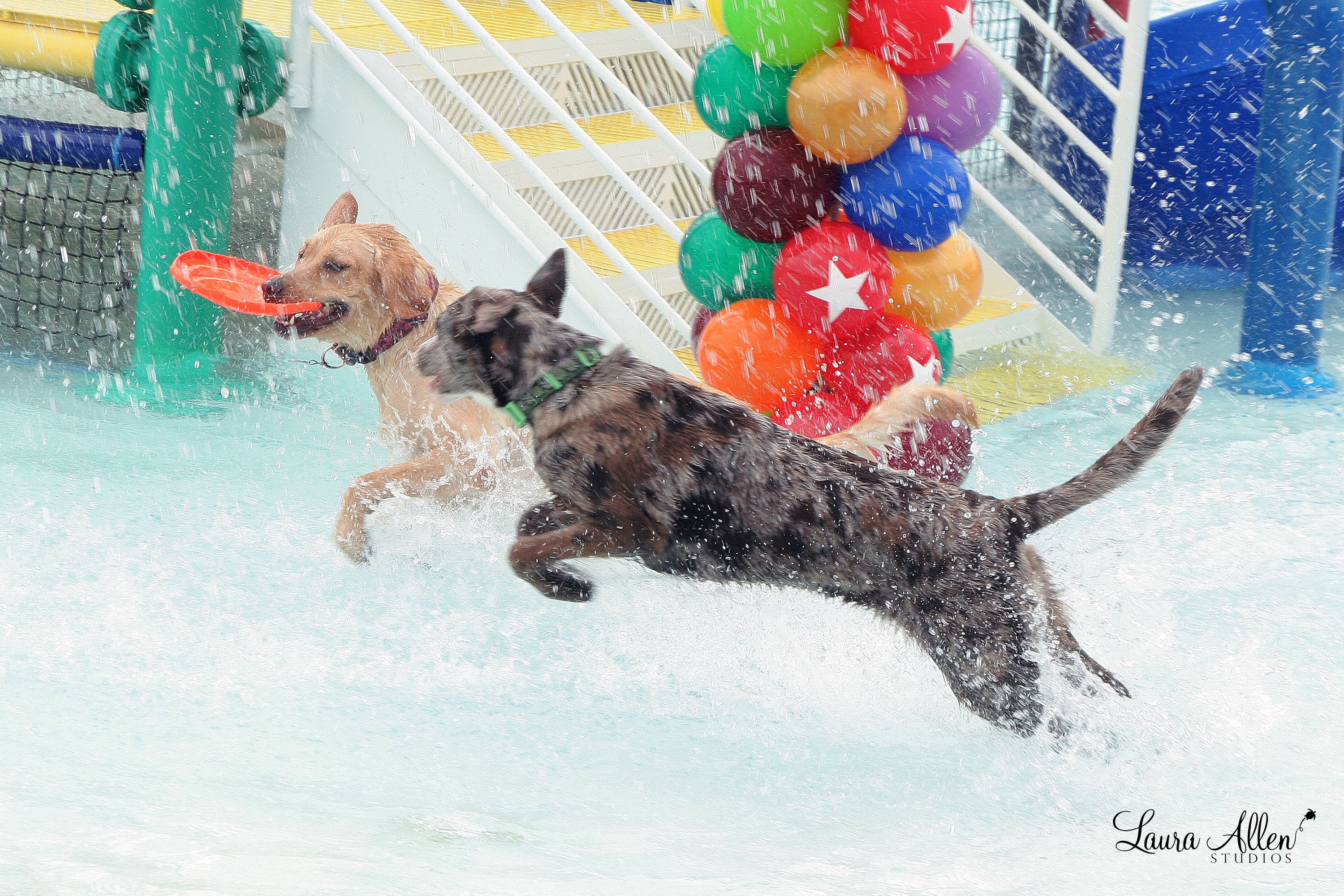
Lucy and Oliver.Oliver and his human drive from South Tampa each year to attend Largo’s Soggy Doggy Splash Party. Photograph by Laura Allen Studios for The New Barker dog magazine.
Lucy is the life of any party and has never met another dog she didn’t like. One moment she is relentlessly flirting with her best friend, Catahoula mix Oliver, adopted from the Humane Society of Tampa Bay. The next moment, she’s taking her toy to another human she doesn’t even know, coaxing him to throw it. No one can resist Lucy’s charm or her invitation to play ball. No one. She will continue to pick up and drop the toy in front of a stranger, until he finally picks it up to throw it into the pool. Mission accomplished, and off she runs.
Throw My Toy. Now.“I don’t know you. But, throw my toy and we will be BFF,” coaxed Lucy to a stranger. Photograph by Laura Allen Studios.
Toy-driven and focused, Lucy will dive down three to five feet in the water to retrieve a toy. She loves swimming with Laura in the Gulf or in a swimming pool, so she has definitely honed her aquatic skills. That came in handy during the 25-yard swim, another event held during the Soggy Doggy Day Splash Party. On this particular day, there was a massive start at the relay, as the dogs all jumped in the water at the same time. Every dog was swimming in all directions. Every dog, that is, except Lucy. With an almost inaudible whistle from Laura, Lucy quickly spotted her mark at the other end of the pool, and was soon cutting through the water like an arrow. Of course it didn’t hurt that Laura held one of Lucy’s toys in her hand. Advantage: Team Lucy, winner of the 2013 Soggy Doggy Splash Party 25-yard swim.
Should I Stay Or Should I Go?Lucy checks out how far down her toy is before diving in after it. Photograph by Laura Allen Studios for The New Barker dog magazine.
Lucy embodies the complete and utter joy of a dog, and Laura brings the best of that out in her. They go almost everywhere together when Laura is not working on location or on assignment as a professional photographer. Laura, who completely appreciates our domestication of dogs as a society, also believes dogs should be allowed to be dogs. Like children, dogs sometimes like to get dirty, and roll around in the grass, or mud. Laura believes in taking it all in stride.
“If I know we’re going to a place where Lucy will get dirty, I just make it a bath day. I try to live in the moment, just like Lucy does, and to not stress about the little things,” said Laura.
Lucy. The Belle of the Ball.Photograph by Laura Allen Studios for The New Barker Dog Magazine.
Society is disrespectful toward not only the animals, but shelter workers as well. Most often, animal caregivers leave shelter work, beaten down and disillusioned. The ones who stay, grow the proverbial “thick skin” in order to deal with the negativity they face, day in and day out.
Anna Cooke, Editor, The New Barker Dog magazine.
Compassion fatigue is also known as “secondary-traumatic stress disorder (STSD).” The symptoms of STSD are similar to those of PTSD. As with PTSD, compassion fatigue can lead to depression and thoughts of suicide. “Animal care professionals are some of the most pain-saturated people I have ever worked with,” said Psychotherapist J. Eric Gentry. “The very thing that makes them great at their work, their empathy and dedication and love for animals, makes them vulnerable.”
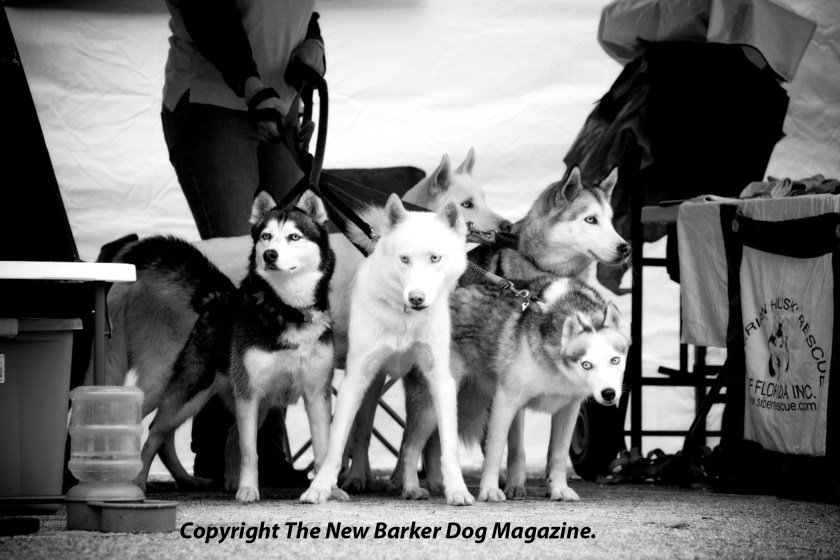
Siberian Husky Rescue of Florida. 2010 Get Rescued In Gulfport. The New Barker.
Most animal caregivers go into the work, either professionally or as a volunteer, carrying a true love for animals in their hearts. They certainly don’t choose the work because of the extraordinary benefits or high salaries. Patricia Smith, founder of the Compassion Fatigue Awareness Project believes that those who work in animal welfare face different challenges than those in other areas of care (i.e. – nurses, social workers, EMTs).
“I found in my work as training and development manager at a shelter that people enter this field very idealistic, really hoping to make a difference in the way animals are cared for and treated,” said Smith. “Unfortunately, it doesn’t take long for that bubble to burst.”
In other helping professions such as health care, teaching or firefighting, the workers are respected and even idealized. This is not the case with shelter workers. Most people believe shelter workers are part of the problem especially at shelters where the dogs and cats are euthanized.
“Society is disrespectful toward not only the animals, but shelter workers as well,” said Smith. “Most often, animal caregivers leave shelter work, beaten down and disillusioned. The ones who stay grow the proverbial “thick skin” in order to deal with the negativity they face, day in and day out.”
When the majority of workers/volunteers in an organization suffer the symptoms of compassion fatigue, the organization itself takes on the symptoms of organizational compassion fatigue. The result is high Worker’s Comp claims, absenteeism, inability of staff and management to collaborate, inability of staff to follow rules and regulations and lack of flexibility and adaptability among workers. Rescue groups experience a high turnover rate with volunteers.
Eventually, this all affects the bottom line and lack of funds creates another layer of challenges: paying decent wages and benefits, lack of quality care the animals receive, inability to retain talented workers. The list is endless.
“Turning around a shelter environment that is plagued with compassion-fatigued workers is the job of management,” said Smith.
As a caregiver, whether as a professional or as a volunteer, self-care is the only answer to healthy caregiving, especially in animal welfare. It takes hard work to become “self directed” Smith explained. “Self direction means that we have personal boundaries, we are able to say “no” without feeling guilty. We know our limitations and we honor them. We practice self-care daily. We need to heal our deep hurts and not allow ourselves to be re-traumitzied by the work we choose to do,” she added.
Compassion Fatigue is not the same as burnout, but they can co-exist. Burnout can happen to anyone in any profession. It’s a cumulative process marked by emotional exhaustion and withdrawal associated with increased workload and institutional stress. It is not trauma-related. Compassion Fatigue is specific to those who are working with a traumatized or suffering population.
“Stress is too much: too much work, too much pressure, too many deadlines. Burnout is not enough: not enough time, not enough resources, not enough energy. When you add compassion fatigue to that mixture, you have a crippled individual in body, mind and spirit.” –Patricia Smith, founder of the Compassion Fatigue Awareness Project.
“I truly believe the number one thing we can do to reduce stress and avoid burnout is to be self aware. What causes our stress? What are the triggers? How do we manage our stress? Self awareness begins with education. Not only learning about stress, burnout and compassion fatigue, but learning about ourselves,” said Smith. “Create a Personal Mission statement (what is my promise to myself?) and follow up with a Self-Care plan (start with one goal and make yourself accountable). We can begin the path to healing that will make it possible to continue to make a difference in the lives of animals.”
This Thursday, October 27, the Tampa location of The Pet Loss Center is hosting a Compassion Fatigue Seminar. It is free and open to all who are in animal care: veterinarians, vet techs, shelter employees and volunteers, rescue organization volunteers. The doors will open a 6p with refreshments served. The seminar is from 6:30p – 7:30p followed by networking. Pets are welcome.The Pet Loss Center will donate $5 for every attendee that comes to the Open House+Seminar on behalf of a local shelter or rescue organization. The rescue whose organization has the most attendees represented during the Open House will receive a $500 donation from The Pet Loss Center.
The Pet Loss Center, Tampa: 6091 Johns Road, Suite 5 33634. 813.999.4040.
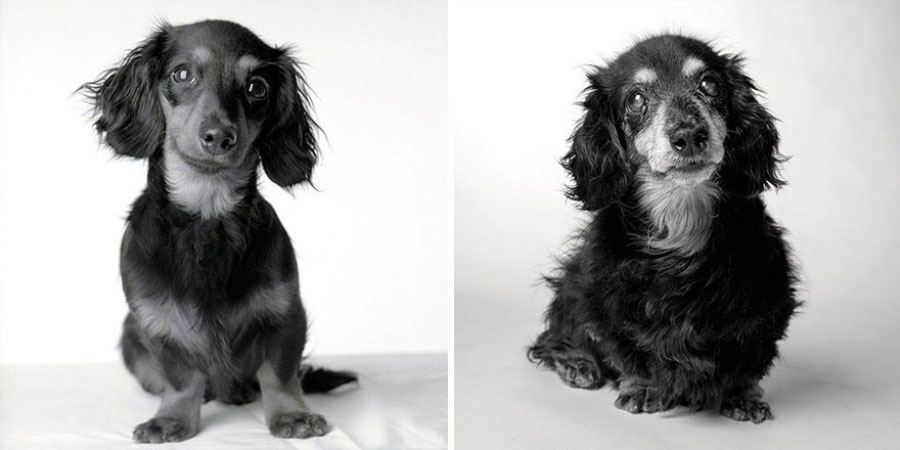
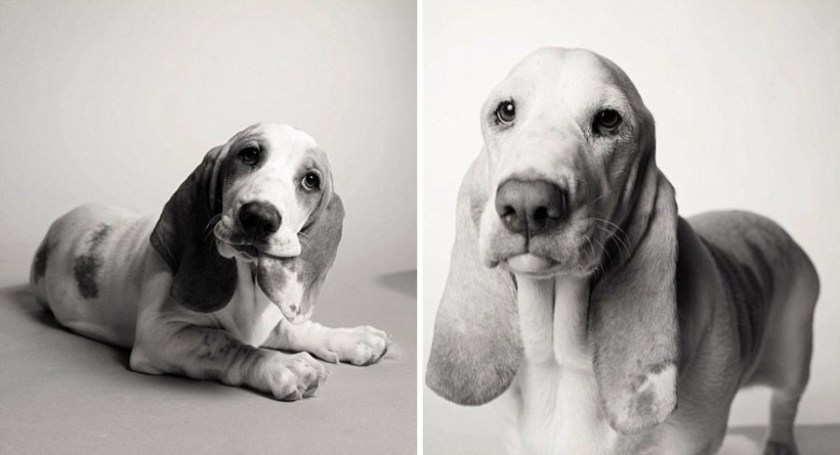
The mind of a photographer never rests. In Michael Freeman’s book, The Photographer’s Eye, he states that design is the single most important factor in creating a successful photograph. He also states that the ability to see the potential for a strong picture is equally important. The following photos are part of a 20-year project created by photographer Amanda Jones. She had the foresight and the discipline to photograph, compile and create a book that features the lifespan of a dog.
Lily at 8 months (left) and 15 years (right). Photography by Amanda Jones.
The book, “Dog Years.Faithful Friends, Then & Now,” is a beautiful look at the lives and stories of 30 dogs. Of course, many people make it a practice to chronicle their dogs’ lives over the years through the use of professional photography. So, perhaps Amanda’s book came more as a result of opportunity. She saw the lives of her clients’ dogs transform before her in the prints and digital files she had amassed over a 20-year span.
Corbet at 2 years (left) and 11 years (right). Photographs by Amanda Jones.Poppy at 1 year (left) and 7 years (right). Photographs by Amanda Jones.
Audrey at 3 years (left) and 12 years (right). Photographs by Amanda Jones.
Photography is an art that also requires the photographer to have some extra special people and animal skills.
HOW’D THEY DO THAT?
Yes, this is one photograph. The amazing work of Laura Allen, photographed outside Ulele Restaurant in Tampa, Florida. The dogs, all adopted, belong to two members of Ulele staff.Obe Wan, the most awesome Pittie ever, at the UpDog Challenge in Brooksville, Florida.
Not only do our photographers have the artistic talent and social skills needed to do their job, they have heart and compassion. They are animal advocates and givers, always donating their time, skill and talent to their communities.
Peanut loves the camera, and her human, Brian Kalish. Riverview, Florida.
We have had the opportunity to work with some of the industry’s most talented photographers here at The New Barker over the last 10 years. How much do our photographers love dogs? One of them (who shall remain unnamed) sent us a note the other day. “Do you know what I like about people? Their dogs.” True that.
Briscoe at 1 year (left) and 10 years (right). Photographs by Amanda Jones.
The following, by Anna Cooke, first appeared as a feature in the Spring 2011 issue of The New Barker dog magazine.
Many of us who live with dogs probably don’t really want to know what they’re thinking. To know may bring in the realities of life like dealing with what they think of us. Who needs that extra burden? We already have to cope with what our parents, siblings, significant others and business associates think of us. It’s one of the reasons we love dogs so much. We believe everything they have to say to us is said through their eyes. And of course, it’s nothing short of adoration and unconditional love, right? Our dogs are sentient beings with a conscience and feelings. They are intelligent and many people believe, they live with a purpose and set goals. The Reverend Nedda Wittels, M.A., M.S. believes that dogs make life choices. Maybe that’s why we don’t really choose dogs, rather they choose us.
It seems that every one in the animal world can tell a story of how they loved and lived with animals since they were very young. Jo Maldonado is not much different. As a young girl she would try to save the fish her father caught. In her teens she took dog-training classes and won ribbons with her devoted companion Rex; in her 20’s she rode horses and in her 30’s and 40’s she volunteered with German Shepherd Rescue in Pennsylvania doing canine assessment and fostering. And, for almost 30 years she lead a successful career as a publicist, owning her agency. But it wasn’t until she and her husband moved to Florida and her children had moved on with their lives, that a continuous odd series of events forced her to change her life’s path. Volunteering at local shelters and seeing the infinite line of discarded animals, and almost losing one of her dogs, led Jo to follow her animal passion and give back to the community.
“Three years ago I realized that I was not following my soul’s purpose, not fulfilling what I was supposed to be doing with my life. I was hospitalized twice, broke my hip, had two surgeries, was in two car accidents and almost lost two members of my family.” But it wasn’t until a series of events involving animals that Jo finally listened to what some other worldly force was trying to tell her. There was the black bear that began appearing in her driveway on a regular basis. Then hundreds of crows began following her around. A woodpecker began “talking to her.” And one day the door to her china cabinet flew open spewing forth china from past relationships.
Jo began reading every book on animal communication and angel healing that she could find. After she completed several classes on the same subject matter, it became clear to Jo that her purpose in life was to work with her first love: animals. Her Centers for Animal Therapies is based on the theory that both sides of the brain are necessary to truly communicate with the animal world. “The left side of the brain is the fact based, scientific side, while the right brain is intuitive, innate and natural,” said Jo.
Animal communicators speak with pet companions who live with humans, oftentimes facilitating a change in varied situations. Why is the cat spraying? Why is the dog cowering or food aggressive? Each situation may have something in common with another situation going on within the pet’s home. For instance, when there is a fear problem there is generally a kidney problem that results in uncontrolled urinating in the house. By communicating with the dog, Jo can show their humans the relationship their dogs would like to have with them. How we live with our dogs can result in a positive or negative affect on them and ourselves.
No telepathic communicator is one hundred percent accurate all the time. The reasons for error may include a weak telepathic connection; the human client has emotional and/or mental blocks about the situation; or the dog may be choosing not to communicate fully. Reverend Wittels adds that each telepathic communicator can bring their own emotional and mental baggage to the situation: belief systems, expectations, past experiences or emotions. A good animal communicator will know how to leave their baggage behind in order to be a clear channel.
As with any professional, it’s good to have a rapport with them before delving into this area of you and your pet’s lives. We had been working and speaking with Jo for the past year on various projects. One thing lead to another, and it seemed almost a natural progression to agree to let Jo communicate with our brood: Zoe, a 13 year-old Cockapoo, her 11 year-old niece Chloe, our adopted MinPin Rita, and our most recent adopted addition, Dougie (pronounced Doogie), a two year-old Scottish Terrier.
There were four dogs and so it took Jo a little longer to assess the situation and discern their different personalities. “I took a deep breath before looking at each photograph you sent of the dogs,” said Jo, who told us she took classes to learn how to communicate through the eyes of an animal. “But dogs don’t like for you to look directly into their eyes. That is why I like to use photos,” she told us. “I pick up the physical characteristics and I pick up the soul. I try to get through the layers in order to connect and communicate.”
She began first by saying that each of these four dogs represents a characteristic in each human member of our household, in this instance a husband and wife. “It’s up to you to figure out those characteristics of you,” said Jo. From the pictures, Jo described the aura of energy emanating from each dog, which assisted in giving the following information. “Your life to them seems scattered. You’re in multiple places at one time. You seem to be going from point A to point B in an instant. You are way too busy and they’re picking up on that. I received a strong sense from the dogs that you are very tired,” Jo said.
For many dogs, a situation such as the one Jo described could be confusing to them, causing problems such as becoming the take-charge being within the household. The Alpha dog if you will. But in this instance the dogs all seem to have adjusted. “Each one of them knows their role within your family,” she told me. “And,” she added, “Your dogs are all very funny. They are just all real characters.”
Dougie, the two-year old Scotty, knows exactly what he is supposed to do. He looks around at his humans and the other dogs and wonders why they don’t know what they’re supposed to be doing? He knows he is a purebred. In fact, somewhere in his lineage, there is a champion or two. So he demonstrates quite a lot of pride as if to say, “Of course I can do that. It’s exactly what I am supposed to do.” Jo said that if she were to humanize Dougie, he would be a career fisherman. “I could see him bellying up to the bar at the end of each successful fishing excursion,” she said. Dougie is a highly intuitive dog and would be excellent in agility. “Oh, he would be a natural,” said Jo.
Chloe, the 11 year-old Cockapoo.“Dougie was pointing at Chloe when I was communicating with him. He told me that while he feels very grounded, Chloe is constantly running around in circles, figuratively. Yet, she thinks she’s the one that has it all under control. But she doesn’t.” Jo explained that she sensed a bit of a Napoleonic complex in Chloe. She is constantly reminding everyone that she is in control; she is in charge, but she isn’t, of course. “If she could talk to you, she would be a tattle-tail and rat everyone else out. Chloe does feel confused most of the time, but thinks that’s okay because her humans are confused and running around in circles too.” Chloe communicated with Jo in such a rapid-fire way that she was almost stuttering. “I have too much to do and too little time in which to do everything,” is what Chloe communicated to Jo. “Interestingly, Chloe and Dougie have similar personalities. If you were to put Chloe in another pack, the other dogs would find her annoying. But she is well-accepted in your pack.”
Zoe, the 13 year-old Cockapoo. “She tends to believe she is the matriarch of the family. I could sense her little quirks. She does like her food and is set in her ways. She has a sense of entitlement, that whatever she gets, the others should not be allowed to have because they are not as deserving as she is. She can get snappy, only to let others know that she does not approve of what they are doing. But she would never display any kind of aggressive behavior towards anyone, human or animal, within her pack.” Jo spoke to me directly about the next point. “Anna, Zoe feels that the two of you are one. She is content to follow you and be wherever you are.” And then Jo added, “Oh, I’m hearing from her again that she really does love her food though. She likes that crunchiness and soft combination you give her.”
Rita, a five year-old MinPin, found wandering the streets. “I like Rita very much. She has this I-am-cool-as-a-cucumber demeanor. She likes to check things out, like a private detective before getting all excited, unlike the rest of the dogs in your pack. She smirks at the other dogs as if they’re ridiculously out of control. If I were to humanize Rita, she would have red hair, red-painted fingernails and a cigarette dangling from her mouth. She’s like one of those cool people you may see at a party. You don’t know them, but you walk up to them anyway and compliment them on the shirt they’re wearing. Instead of saying thank you, Rita would answer, ‘Huh. You don’t really give a damn about my shirt now, do you?’”
So it appears we have an odd little pack, with a funny mixture of personalities, each one of them strong in their own way. They all have their quirks but everyone gets along, albeit grumbling along the way. Most important, they all seem to be functioning as a pack and each feels they have jobs, which is a good thing. “They are all who they are as long as they’re all with the two of you. And as long as you make sure what your expectations are of them, they’re all pretty happy,” Jo said.
The Cooke Brat Pack, photographed at Steinhatchee Landing Resort, soon after Jo Maldonado’s reading.
The dogs were all in agreement with one special request. “What they would like you to do is schedule more family time with them, altogether. They would prefer daily, but they’ll settle for weekly jaunts to a big fenced in field or park to run around.” I told Jo that we have a big backyard and take them out many times throughout the day. “No,” she answered, “They want family time. They want everyone in the car at the same time, to go somewhere together. And Chloe said not to forget the treats. That was a very strong communication to me. They want you to think about nothing but the present during these field trips with them.”
QUOTES:
“Somewhere in time, an animal’s soul has made a pact with the human’s soul to help them. I look at what I am doing as my privilege to be able to work with two beings, human and animal, to decipher what that help might be,” Jo Maldonado.
“People will spend hundreds of thousands of dollars to help their pets while totally ignoring the obvious to help themselves. We humans must recognize that we need to change to improve our own health and well-being. Through the voice of their pets, a person can help themselves,” Jo Maldonado.
“I’ve never found an animal who communicated to me that they hated their human. I know instantly when I go into that animal that there is a need for them to express themselves as to why they are here,” Jo Maldonado.
Jo Maldonado can be reached at jo@cat-edu.com or 386.279.0257
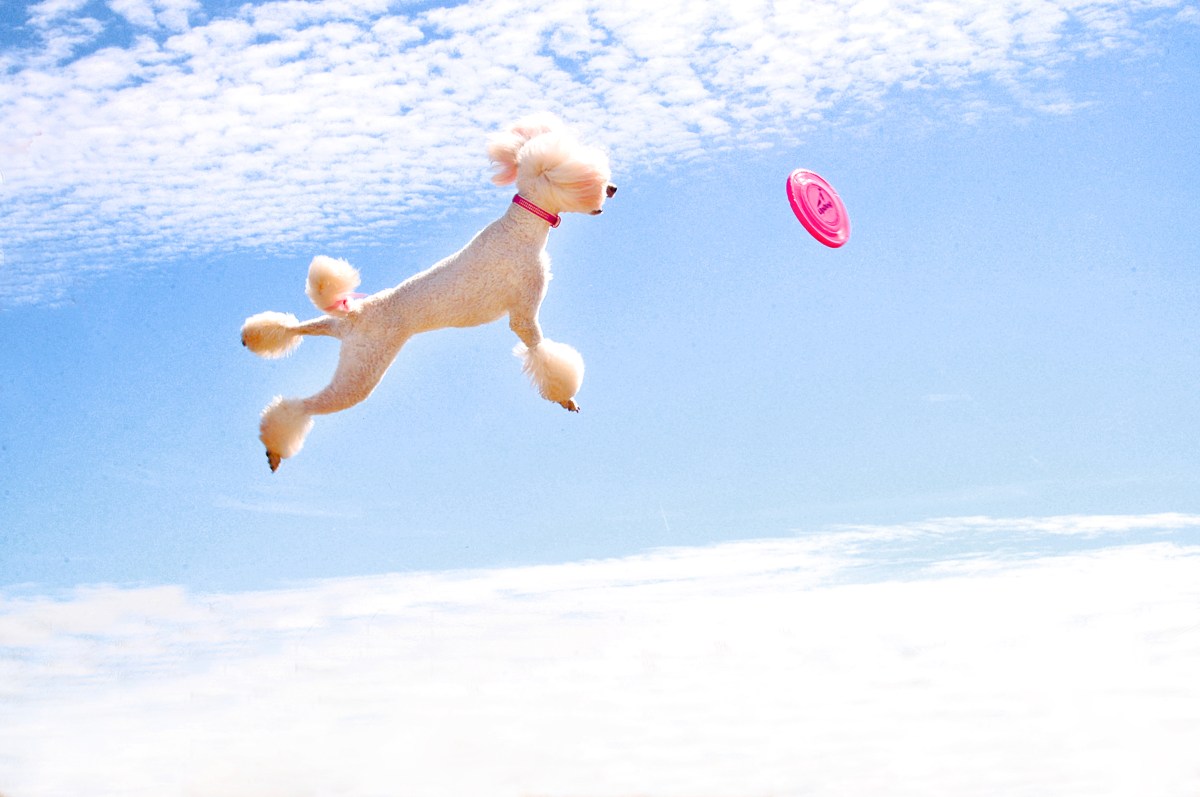
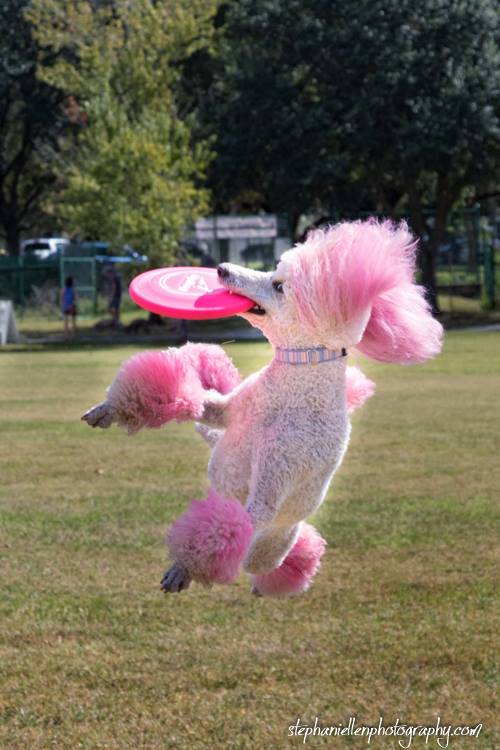
We first met Jolene, a beautiful white Standard Poodle, in Tampa at Woofstock, hosted by TampaPets.org. Her fur had been accented in pink to show her support for Breast Cancer Awareness. The following is an original feature from the winter 2015/16 (current) issue of The New Barker dog magazine, written by Anna Cooke.
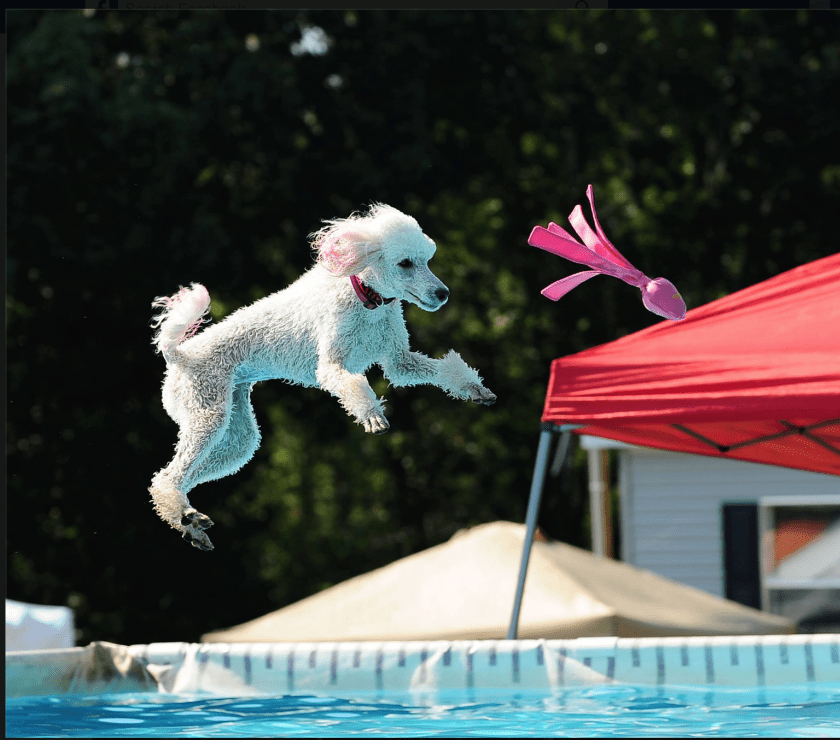
At fifty years old, Barbara Mahoney decided to end her abusive marriage and sell her business. She knew the change would be good for her, but realized she was still not in a good place, emotionally. She recalled how happy she felt around her mother’s dogs while growing up, especially the Poodles. Now, she wanted a constant companion, someone who would give her unconditional love. A dog who would go swimming with her. Heck, maybe she’d even get into agility, she thought. Jolene came into Barbara’s life in 2011, and she decided to let the dog show her just what she wanted to do in the way of “work.”
When she was just a year old, Jolene began her athletic career in dock diving. She received her canine therapy certification in water rehabilitation. She took the Southeastern Regional Division championship in her class, and all was good. Then, someone threw a Frisbee. Jolene ran after it, and caught it. She and Barbara were hooked. Barbara sought out competitions and talked to other people about Jolene’s talent. “I even found people to throw Jolene the disc when I broke my clavicle,” she said. “I didn’t want her to stop having fun while I was laid up.” The duo’s devotion to the sport and hard work quickly paid off. Jolene became the only World Qualifying Standard Poodle in the sport.
“Working with dogs in activities like disc and agility enriches and completes our relationship with them,” Barbara told us. “Jolene is an exceptional Poodle, but she is also an incredible disc dog.”
Barbara and five other people formed Up Dog Challenge, an organization they hope will inform dog lovers how “awesome this sport is,” she told us. The group’s goal is to provide a non-intimidating forum where people will feel comfortable asking questions about the sport. Go to an Up Dog Challenge event and everyone involved is approachable and enthusiastic about the sport. “We want more people to know how fun this is,” added Barbara. “All ages and skill levels are welcome. All breed types, size, and shape. We’ll even teach you how to throw a disc so that your dog will catch it. We have trainers that are very good with newcomers to the sport. They explain how your dog thinks and will train you to throw the disc in a way that maximizes your dog’s success. We want to optimize that play for you both.”
Dogs are happiest when they have something to do, when people play with them. “Happy dogs equal happy people,” said Barbara. “Look what Jolene did for me. She changed my life.”
MORE: 2016 marks the 42nd consecutive year of competitive canine disc sports. The first annual UpDog International Finals will be held March 18 – 20 in Brooksville, Florida at Florida Classic Park (5360 Lockhart Road). Qualified teams must pre-register by Sunday, January 31. For more information, visit UpDogChallenge.com
This story originally appeared in the current issue of The New Barker dog magazine.
Yes, it’s true. Even the greatest gift giver in the world does the research to make a list. For dogs and dog lovers on his list, he’s been known to refer to The New Barker dog magazine for ideas. So take heart, gentle human gift giver – for the dog and dog lover on your list, who seem to have everything they need (each other), here are some unique ideas from The New Barker, of course.
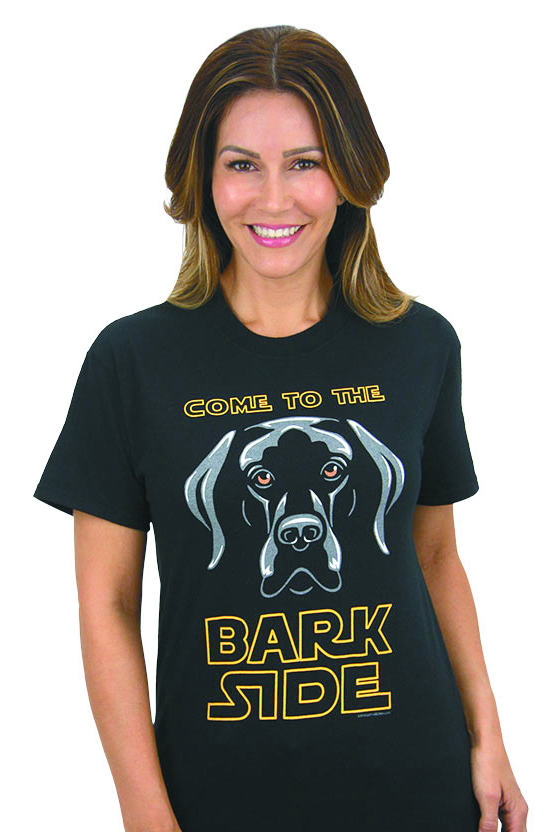
Dog lovers with a sense of humor. Clothing, like this t-shirt that plays into the Star Wars craze right now, with just the right touch of dog. Available at The Doggie Door in Winter Park (407.644.2969). Or maybe the dog lover on your list is into craft beer. How about this hoodie, available at Pet Food Warehouse in St. Pete (727.521.6191) and Earth Pets Organic in Gainesville (352.377.1100).
Dog lovers with a sense of style. Nothing says ‘put together’ like the accessory of a scarf. The fashionista on your list will appreciate this cosmo-PAW-litan scarf with dog silhouettes. Available in assorted color combos of grey/blue, grey/peach or grey/light green. One Lucky Dog in St. Pete (727.527.5825).
Dog lovers who are tea connoisseurs. Add a little whimsy to their tea and crumpets ritual with these whimsical hand-painted ceramics. Cats In Bloom Tea For One tea pot and mug designed by artist Sharon Bloom. Catzilla Covered Butter Dish designed by artist Candace Reiter. Both are available at Pawsitively Posh Pooch in St. Pete (727.892.9303).
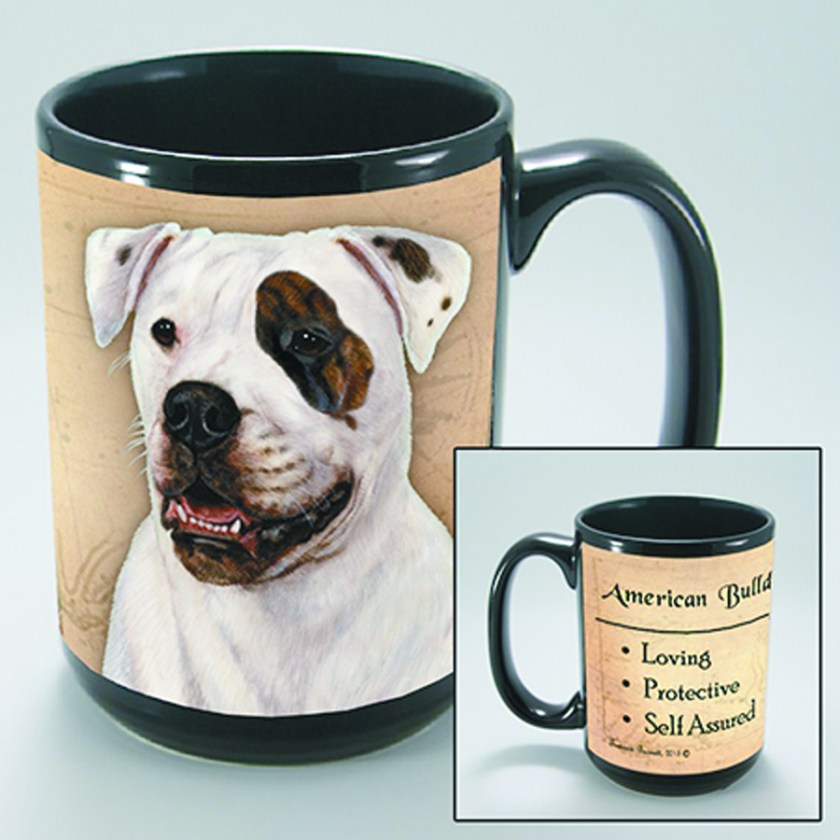
Dog lovers who insist on at least one cup of java before heading out for their power dog walk. How about a breed-specific coffee mug? Beautifully hand-painted, the details bring out each breed’s characteristic. Available at Fluffy Puppies, Clearwater (727.446.7999).
For the homebody dog lover. How about dog art, underfoot with a machine washable accent rug? They’re so reasonably priced, you’ll want to buy one (or two) for yourself. Each rug is artist-inspired. The bright colors won’t fade through many washes and will stand up to heat, cold and sunlight. Available at Pet Food Warehouse, St. Pete (727.521.6191).
Dog lovers who sleep with dogs. Nothing shows off someone’s sense of humor, style and love of home than a well-made bed, accessorized with dog-themed pillowcases. 300 thread count for extra softness. Made in the USA. Available at One Lucky Dog, St. Petersburg (727.527.5825) and Sweet Sage Cafe & Boutique, North Redington Beach (727.391.0453).
Dog lovers who love to dress their dogs (big and small). EZ Reflective Royal Elegance Harness Vest. No choke design – pulls on chest, not the neck. Designed for easy on/easy off (not over the head). High quality quick release buckle with reinforced D-ring and reflective safety striping. Available at Fluffy Puppies, Clearwater (727.446.7999). For big dogs, visit Dade City’s Dog Mania & Cats to see their line of unique, hand-crafted clothing and accessories. Dressing up is not just for the little ones, anymore. Dog Mania & Cats (352.467.9622). Visit their beautiful new store on Meridian Avenue.
For the dog lover who is also a romantic. You must see and touch this beautiful collection of vintage hinged trinket boxes to appreciate them. Made of sculpted resin, decorated with enamel and 24 karat accents; bejeweled with Swarovski crystal. Each one is worthy of holding precious keepsakes. Available at Pawsitively Posh Pooch, St. Petersburg (727.892.9303).
For the practical dog lover. There’s no shame in being practical, and practical doesn’t have to be boring, right? Anyone who has ever owned a Dog Gone Smart Dirty Dog Rug has gone back to purchase more. We love using them just outside the shower area for a spa-like feel underfoot. Millions of microfiber strands create an extra large super-sponge for use just about anywhere in your home. Place them in crates; under food and water bowls to keep water and kibble in place. Plush, velvety soft and easy to wash. Non-slid backing helps it stay in place. Available at all the shops listed above as well as: Animal House, St. Pete (727.328.0503), Fuzzy & Furries, St. Pete (727.954.3952), Pet Supplies Plus, Pinellas Park (727.415.8016) & Clearwater (727.453.9131).
Go forth and shop, fellow dog lovers. You have now been properly advised, and Santa can’t hold a cookie to your super shopping powers.
We wanted to share a story that was first reported by the New York Daily News on Monday, December 17. The comfort dogs are able to bring is no surprise to dog lovers. The New Barker joins the nation in sending our thoughts and prayers to those who lost loved ones as a result of this tragedy.
Comfort dogs help ease pain of mourning Newtown Community. By Jennifer H. Cunningham and Adam Edelman for the New York Daily News. Photography is by Allison Joyce for the New York Daily News.
A pack of sympathetic groups bearing supportive canines spent much of Monday with bereaved Connecticut residents affected by last week’s Sandy Hook Elementary School massacre, providing children and adults alike with the cuddly comfort that only a four-legged friend can give.
The therapy dogs were brought in by at least three groups late Sunday to help kids and adults alike cope with last week’s horrific shooting in Newtown that left 20 first graders and six school officials dead.
Among the groups was the Hudson Valley Golden Retrievers Club, whose members spent the afternoon at a makeshift memorial near the town center, where both kids and adults in need of compassion stopped to pet and cuddle the dogs.
Mourning or otherwise devastated children and parents said that petting the dogs gave them relief from their sadness.
“I just love dogs, so whenever I’m around them, they make me feel better,” said 12-year-old Ryan Williams. “When they come over and you pet them you kind of forget about what’s happening for a little bit.”
Jenna Stuart, a school bus driver from Newtown, said the dogs were an enormous help to her four-year-old daughter, Kylie, who attends preschool at the Children’s Adventure Center in front of Sandy Hook Elementary and lost friends in the tragedy.
“I like the dogs because they made me happy,” said Kylie, after petting one on the head. “The dogs love me.”
Some residents, who weren’t directly affected by the bloodshed, found peace in simply bringing their own dogs to help others.
Sandy Hook resident Ann Mari Cioffi, a member of the Hudson Valley Golden Retrievers Club, brought her dog, Libby, 5, to comfort victims, at a memorial in the center of town.
“They’re just gentle, caring, kind and sweet. Cioffi said of the dogs. “They just seem to sense it. They just sense when somebody’s sad.”
Massachusetts- based K-9’s For Kids Pediatric Therapy Dogs was also among the groups sharing their tail-wagging buddies.
Crystal Wright, 52, of Becket, Mass., a dog handler with the group for Rhiku, a 5 year old Sheltie, said the canine had been easing frowns all day.
“Everyone likes to pet a dog,” she said. “It changes the mood. It kind of takes them away from what they’re going through for a moment. I think it’s helping. I think they needed it.”
Some canines even traveled across the country to help out.
Trainers from the Chicago-based Lutheran Church Charities, which has deployed its comfort dogs to other communities hit by tragedy in the past, brought in 10 to 15 Golden Retrievers and their handlers to Connecticut to help with the consolation efforts, Tim Hetzner, the president of the organization, said.

 Meet Angel, the newest addition to The New Barker staff. Like Bailey, the dog in the movie A Dog’s Purpose, we’re clueless as to what Angel’s purpose is at the moment. We’re not even certain what compelled us to adopt a puppy at this stage in our lives. It’s been 18 years since we’ve raised one, and evidently our memory bank was devoid of all that is involved. Maybe it has something to do with her name, given to her before we adopted her from VIP Rescue Florida in Clearwater. Divine intervention for two broken hearts?


















 Go forth and shop, fellow dog lovers. You have now been properly advised, and Santa can’t hold a cookie to your super shopping powers.
 The Art Of Dog.™
You must be logged in to post a comment.