Happiness Is Running With A Friend.

Have you ever considered running a marathon with your dog?

by Anna Cooke – Have you signed up for the 2017 Goody Goody Turkey Gobble? It is dog-friendly with giveaways, awards and a delicious post-race meal. Information below.

Jeff Odell has been running with his dog Kuma since she was old enough to start training.  “I did enough reading to know that it is not healthy to run a dog before they are at least a year old,” said Jeff, who ran a fair amount when he was younger.

Eventually, raising a family and other things would take precedence, placing Jeff’s running on hold for many years. He picked it up again about 18 years ago when he was 42, focusing on long distance running and marathon training. He has completed 27 marathons and led a local chapter of the Jeff Galloway Marathon Training group in Tampa for five years. It was with that group in Temple Terrace where we first met Jeff, Kuma and some of the other runners early one Saturday morning. They had just completed their morning run of between 10 to 15 miles. Kuma, a Golden Retriever/Black Labrador Retriever mix, had done about five miles with Jeff. “Ten miles is her cool weather run,” said Jeff. “She let’s me know, but we usually keep it to between three and five miles in hot weather.”

IMG_TheNewBarker
Jeff Odell, racing buddies Sandi Lake and Kuma. Temple Terrace, 2017.

Kuma has the coat of a Golden Retriever that is the color of a black Labrador. She is almost seven and sports a little white around her muzzle now. It would be three years after the death of Lightning, the family’s beloved Golden Retriever, before Jeff’s wife Therese considered another dog. “It took Therese a long time to get over losing Lightning, who had grown up with our kids. She thought she could never have another dog, until we met Kuma,” said Jeff. The couple’s middle child Joseph, who lives in Japan, took one look at the puppy, and said she looked like a fuzzy little bear cub or Kuma – the Japanese word for bear. “We liked it and the name stuck,” said Jeff.

IMG_KumaJeff and Kuma bonded right away and he knew he wanted to eventually run her for exercise, if she took to it. “When I was a kid in upstate New York, I had a mixed breed dog that followed me everywhere around town. The idea of generally doing things with a dog in tow is pretty ingrained in me. When you have a dog the size of Kuma, at 65 pounds, you need to give her plenty of exercise, so I thought, why not both of us?”

Jeff began working with the puppy by taking her on walks with a six foot leash, training her to stay on his left side. When she was around a year old, Jeff began taking her for shorter runs, gradually increasing their length. As part of her training, he also mixed in running and walking to help ease Kuma into it.

“She took to running right away,” said Jeff. “She was so in tune with walking that running just seemed the next natural step.”

Jeff said that Kuma has never run on the wrong side of a mailbox or sign. “She knows to stay on the same side as me. We never end up wrapped around anything – except on the rare occasion when a squirrel gets her attention,” laughed Jeff.

One of the most important tips Jeff stresses for running with a dog is learning to recognize the signs of fatigue. “As long as Kuma’s tail and ears are up, she’s good. When they start to droop, it’s time to take her home.”

Early in their training, Jeff noticed something else about Kuma. “In hot weather, she would want to stop and spread out in heavy dewy grass. She was cooling herself by getting herself damp. Now, I find that if I give her 10 to 15 seconds, she rolls over one side, then the other, gets up, shakes if off and is ready to go again. She does this every couple of miles. Sometimes, dogs are smarter than we are.”

A RUNNING TIP FROM JEFF:  There’s lots of gimmicky running  gear for dogs. I don’t use any of it. Save your money. You need a leash and a light.  Don’t use an adjustable leash. I use a six foot leash that also has a handle-like loop near the dog in case I need to grab it and pull her in tight. I do not use one of those ‘hands free’ leashes that attaches around your waist. I don’t want my 65 pound dog, upon seeing a squirrel or a duck, to pull me over. I’m more comfortable holding the leash in my hand.

Jeff blames the Labrador half of Kuma for her wanting to pick up and swallow all manner of junk along the road. “I have to keep a good eye on her, and my running group does too. They have heard me say ‘drop it’ so many times that they will tease me whenever I say it – which is often.”

At a race, Kuma is a great icebreaker. “Runners are, for the most part, pretty social. Having Kuma around attracts all kinds of people and sparks conversations on how she was trained and what is her longest run (13 miles). Many people tell me of their successes or failures at getting their dogs to run with them,” said Jeff.

For Jeff, having Kuma in his life has been very rewarding. “Finding activities that your dog can participate in with you makes the dog part of your family and everyday life. In that sense, I’m like any dog owner that likes their dog around in varying circumstances.”

Knowing he has to walk or run Kuma continues to motivate Jeff. “When a personal or family issue arises and you don’t feel like getting out there, knowing Kuma will enjoy it gets me going when I otherwise might not want to.”

The New Barker dog magazine is a co-sponsor of the 2017 Goody Goody Turkey Gobble, 5K, 8K and 1 mile run on Thanksgiving Day, Thursday, November 23, 2017. Reeves Volkswagen will provide the official Pace Car. The start/finish is near Amalie Arena, 401 Channelside Drive, Tampa.

Reeves_Pacecar

Here are some FAQ’s – good information for run day. Registered runners and their dogs will receive a Doggie Swag Bag from THE NEW BARKER. Post race will include a delicious meal provided by Goody Goody Famous Burgers. Sign up today for the best prices. We are limiting the number of dogs to 150. The best part of the race is that the proceeds will go to support LIVESTRONG at the Tampa Metropolitan Area YMCA for cancer survivors and their families. We’ll see you on race day, bright and early.

IMG_1804_THENEWBARKER
Last year, Rita was ready for some post-race chow.

I’ve Got Your 6.

The unconditional love of a dog heals the soul, reaching into the heart to cross canyons of loneliness and despair. Military researchers are trying to learn if there’s real science behind that semi-mystical link and whether it can help treat the signature wounds of the Iraq and Afghanistan wars.

by Anna Cooke

“We had never trained a tripod to be a service dog,” said Mary Peter, CEO and founder of K9 Partners For Patriots. The Brooksville, Florida program is helping veterans win the war against suicide, depression and anxiety through the experience of training their own service dog. The dog Mary was referring to, a Jack Russell Terrier mix, had been pulled from a kill shelter by a Spring Hill rescue group called Furever Friendz Inc. When volunteers picked him up, he was jaundiced with an infection in his right leg and parts of his right shoulder. He looked as if he’d been to hell and back. Once his caregivers nursed him back to health, including treating his infections, he was scheduled for surgery to save his leg. During surgery, the doctor discovered that the injury to the dog’s leg was so severe, amputation would be the best solution.

The happy little guy re-habbed really well, hardly noticing the difference. Furever Friendz Rescue Inc. made him available for adoption. He ended up in a most unusual place.

Lt. Dan, the tripod, pulled from a kill shelter, fostered by a rescue group, adopted by a veteran to be his service dog.

In War, There Are No Unwounded Soldiers. Every veteran has a story. Sometimes, it’s the wounds that are unseen that hurt the most. The conditions of Post Traumatic Stress Disease (PTSD) and Traumatic Brain Injury (TBI) are often invisible to other service members, family and society. Each condition affects mood, thoughts and behavior. Yet, these wounds often go unrecognized and unacknowledged. Roughly 20 veterans a day commit suicide nationwide, according to new data from the Department of Veterans Affairs (VA). The problem is particularly worrisome among female veterans, who saw their suicide rates rise more than 85 percent between 2001 and 2014. Women make up 15 percent of our All Volunteer Force. About one-third of these women will be sexually assaulted during their time in service.

The first step to helping our veterans is to educate them about PTSD and what is going on inside of them. “They need to stop seeing themselves as broken, instead understanding that their brain did exactly what it was supposed to do to keep them safe in combat. They trained for combat; now they need to train to be home,” said Diane Scotland-Coogan, an associate professor in the School of Social Work at Saint Leo University. She provides counseling for many veterans with PTSD.

Two major U.S. government studies are investigating the ways that trained service dogs may help veterans with TBI and/or PTSD. The first study is underway at the Walter Reed National Military Medical Center in Bethesda, Maryland. Participating troops are paired with puppies that they will raise for two years to serve as assistance dogs for other injured veterans.

A second study, conducted by the VA, has taken several years and is almost complete. The focus of the study is to determine if “there are things a dog can do for a veteran with PTSD that would qualify the animal as a service dog for PTSD.” K9 Partners for Patriots is participating in the study.

IMG_8453_TheNewBarkerWe All Have A Destiny. Mike, a retired veteran, has been through many tours of duty, including theatres in Desert Storm and Panama. Daily, he faces the mental, emotional and physical challenges as a result. Like many graduates of the K9 Partners for Patriots program, Mike returns to volunteer his services, wherever needed. His wife Lana volunteers as well. The day we met Mike, he was recovering from knee replacement surgery. Standing next to him was Lt. Dan, the aforementioned tripod Jack Russell Terrier mix. Mike named the dog after the character in the movie Forest Gump. Lt. Dan is now Mike’s service dog. It turns out this burly man with the imposing presence has a soft spot for the feisty little breed.

When Lana first found the three-legged dog on the Furever Friendz Rescue website, she called her husband. “Honey, I’ve found a Jack Russell but, there might be one problem; he only has three legs.” Mike didn’t miss a beat. “Not a problem. Let’s bring him home,” he told her. Once home, the dog instinctively began alerting Mike to oncoming anxiety attacks. Mike’s wife noticed the overall calming effect Lt. Dan had on her husband and wondered if he could be trained to do more as a service dog. Lt. Dan passed the preliminary tests conducted by the trainers at K9 Partners for Patriots. He and Mike were immediately enrolled in the 19-week program.

Lt. Dan was further trained to alert Mike to oncoming anxiety attacks, wake him from nightmares and calm him down in other certain trigger situations. At home, throughout the day and night, Lt. Dan never leaves Mike’s side.

Never Give Up. Never Give In. In the Army for 23 years (1983-2007), Paul had been working at one of the highest security clearance levels. “There was a sense of purpose,” he said. “But once the VA slaps you with a diagnosis, you’re out. And all dignity is lost. Once, we were someone important. Now, we’re forgotten.”

Army veteran Paul and his service dog Hans, a Lemon Dalmatian/Treeing Coonhound mix.

Paul was diagnosed with PTSD, TBI, MCI (mild cognitive impairment) and GWS (Gulf War Syndrome). “I’ve seen quite a bit; lost friends,” he told us. “I was taking so many medications, just to get my head clear.” In 2000, a doctor predicted Paul would be dead in three years. He credits his faith, sense of honor and the medical profession with keeping him alive. “And my two daughters, Caroline and Viktoria. They’ve stuck with me through it all,” he said.

About two years ago, Dr. Mueller, Paul’s clinical psychiatrist with the VA in New Port Richey, handed Paul a piece of paper. It had the phone number for K9 Partners for Patriots. When he called, he was told they would be able to evaluate his dog Moose, a black Labrador Retriever. If his dog passed, they would be trained together over the course of 19 weeks.

“How much is this going to cost me?” he asked. Not a dime, he was told. There had to be a catch. “Nothing is free,” he thought, out loud. “You’re right, Paul. Nothing is free. You’ve already given us a lot. All we need now is your commitment to participate,” he was told.

One in 25 dogs assessed actually makes it into the K9 Partners for Patriots program. “We look for dogs who can sense the adrenaline. Some dogs are repelled by it. Others could care less. We look for a dog who is attuned to it,” said Mary. Moose was 12 years old and it was determined he was too old for the service dog program. The Acquisition Team set out to find the perfect partner for Paul, which usually takes anywhere from two to six weeks.

“We interview the veteran to find out their needs. We also want to see a commitment from the veteran before we spend the time and money to find a dog,” said Mary. “We ask them to spend time at our facility to get used to the environment and meet the other veterans in the program. We invite their families.”

Hans, a two-year-old Lemon Dalmatian Treeing Coonhound mix, was transported from a North Georgia shelter to the K9 Partners for Patriots campus and paired with Paul. During their second night together, Hans pushed his head into Paul to wake him. “It was late and he was just looking at me. I thought he had to go outside. But he didn’t. Then I realized, I was having a flashback, and Hans woke me up and stayed by my side.”

Paul and Hans graduated from the K9 Partners for Patriots program earlier this year. They continue to come to the campus to volunteer wherever they’re needed. “I’ll cut the grass. I figure if I can do something to free up the trainers so they can focus on what they do, then, it’ll help save another vet’s life,” he said.

I’ve Got Your Back. Mary has never been in combat. “But I’ve seen some things that affected me while working in forensics recovery, and I had no one to talk to about it,” she said. She feels a higher power called her into action to help her community. “I cannot change the world, but I can sure help my corner of it,” she told us. The second hardest part of Mary’s job is convincing the medical field that the program is working. “Many of our veterans come into this program as highly medicated, barely functioning individuals,” she said.

In spite of this roadblock put up by some medical practitioners, K9 Partners for Patriots has been recognized by experts as a successful path forward for veterans living with PTSD. “When veterans come to K9 Partners for Patriots, they may not be able to visualize what their life could be because of the symptoms of PTSD. But if they trust the process, they can take control away from the symptoms of PTSD and start to live their lives again,” said Diane Scotland-Coogan, the associate professor at Saint Leo College. She has been working with K9 Partners for Patriots, conducting the double-blind studies that will be presented as a report to the Department of Defense. Continue reading “I’ve Got Your 6.”

One Dog At A Time.

In 2006, during a tour of duty in the Afghanistan town of Now Zad, Royal Marine Sergeant Pen Farthing helped break up a dogfight. Located in Helmand Province, this was an area once described as the most dangerous place on Earth. Pen could not resist the soulful eyes of one of the street dogs he saved, whose ears had been cut off for fighting. He ended up befriending the dog and named him Nowzad.

Pen_Nowzad
Pen Farthing and Nowzad.

After his tour of duty ended, Pen went through a difficult process to bring Nowzad home to the UK. He quickly realized that he wasn’t the only one hoping to do the same. Pen founded NOWZAD, and soon began the process of reuniting dogs with the soldiers who had befriended them in war zones around the world, including Afghanistan, Iraq, Ukraine, Kuwait and Libya. Through donations, happy homecoming destinations have included USA, UK, Australia, Belgium, Canada, Germany, Holland, Italy, Spain, Jordan and South Africa.

Seven of the rescued street dogs have become fully fledged service dogs in the United States. The dogs are a much valued and loved lifeline to their veterans who have been diagnosed with PTSD. That these dogs endured a war zone like their handlers only strengthens the connection and understanding.

Service dog Hannah with Nate
Nate, reunited with Hannah through the efforts of NOWZAD. Hannah is now Nate’s service dog.

“As the troop sergeant in Afghanistan, I was there to motivate the guys and get them fired up again to go out and do the job. But no one was doing that for me,” said Pen. “My time with this dog was a way of de-stressing, collecting my thoughts and popping my head back in the game.”

KIA_TNB
Lexi, moments after being rescued. Sadly, Staff Sergeant David P. Day, 26 of Gaylord, MI, later gave his life in service with Fox Company, 2nd Marine Special Operations Battalion, during combat operations in Badges Province, Afghanistan, April 24, 2011.

Hope For Animals In A War-Tone Region. The charitable organization has reunited more than 900 dogs and cats with the soldiers. NOWZAD also runs the only animal shelter and clinic of its kind in all of Afghanistan. Currently, it is home to around 150 dogs, 40 cats and six donkeys. The modern veterinary clinic is staffed by a team of Afghan nationals. In addition to animal welfare education, NOWZAD’s mission at the clinic is the prevention of the spread of rabies. They are also implementing a humane trap, neuter, vaccinate and return program in Kabul for cats.

Who Rescued Whom? Often, the brave men and women serving their countries in war zones around the world, find themselves adopting a stray dog or cat struggling to survive. The animals end up providing a respite from war; a moment of peace, home and love. Leaving them behind, after their tour of duty is over, is unthinkable for many of these soldiers. NOWZAD arranges for the dog or cat to safely get to the Nowzad clinic where shelter and care are provided. They spay/neuter all rescues and provide any other required medical attention as well as vaccinations. Then, they carry out all necessary checks and paperwork to ensure the animal will arrive to its final destination, back in the arms of its loving warrior.

NOWZAD’s Policy Statement On The Import Of Dogs. There has been an increase of press speculation in reference to the irresponsible importation of dogs in the UK and the US. “It has been reported that more than 30,000 dogs were brought into the UK from the EU alone, with the majority coming from Romania, Bulgaria and Lithuania; many of which are via puppy traffickers or negligent organizations that do not adhere to the strict regulations that are required to import a dog or cat into the UK. Irresponsible dog importation poses a health and safety threat not only to the dog itself, but to other dogs and humans it may come into contact with. Many of the dogs imported are not a typical domesticated dog that easily integrates into a household environment; a fact not always communicated fully to a new owner,” states NOWZAD on its website.  While there have been numerous calls to prevent this international rehoming as standard practice, NOWZAD adds. “Whilst a complete ban would be unfavorable to us as it would prevent us reuniting soldiers with the dogs or cats, we strongly advocate the need for tighter regulations to prevent rogue importers who are detrimental to the hard work of reputable and responsible animal charities like ourselves.”

Cathy Kangas, who sits on the Board of NOWZAD says of Pen, “He has shown that one person can have an amazing impact, bringing good to an environment written off by many. NOWZAD is demonstrating what can be achieved when people from all walks of life and cultures cast differences aside and work toward a common goal.”

Adam_Freedom_2011
November, 2011/JFK Airport. With the help of American Dog Rescue, NOWZAD was able to make this emotional reunion possible between Adam and his battle buddy Freedom.

The New Barker dog magazine was first introduced to Pen Farthing and NOWZAD in 2011 by Florida’s own Arthur Benjamin of American Dog Rescue. Pen has written the bestseller “One Dog at a Time, Saving the Strays of Helmand.” The NOWZAD charity has support from animal lovers all over the world, including Ricky Gervais, who  donated the profits from one of his warm-up gigs, earlier this year. The warm-ups took place ahead of Gervais’ national tour of his stand-up show, appropriately called Humanity.

A Bacteria That Can Kill Your Dog.

by Elizabeth F. Baird, DVM, CVPP, CCRT, CVMA

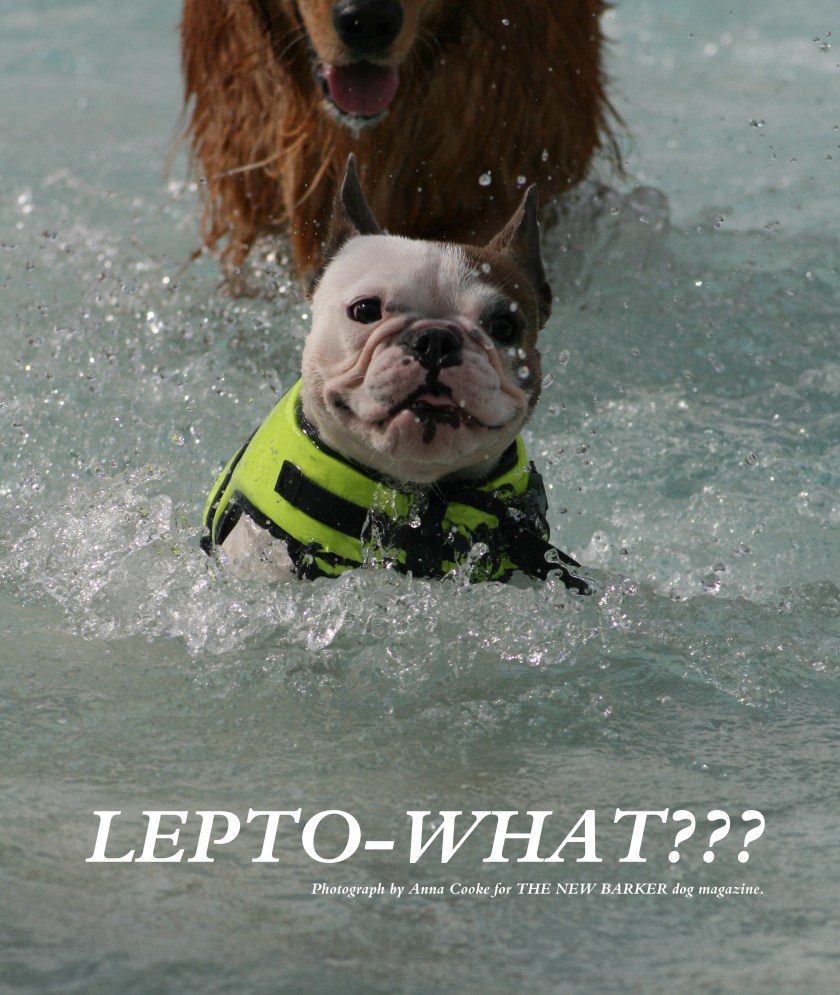
It may be a rare bacteria, but it is ever-present in Florida.  Dr. Baird, of Country Oaks Animal Hospital in Palm Harbor, weighed in on Leptospirosis for The New Barker dog magazine, a year ago in the Spring 2016 issue. It is just as relevant today,  as cases of Leptospirosis is rising.

Leptospirosis, a disease common to many mammals, is caused by a type of bacterium called Leptospira. It seems to be on the rise in dogs the last few decades and has shifted from a rural disease to a suburban and even urban problem. Dr. Carsen Brandt of the Emergency and Critical Care Service at the University of Florida’s College of Veterinary Medicine, has reported a tenfold increase in cases since 2013. There have been fairly recent outbreaks in Fresno, California and Denver, Colorado. Dr. Richard Goldstein of the Animal Medical Center in New York City says he sees cases of Lepto every week, including in dogs that have never left Manhattan. So much for the image of this as a rural disease.

lepto_post_thenewbarker

A typical scenario goes something like this: A raccoon urinates on the grass in a suburban yard or in a puddle at a park during the night. A dog then sniffs or licks at that curious odor while out for a walk the next day. Bingo! The dog has now been exposed to one of the eight strains of Leptospira bacteria that can cause Leptopsirosis in the dog. The bacteria quickly begin to replicate and move into various target tissues such as the kidneys, liver, spleen and central nervous system. The infected dog typically begins to show signs of illness within 7 days of exposure. The severity of the illness can vary considerably, from mild and vague symptoms to acute kidney failure and fairly sudden death.

So, what other wildlife carry these Leptospira bacteria in their urine? In addition to the ever-present raccoon, mice and rats are common carriers of Leptospira and this includes the ubiquitous wood rats and citrus rats that populate most of Florida. The opossum, skunk, deer, cow and pig can carry other infectious strains of Leptospira bacteria. There is some question as to whether squirrels are also carriers for Leptospira.

If a dog contracts Leptospirosis, what happens next?

Unfortunately, the clinical symptoms of the disease are not very distinctive, making diagnosis trickier. The affected pet will usually be lethargic and have a poor appetite, sometimes showing signs of a fever. The majority of affected animals will have some vomiting and about a third will have diarrhea and weight loss. None of this is terribly specific and it sounds like many other illnesses. Routine lab tests may show significant abnormalities in the urinalysis, as well as the kidney and liver values. None of these are terrifically specific either, but it does start to help narrow the diagnosis list. At this stage, the veterinarian is likely looking to test for Leptospirosis. The older Lepto test can take up to a week and won’t catch every patient. A newer type of test, an Elisa test, can be run right in the hospital in under 30 minutes. It’s still not perfect, but it will detect many patients right away. A patient with these symptoms is likely already on intravenous fluids and medication to help with the vomiting and discomfort. A diagnosis of Leptospirosis indicates a need for very specific antibiotics as not all antibiotics will do the trick. If IV fluid support and the appropriate antibiotics are started in a timely manner, the prognosis is good and most patients (80-plus percent) will recover. If it takes longer to diagnose due to the vague symptoms or a delay in seeking medical care, the dog may suffer kidney failure, but many can still be saved with dialysis.

Did I mention that you can catch Leptospirosis too? Yes, it is actually one of the most common infectious diseases in humans worldwide. Thankfully, it is not common in humans in the U.S., at least outside of Hawaii. The odds of catching it directly from your dog are pretty slim, but if your dog has been diagnosed with Leptospirosis, your vet will give you detailed instructions on methods to protect yourself and family. You are far more likely to catch it from swimming in rivers, streams or walking through swampy water. In 2005, 44 out of 192 adventure racers in Tampa (23% of the participants) caught Leptospirosis from running through swampy water. There was an earlier outbreak in Illinois in Triathlon runners. Dogs can contract it directly from contaminated water as well.

Given the large population of potential wildlife carriers and the difficulty in diagnosing the disease early, prevention is a more prudent approach in the areas where Leptospirosis is a risk. The older vaccines (1970’s and 80’s) carried a higher risk of vaccine reaction and only covered two strains. Because of this, they had fallen out of favor in that era and were used only in the higher risk rural areas. Leptospirosis was labeled a non-core vaccine to use only for “at risk” populations. But the definition of which dogs are at risk seems to have shifted significantly in the last decade or two. The rural outdoor large breed dog that was the poster child for Leptospirosis in 1985 is now a fluffy suburban or urban Shih Tzu or Cocker Spaniel. We currently have Leptospirosis vaccines that protect for four strains. They have a much lower risk of vaccine reaction than the older vaccines – and are more highly purified as vaccine manufacturing technology has evolved over the last 30 years. Some internists believe that even though our current vaccines only cover four of the Leptospira serovars, there may be cross-reactivity and some protection from the other infective strains as well. Leptospirosis is very uncommon in vaccinated dogs, regardless of the strain or serovar of Leptospira bacteria involved. It is a series of two doses given 3-4 weeks apart and then yearly boosters.

If your pet tends to be sensitive to vaccines and you’re worried they may react, have this administered separate from any other injectable vaccines. The more vaccines given in one day, the higher the risk of a vaccine reaction, regardless of which specific vaccinations are given.

Given the changes in Leptopsirosis over the last few decades, from the shifts in which strains are causing disease and the populations of dogs being affected, it is time to rethink our approach to managing this dangerous disease. The vaccines are more protective and less reactive than ever before and our suburban house dogs are at a higher risk than we believed possible even twenty years ago. If your dog is not already protected from Leptospirosis, it may be time for a conversation with your veterinarian about the risk factors in your specific area and whether vaccination is appropriate for your beloved dogs. I can assure you that mine are vaccinated against this potentially deadly disease. Raccoons, opossums and citrus rats are rampant in my suburban neighborhood and the risk of potential exposure is real. And all too scary to ignore.

For more on the subject, here is a recent video from CBS Miami.

THE NEW BARKER VETERINARY ADVISORY BOARD INCLUDES: Dr. Elizabeth Baird, Country Oaks Animal Hospital/Palm Harbor; Dr. Mark Brown, Central Animal Hospital/St. Petersburg; Dr. Eddie Garcia, Urgent Pet Care of South Tampa; Dr. Shawna Green, Medicine River Animal Hospital/Madeira Beach; Dr. Timothy Hodge, Harbourside Animal Hospital/Downtown Tampa and Cross Creek Animal Medical Center/Tampa; Dr. Steven Lewis, Davis Island Animal Clinic; Dr. Gregory Todd, Animal Hospital of Dunedin.

“If You See A Risk And Walk Away…

Then hope you never have to say, I could have saved a life that day, But I chose to look the other way.” From a poem by Don Merrill, “I Chose To Look The Other Way.”

by Anna Cooke, Editor-in-Chief of The New Barker dog magazine.

We have a problem in this state. Call it whatever you want: pet overpopulation. Blame it on the irresponsible public, if you’d like. It has reached epic proportions in Miami-Dade. Law enforcement and government officials are turning the other way, saying it’s not their job, not in their pay grade, not in their circle of knowledge.

Small bands of animal advocates are stepping in, but it’s only a bandaid. The problem is growing, and dogs are dying as a result.

Dogs are being dumped in an area known as the Redland Rock Pit. Volunteers with organizations like the Redland Rock Pit Abandoned Dog Project are trying to help the dogs by either capturing or feeding them have witnessed cars driving up, doors opening to let a dog out, then driving away. In one heartbreaking scene that played out just last week, a German Shepherd Dog chased after his owner’s car. The dog stood on the corner as the white car took off. A volunteer with Racing 4 Rescues coaxed the dog, now named Brady, safely into her car. Racing 4 Rescues volunteers were already in the area with the goal of pulling a momma (another German Shepherd Dog) and her two pups to safety.

momma_looking
Momma and her two pups in the Redland Rock Pit area. Photography by Jaime Wald Seymour-Newton of JSN Photo/Animal Rescue.


momma_two_pups
Her puppies were pulled. But, momma eluded volunteers with Racing 4 Rescues.

Miami-Dade Animal Services is crowded – at capacity. Same story, different town. This, in spite of a grand opening in June 2016 of the brand new Miami-Dade Animal Services Pet Adoption and Protection Center. “The new Pet Adoption and Protection center is a significant accomplishment for our pet loving community and will help Animal Services continue to save lives,” said Miami-Dade Mayor Carlos Gimenez. “We built the best facility to help ensure every pet gets adopted, offer more low-cost spay/neuter services and enrich our life-saving programs,” he added.

Yet, in a response to the Redland Rock Pit problem, the Mayor sent this email last year, around the same time: “The shelter has rescued over 1100 strays from the Redlands/Homestead/Florida City area in this time period (three years). ASD continues to stand ready to respond to any issues identified by volunteers and asks all individuals to provide specific addresses and locations so that they can respond and follow-up on stray animals or cruelty issues.”

Mayor Gimenez, emails and phone calls are going unanswered. The dumped dogs, many of whom are unaltered, are left to fend for themselves. They are breeding, adding to the problem. Cruelty issues include dogs being sacrificed in Santeria rituals. Death by poisoning, or from being hit by cars. Starving to death.  Have you seen some of the cruelties, Mayor?

Welcome to Miami, Florida (warning – graphic images within this video)

Meanwhile, people and businesses from outside your community are coming in to help, donating time, services and food. Resources that could be used to help shelter pets and the pet overpopulation problems in their own communities.

food_pfw
Food, donated by Pet Food Warehouse of St. Petersburg, is loaded onto a truck bound for Miami.
more_food
Yoho Automotive & Towing, owned by Danielle Yoho – also the founder and president of Racing 4 Rescues.

But, your situation, Mayor Gimenez, has moved people to want to help, because it is a problem that belongs to all of us. And yet – no word from anyone in your offices, Miami-Dade Animal Services or law enforcement. Tell us, please, what should your constituents do? What can we, as concerned Florida animal advocates, do? We would love to speak with you. We’d love to hear your take on the situation. It is only going to get worse. My email address is anna@thenewbarker.com

Contact the office of Mayor Carlos A. Gimenez: mayor@miamidade.gov Call 305.375.1880.

Miami-Dade Board of County Commissioners:

District 1 – Commissioner Barbara J. Jordan: district1@miamidade.gov; 305.375.5694

District 2 – Commissioner Jean Monestime: district2@miamidade.gov; 305.375.4833

District 3 – Vice Chairwoman Audrey M. Edmonson: district3@miamidade.gov; 305.375.5393

District 4 – Commissioner Sally A Heyman: district4@miamidade.gov; 305.375.5128

District 5 – Commissioner Bruno A. Barreiro: district5@miamidade.gov; 305.643.8525

District 6 – Commissioner Rebeca Sosa: district6@miamidade.gov; 305.375.5696

District 7 – Commissioner Xavier L. Suarez: district7@miamidade.gov; 305.669.4003

District 8 – Commissioner Daniella Levine Cava: district8@miamidade.gov; 305.375.5218

District 9 – Commissioner Dennis C. Moss: DennisMoss@miamidade.gov; 305.375.4832

District 10 – Commissioner Javier D. Souto: district10@miamidade.gov; 305.375.4835

District 11 – Commissioner Joe A. Martinez: district11@miamidade.gov; 305.375.5511

District 12 – Commissioner Jose “Pepe” Diaz: district12@miamidade.gov; 305.375.4343

District 13 – Chairman Esteban L. Bovo, Jr.: district13@miamidade.gov; 305.375.4831

brady
Brady, the dog left behind in front of witnesses at Redland Rock Pit, is in the caring hands of volunteers at Racing 4 Rescues. He has tested HW negative and is receiving treatment for skin issues.

What’s So Super About Sunday?

This Sunday in America is Super Bowl Sunday. It’s the New England Patriots vs. the Atlanta Falcons. Earlier this year, Michael Vick made a triumphant return to the Georgia Dome, riding onto the field in a convertible to a raucous ovation. According to a story in USA Today, Vick received by far the loudest ovation from the sellout crowd of 70,835 during a ceremony honoring the final regular-season game at the team’s home of 25 years. This, despite an online campaign calling for the Falcons to revoke their invitation over a 2007 dogfighting case that sent Vick to prison for nearly two years. A decade after his final game with Atlanta, the animosity that Vick’s name once stirred among Atlanta fans appeared to have turned to forgiveness. Not one boo or jeer was heard from the crowd.

The End Of An Era? “There are a lot of people who forgave me,” said Vick before the game. “It gives me another opportunity to show a different side of myself. I’m just thankful I have a lot of supporters.”

And this from Arthur Blank, Falcons owner, “Mike obviously has a great history with us, a great history with the franchise, an important player in our history. Michael represented an important part of my ownership period. I think our fans, based on the response I saw and felt, I think our fans were excited to have him as well.”

Gone But Never Forgotten. Two dogs from Vick’s dogfighting ring Bad Newz Kennels passed away  this month. Best Friends reported that Denzel died on January 10, 2017, nine years after he came to live at the sanctuary.

denzel-dr-patti-vicktory-dog-1468
Denzel with Best Friend veterinarian Dr. Patricia Patterson.
alyssa-denzel-vicktory-dog-1629mw
Dogtown caregiver Paul Lindley with Denzel.


From Denzel’s obituary, Best Friends wrote: “Denzel was a fighter, but not in the way that NFL player Michael Vick wanted him to be. This brave dog fought against the trauma of his past to find happiness and friendship at Best Friends Animal Sanctuary. He also fought against serious health issues that threatened to take him down, time and again. He suffered from a strain of the blood parasite babesia, which is spread among dogs forced to fight by way of bites. It can be managed but not cured, and each bout takes an increasing toll.”

oscaradoption
Oscar and Rachel Johnson.

Another Victory Dog rescued from Bad Newz Kennels in 2007, passed away on January 15. Oscar lived with Rachel Johnson since 2012. This was posted on Oscar’s Facebook page: “Friends, on Sunday, I let Oscar go. I’ve watched his bad days start to overshadow the good. So Sunday, we had breakfast in bed, read and cuddled, went to the drive-thru for cheesy burgers…” Oscar’s Facebook page is here.

Michael Vick’s playing days are over. “I’m very content with my career and what I’ve been able to accomplish. I’m ready to move forward in life.” Vick has recently expressed an interest in coaching.


Treat Me Right.

Rawhide is a dangerous treat, given unknowingly by pet parents to their dogs. It is not, as many folks believe, the by-product of the beef industry nor is it made of dehydrated meat. It is actually the by-product of the leather industry. Producing rawhide begins with the splitting of an animal hide, usually from cattle. The top grain is generally tanned and made into leather products, while the inner portion, in its “raw” state, goes to the dogs. Harmful chemicals, glue and paint are added to the product. A brief 4-step explanation below this illustration describes how the actual process transforms the hide to the dangerous chew stick. And, below the explanation, we’ve included some safer, healthier treat option suggestions (vegetarian option as well).

deadliest_chew_toy

STEP 1: Normally, cattle hides are shipped to tanneries for processing. The hides are treated with a chemical bath to help “preserve” the product during transport to help prevent spoilage.

Once at the tannery, the hides are soaked and treated with either an ash-lye solution or a highly toxic recipe of sodium sulphide liming. This process will help strip the hair and fat that maybe attached to the hides themselves.

The hides are then treated with chemicals that help “puff” the hide, making it easier to split into layers. The outer layer of the hide is used for goods like car seats, clothing, shoes, purses, etc. But, it’s the inner layer that is needed to make the rawhide, and other things like gelatin, cosmetics, and glue.

STEP 2: The post-tannery stage: Hides are washed and whitened using a solution of hydrogen peroxide and/or bleach; this will also help remove the smell of the rotten or putrid leather. (Research also shows that other chemicals maybe used to help the whitening process if the bleach isn’t strong enough.)

STEP 3: Now it’s time to make these whitened sheets of this “leathery by-product” look delicious. So, here is where the artistic painting process comes in.

Basted, smoked, and decoratively tinted products might be any color (or odor) underneath the coating of (often artificial) dyes and flavors. They can even be painted with a coating of titanium oxide to make them appear white and pretty on the pet store shelves.

The Material Safety Data Sheet reveals a toxic confection containing the carcinogen FD&C Red 40, along with preservatives like sodium benzoate. Tracking the effects of chemical exposure is nearly impossible when it’s a matter of slow, low-dose poisoning.

STEP 4: How does it last forever? Because the FDA does not consider these chews to be food, it’s a free for all when it comes to the manufacturers of these leather strips, and the products they may want to add to these chews, to get them to last forever. Any sort of glue may be added here to help ensure they never come apart.

When tested: Lead, arsenic, mercury, chromium salts, formaldehyde, and other toxic chemicals have been detected in raw hides.

Finally, it’s time to package and attach all the glorious marketing labels to the product. The fine print warning is attached with some rawhide products:  “Choking or blockages. If your dog swallows large pieces of rawhide, the rawhide can get stuck in the esophagus or other parts of the digestive tract. Sometimes, abdominal surgery is needed to remove them from the stomach or intestines. If it isn’t resolved, a blockage can lead to death.“

How do proactive veterinarians feel about these chews? This is what world-renowned veterinarian Doctor Karen Becker has to say on the matter:

“The name ‘rawhide’ is technically incorrect. A more accurate name would be processed-hide, because the skin isn’t raw at all. But the term “rawhide” has stuck. Rawhide chews start out hard, but as your dog works the chew it becomes softer, and eventually he can unknot the knots on each end and the chew takes on the consistency of a slimy piece of taffy or bubble gum. And by that time your dog cannot stop working it — it becomes almost addictive.At this point, there’s no longer any dental benefit to the chew because it has turned soft and gooey, and, in fact, it has become a choking and intestinal obstruction hazard.“

An investigation by Humane Society International stated in their report, “In a particularly grisly twist, the skins of brutally slaughtered dogs in Thailand are mixed with other bits of skin to produce rawhide chew toys for pet dogs. Manufacturers told investigators that these chew toys are regularly exported to and sold in U.S. stores.”

Healthy, Safer & Delicious Treat Alternatives, as Suggested by THE NEW BARKER dog magazine.

Treat_Trio

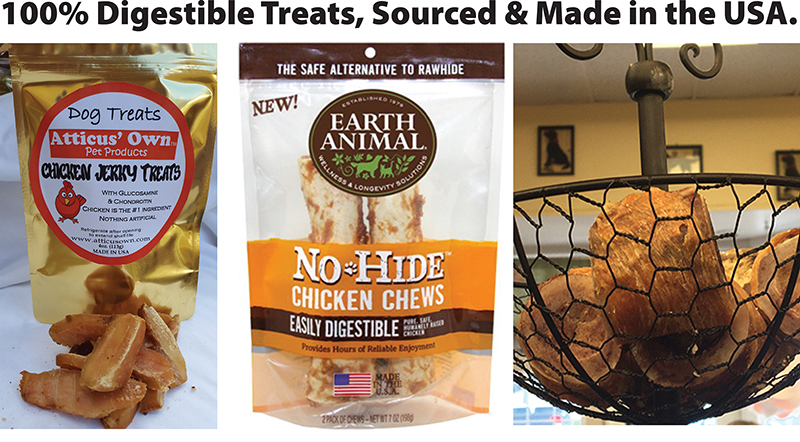
  1. Atticus’ Own Pet Products – a variety of delicious treats, chock full of all things healthy, like glucosamine and chondroitin. A super treat to keep you dog’s hips and joints healthy. The jerky is made from USDA-certified, all-natural chicken breast from family farms right here in the USA. In fact, Atticus’ Own Pet Products is headquartered right here in Florida. Grain free. No wheat, corn, soy or additives. In addition to the chicken jerky, Atticus’ Own offers Fish Jerky treats “like heaven in a bag…” A great source of omega-3’s. For dogs and cats. Follow the adventures of Atticus’ Own Gibbs and Sunshine at Atticus’ Own Pet Products. Better yet, order up some treats at http://www.atticusown.com
  2. Earth Animal No-Hide Chicken Chews – 100% USA-sourced chicken, made in the USA.  The chicken has been carefully rolled, cooked and uniquely dried for a one-of-a-kind chew. No hormones or additives. Also available: Beef and Salmon. You’ll find these delicious dog treats at fine Florida dog stores such as Dog Mania & Cats in Dade City.
  3. Al CaBONES – We’ve watched customers load up on these treats, as their dogs just love them. The treats are actually beef marrow bones wrapped in chicken. No additives, preservatives or fillers. All goodness, sourced and made in the USA. Bada bing, bada boom. Trust us. This is a treat your dog can’t refuse. Available at fine independent pet retail stores including Fluffy Puppies in Clearwater and Pet Food Warehouse in St. Petersburg. einsteinpets_ilovelucy
  4. Einstein Pets – What about an alternative for the vegetarian lover?  Einstein Pets uses only ingredients that matter. Ingredients like oats, rich in nutrients. Veggie Time dog treats are made with real carrots, turmeric and chia which promotes heart and liver health. This Sarasota, FL company is turning heads in the pet treat industry with awards from Pet Product News and the Best Brand award from American Choice Awards. You’ll find them at fine independent pet retail stores including Wet Noses, Sarasota; Bark Life, Seminole; Downtown Dogs, Tampa’s Hyde Park; The Modern Paws, Tampa; Wag Natural Pet Market, Tampa’s Davis Island; Earthwise Pet Supply in Gainesville, Valrico, Naples and Jacksonville Beach.

Finally – always supervise your pet when giving any chew treats. It’s also a good idea to check with your veterinarian, especially if your dog is on a special diet.

Sources: Pet nutrition blogger Rodney Habib, Planet Paws, The Whole Dog Journal and The Bark.

THE NEW BARKER dog magazine, established in 2006, publishes quarterly. Each cover of THE NEW BARKER dog magazine features an original work of art by a different Florida artist. For more information, visit http://www.TheNewBarker.com


What Do Our Dogs Think Of Us?

The following, by Anna Cooke, first appeared as a feature in the Spring 2011 issue of The New Barker dog magazine.

Many of us who live with dogs probably don’t really want to know what they’re thinking. To know may bring in the realities of life like dealing with what they think of us. Who needs that extra burden? We already have to cope with what our parents, siblings, significant others and business associates think of us. It’s one of the reasons we love dogs so much. We believe everything they have to say to us is said through their eyes. And of course, it’s nothing short of adoration and unconditional love, right? Our dogs are sentient beings with a conscience and feelings. They are intelligent and many people believe, they live with a purpose and set goals. The Reverend Nedda Wittels, M.A., M.S. believes that dogs make life choices. Maybe that’s why we don’t really choose dogs, rather they choose us.

It seems that every one in the animal world can tell a story of how they loved and lived with animals since they were very young. Jo Maldonado is not much different. As a young girl she would try to save the fish her father caught. In her teens she took dog-training classes and won ribbons with her devoted companion Rex; in her 20’s she rode horses and in her 30’s and 40’s she volunteered with German Shepherd Rescue in Pennsylvania doing canine assessment and fostering.  And, for almost 30 years she lead a successful career as a publicist, owning her agency. But it wasn’t until she and her husband moved to Florida and her children had moved on with their lives, that a continuous odd series of events forced her to change her life’s path. Volunteering at local shelters and seeing the infinite line of discarded animals, and almost losing one of her dogs, led Jo to follow her animal passion and give back to the community.

“Three years ago I realized that I was not following my soul’s purpose, not fulfilling what I was supposed to be doing with my life. I was hospitalized twice, broke my hip, had two surgeries, was in two car accidents and almost lost two members of my family.” But it wasn’t until a series of events involving animals that Jo finally listened to what some other worldly force was trying to tell her. There was the black bear that began appearing in her driveway on a regular basis. Then hundreds of crows began following her around. A woodpecker began “talking to her.” And one day the door to her china cabinet flew open spewing forth china from past relationships.

Jo began reading every book on animal communication and angel healing that she could find. After she completed several classes on the same subject matter, it became clear to Jo that her purpose in life was to work with her first love: animals. Her Centers for Animal Therapies is based on the theory that both sides of the brain are necessary to truly communicate with the animal world. “The left side of the brain is the fact based, scientific side, while the right brain is intuitive, innate and natural,” said Jo.
Animal communicators speak with pet companions who live with humans, oftentimes facilitating a change in varied situations. Why is the cat spraying? Why is the dog cowering or food aggressive? Each situation may have something in common with another situation going on within the pet’s home. For instance, when there is a fear problem there is generally a kidney problem that results in uncontrolled urinating in the house. By communicating with the dog, Jo can show their humans the relationship their dogs would like to have with them. How we live with our dogs can result in a positive or negative affect on them and ourselves.

No telepathic communicator is one hundred percent accurate all the time. The reasons for error may include a weak telepathic connection; the human client has emotional and/or mental blocks about the situation; or the dog may be choosing not to communicate fully. Reverend Wittels adds that each telepathic communicator can bring their own emotional and mental baggage to the situation: belief systems, expectations, past experiences or emotions. A good animal communicator will know how to leave their baggage behind in order to be a clear channel.

As with any professional, it’s good to have a rapport with them before delving into this area of you and your pet’s lives. We had been working and speaking with Jo for the past year on various projects. One thing lead to another, and it seemed almost a natural progression to agree to let Jo communicate with our brood: Zoe, a 13 year-old Cockapoo, her 11 year-old niece Chloe, our adopted MinPin Rita, and our most recent adopted addition, Dougie (pronounced Doogie), a two year-old Scottish Terrier.

There were four dogs and so it took Jo a little longer to assess the situation and discern their different personalities. “I took a deep breath before looking at each photograph you sent of the dogs,” said Jo, who told us she took classes to learn how to communicate through the eyes of an animal. “But dogs don’t like for you to look directly into their eyes. That is why I like to use photos,” she told us. “I pick up the physical characteristics and I pick up the soul. I try to get through the layers in order to connect and communicate.”

She began first by saying that each of these four dogs represents a characteristic in each human member of our household, in this instance a husband and wife. “It’s up to you to figure out those characteristics of you,” said Jo. From the pictures, Jo described the aura of energy emanating from each dog, which assisted in giving the following information. “Your life to them seems scattered. You’re in multiple places at one time. You seem to be going from point A to point B in an instant. You are way too busy and they’re picking up on that. I received a strong sense from the dogs that you are very tired,” Jo said.

For many dogs, a situation such as the one Jo described could be confusing to them, causing problems such as becoming the take-charge being within the household. The Alpha dog if you will. But in this instance the dogs all seem to have adjusted. “Each one of them knows their role within your family,” she told me. “And,” she added, “Your dogs are all very funny. They are just all real characters.”

Dougie

Dougie, the two-year old Scotty, knows exactly what he is supposed to do. He looks around at his humans and the other dogs and wonders why they don’t know what they’re supposed to be doing? He knows he is a purebred. In fact, somewhere in his lineage, there is a champion or two. So he demonstrates quite a lot of pride as if to say, “Of course I can do that. It’s exactly what I am supposed to do.” Jo said that if she were to humanize Dougie, he would be a career fisherman. “I could see him bellying up to the bar at the end of each successful fishing excursion,” she said. Dougie is a highly intuitive dog and would be excellent in agility. “Oh, he would be a natural,” said Jo.

ChloeTastesOrange

Chloe, the 11 year-old Cockapoo.“Dougie was pointing at Chloe when I was communicating with him. He told me that while he feels very grounded, Chloe is constantly running around in circles, figuratively. Yet, she thinks she’s the one that has it all under control. But she doesn’t.” Jo explained that she sensed a bit of a Napoleonic complex in Chloe. She is constantly reminding everyone that she is in control; she is in charge, but she isn’t, of course. “If she could talk to you, she would be a tattle-tail and rat everyone else out. Chloe does feel confused most of the time, but thinks that’s okay because her humans are confused and running around in circles too.” Chloe communicated with Jo in such a rapid-fire way that she was almost stuttering. “I have too much to do and too little time in which to do everything,” is what Chloe communicated to Jo. “Interestingly, Chloe and Dougie have similar personalities. If you were to put Chloe in another pack, the other dogs would find her annoying. But she is well-accepted in your pack.”

Zoe_Flowers

Zoe, the 13 year-old Cockapoo. “She tends to believe she is the matriarch of the family. I could sense her little quirks. She does like her food and is set in her ways. She has a sense of entitlement, that whatever she gets, the others should not be allowed to have because they are not as deserving as she is. She can get snappy, only to let others know that she does not approve of what they are doing. But she would never display any kind of aggressive behavior towards anyone, human or animal, within her pack.” Jo spoke to me directly about the next point. “Anna, Zoe feels that the two of you are one. She is content to follow you and be wherever you are.” And then Jo added, “Oh, I’m hearing from her again that she really does love her food though. She likes that crunchiness and soft combination you give her.”

Rita_Profile

Rita, a five year-old MinPin, found wandering the streets. “I like Rita very much. She has this I-am-cool-as-a-cucumber demeanor. She likes to check things out, like a private detective before getting all excited, unlike the rest of the dogs in your pack. She smirks at the other dogs as if they’re ridiculously out of control. If I were to humanize Rita, she would have red hair, red-painted fingernails and a cigarette dangling from her mouth. She’s like one of those cool people you may see at a party. You don’t know them, but you walk up to them anyway and compliment them on the shirt they’re wearing. Instead of saying thank you, Rita would answer, ‘Huh. You don’t really give a damn about my shirt now, do you?’”

So it appears we have an odd little pack, with a funny mixture of personalities, each one of them strong in their own way. They all have their quirks but everyone gets along, albeit grumbling along the way. Most important, they all seem to be functioning as a pack and each feels they have jobs, which is a good thing. “They are all who they are as long as they’re all with the two of you. And as long as you make sure what your expectations are of them, they’re all pretty happy,” Jo said.

Brat_Pack
The Cooke Brat Pack, photographed at Steinhatchee Landing Resort, soon after Jo Maldonado’s reading.

The dogs were all in agreement with one special request. “What they would like you to do is schedule more family time with them, altogether. They would prefer daily, but they’ll settle for weekly jaunts to a big fenced in field or park to run around.” I told Jo that we have a big backyard and take them out many times throughout the day. “No,” she answered, “They want family time. They want everyone in the car at the same time, to go somewhere together. And Chloe said not to forget the treats. That was a very strong communication to me. They want you to think about nothing but the present during these field trips with them.”

QUOTES:

“Somewhere in time, an animal’s soul has made a pact with the human’s soul to help them. I look at what I am doing as my privilege to be able to work with two beings, human and animal, to decipher what that help might be,” Jo Maldonado.

“People will spend hundreds of thousands of dollars to help their pets while totally ignoring the obvious to help themselves. We humans must recognize that we need to change to improve our own health and well-being. Through the voice of their pets, a person can help themselves,” Jo Maldonado.

“I’ve never found an animal who communicated to me that they hated their human. I know instantly when I go into that animal that there is a need for them to express themselves as to why they are here,” Jo Maldonado.

Jo Maldonado can be reached at jo@cat-edu.com or 386.279.0257


Santa Claus Uses A Shopping Guide.

Yes, it’s true. Even the greatest gift giver in the world does the research to make a list. For dogs and dog lovers on his list, he’s been known to refer to The New Barker dog magazine for ideas. So take heart, gentle human gift giver – for the dog and dog lover on your list, who seem to have everything they need (each other), here are some unique ideas from The New Barker, of course.

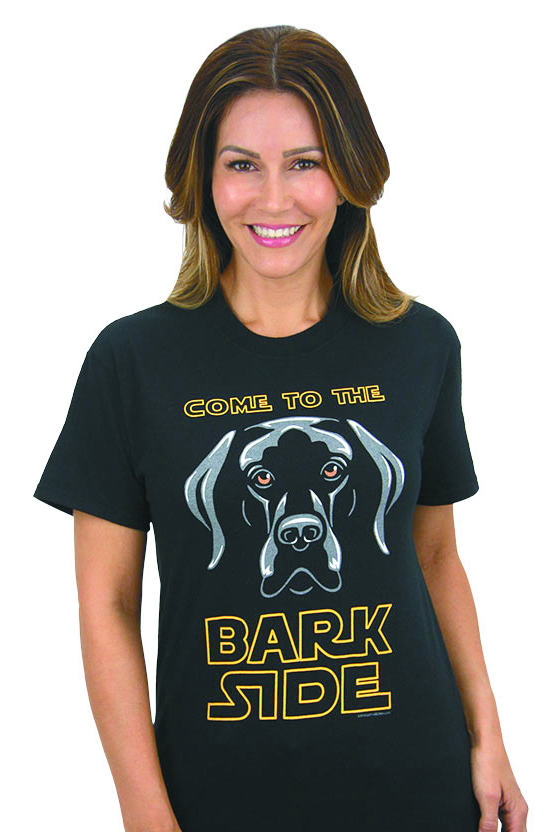
Dog lovers with a sense of humor. Clothing, like this t-shirt that plays into the Star Wars craze right now, with just the right touch of dog. Available at The Doggie Door in Winter Park (407.644.2969). Or maybe the dog lover on your list is into craft beer. How about this hoodie, available at Pet Food Warehouse in St. Pete (727.521.6191) and Earth Pets Organic in Gainesville (352.377.1100).

BarkSide_WomanDogBeers_Hoodie

Dog lovers with a sense of style. Nothing says ‘put together’ like the accessory of a scarf. The fashionista on your list will appreciate this cosmo-PAW-litan scarf with dog silhouettes. Available in assorted color combos of grey/blue, grey/peach or grey/light green. One Lucky Dog in St. Pete (727.527.5825).

21215-20_1_

Dog lovers who are tea connoisseurs. Add a little whimsy to their tea and crumpets ritual with these whimsical hand-painted ceramics. Cats In Bloom Tea For One tea pot and mug designed by artist Sharon Bloom. Catzilla Covered Butter Dish designed by artist Candace Reiter. Both are available at Pawsitively Posh Pooch in St. Pete (727.892.9303).

TeaButterDish_Cats

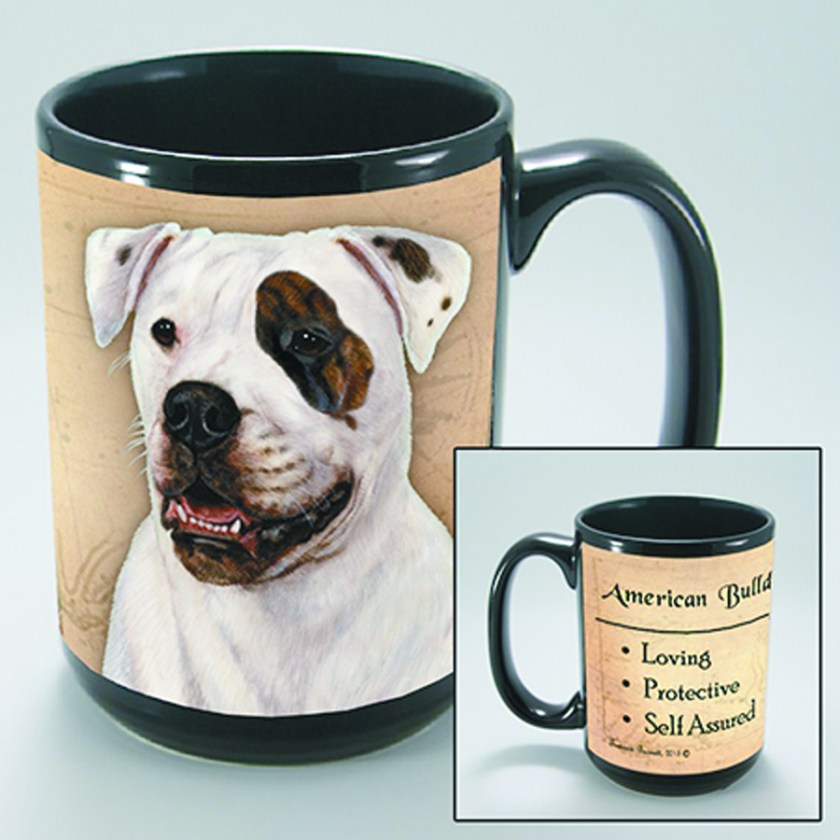
Dog lovers who insist on at least one cup of java before heading out for their power dog walk. How about a breed-specific coffee mug? Beautifully hand-painted, the details bring out each breed’s characteristic. Available at Fluffy Puppies, Clearwater (727.446.7999).

Coffee_Mug

For the homebody dog lover. How about dog art, underfoot with a machine washable accent rug? They’re so reasonably priced, you’ll want to buy one (or two) for yourself. Each rug is artist-inspired. The bright colors won’t fade through many washes and will stand up to heat, cold and sunlight. Available at Pet Food Warehouse, St. Pete (727.521.6191).

Dog lovers who sleep with dogs. Nothing shows off someone’s sense of humor, style and love of home than a well-made bed, accessorized with dog-themed pillowcases. 300 thread count for extra softness. Made in the USA. Available at One Lucky Dog, St. Petersburg (727.527.5825) and Sweet Sage Cafe & Boutique, North Redington Beach (727.391.0453).

Dog lovers who love to dress their dogs (big and small). EZ Reflective Royal Elegance Harness Vest. No choke design – pulls on chest, not the neck. Designed for easy on/easy off (not over the head). High quality quick release buckle with reinforced D-ring and reflective safety striping. Available at Fluffy Puppies, Clearwater (727.446.7999). For big dogs, visit Dade City’s Dog Mania & Cats to see their line of unique, hand-crafted clothing and accessories. Dressing up is not just for the little ones, anymore. Dog Mania & Cats (352.467.9622). Visit their beautiful new store on Meridian Avenue.

buy_dog_red_royal_elegance_smallfile_vest__60554.1412797698.1280.1280

For the dog lover who is also a romantic. You must see and touch this beautiful collection of vintage hinged trinket boxes to appreciate them. Made of sculpted resin, decorated with enamel and 24 karat accents; bejeweled with Swarovski crystal. Each one is worthy of holding precious keepsakes. Available at Pawsitively Posh Pooch, St. Petersburg (727.892.9303).

IMG_3731

For the practical dog lover. There’s no shame in being practical, and practical doesn’t have to be boring, right? Anyone who has ever owned a Dog Gone Smart Dirty Dog Rug has gone back to purchase more. We love using them just outside the shower area for a spa-like feel underfoot. Millions of microfiber strands create an extra large super-sponge for use just about anywhere in your home. Place them in crates; under food and water bowls to keep water and kibble in place. Plush, velvety soft and easy to wash. Non-slid backing helps it stay in place. Available at all the shops listed above as well as: Animal House, St. Pete (727.328.0503), Fuzzy & Furries, St. Pete (727.954.3952), Pet Supplies Plus, Pinellas Park (727.415.8016) & Clearwater (727.453.9131).

DogGonsSmartRunnerGo forth and shop, fellow dog lovers. You have now been properly advised, and Santa can’t hold a cookie to your super shopping powers.

We wanted to share a story that was first reported by the New York Daily News on Monday, December 17. The comfort dogs are able to bring is no surprise to dog lovers. The New Barker joins the nation in sending our thoughts and prayers to those who lost loved ones as a result of this tragedy.

Comfort dogs help ease pain of mourning Newtown Community. By Jennifer H. Cunningham and Adam Edelman for the New York Daily News. Photography is by Allison Joyce for the New York Daily News.

A pack of sympathetic groups bearing supportive canines spent much of Monday with bereaved Connecticut residents affected by last week’s Sandy Hook Elementary School massacre, providing children and adults alike with the cuddly comfort that only a four-legged friend can give.

The therapy dogs were brought in by at least three groups late Sunday to help kids and adults alike cope with last week’s horrific shooting in Newtown that left 20 first graders and six school officials dead.

Among the groups was the Hudson Valley Golden Retrievers Club, whose members spent the afternoon at a makeshift memorial near the town center, where both kids and adults in need of compassion stopped to pet and cuddle the dogs.

Mourning or otherwise devastated children and parents said that petting the dogs gave them relief from their sadness.

“I just love dogs, so whenever I’m around them, they make me feel better,” said 12-year-old Ryan Williams. “When they come over and you pet them you kind of forget about what’s happening for a little bit.”

Jenna Stuart, a school bus driver from Newtown, said the dogs were an enormous help to her four-year-old daughter, Kylie, who attends preschool at the Children’s Adventure Center in front of Sandy Hook Elementary and lost friends in the tragedy.

“I like the dogs because they made me happy,” said Kylie, after petting one on the head. “The dogs love me.”

Some residents, who weren’t directly affected by the bloodshed, found peace in simply bringing their own dogs to help others.

Sandy Hook resident Ann Mari Cioffi, a member of the Hudson Valley Golden Retrievers Club, brought her dog, Libby, 5, to comfort victims, at a memorial in the center of town.

“They’re just gentle, caring, kind and sweet. Cioffi said of the dogs. “They just seem to sense it. They just sense when somebody’s sad.”

Massachusetts- based K-9’s For Kids Pediatric Therapy Dogs was also among the groups sharing their tail-wagging buddies.

Crystal Wright, 52, of Becket, Mass., a dog handler with the group for Rhiku, a 5 year old Sheltie, said the canine had been easing frowns all day.

“Everyone likes to pet a dog,” she said. “It changes the mood. It kind of takes them away from what they’re going through for a moment. I think it’s helping. I think they needed it.”

Some canines even traveled across the country to help out.

Trainers from the Chicago-based Lutheran Church Charities, which has deployed its comfort dogs to other communities hit by tragedy in the past, brought in 10 to 15 Golden Retrievers and their handlers to Connecticut to help with the consolation efforts, Tim Hetzner, the president of the organization, said.

For information on becoming a therapy dog team with your dog, contact the following organizations: Therapy Dogs International: http://www.TDI-Dog.org; Delta Society: http://www.DeltaSociety.org; Therapy Dogs Inc.: http://www.TherapyDogs.com