There were a dozen dogs aboard the Titanic when it hit an iceberg and sank, 100 years ago, April 15. Three of the dogs, all on the smaller side, actually survived. Traveling first class with their owners, the dogs were kept inside their owners’ cabins instead of in the onboard kennel. A Pomeranian named Lady was saved by her owner Margaret Hays, who wrapped the dog in a blanket and sneaked her onto a lifeboat. Sun Yat-sen, a Pekingese owned by Henry and Myra Harper (of Harper & Row Publishing) and another Pom, owned by Elizabeth Rothschild, were the other two dogs who survived.
An exhibit at the Widener University Art Gallery in Chester, Pennsylvania, called “RMS Titanic: 100 Years” acknowledges that the other stories of the dogs did not have such happy endings. One story was of William Carter, a Philadelphia coal magnate who was traveling with his family, which included his two children and their two dogs, Lucy (a King Charles Spaniel) and an Airedale. In order to persuade his children to board a lifeboat, he told them the dogs were safe. The family survived, but the dogs did not. John Jacob Astor IV and his wife also lost their two Airedales, Kitty and Airedale. A Fox Terrier named Dog was reported lost in the tragedy as well.
But the most heartbreaking story was that of Ann Elizabeth Isham, who actually left a lifeboat in hopes of saving her Great Dane. She was found by rescuers several days later, floating dead in the water, still holding tight to her beloved dog.
The Titanic exhibit is produced and curated by J. Joseph Edgette, PH.D., professor emeritus of education and folklorist emeritus at Widender University. He is also an authority on the Titanic and said he was particularly touched by the dogs on the cruise. “There is such a special bond between people and their pets. For many, they are considered to be family members,” said Edgette. “I don’t think any Titanic exhibit has examined that relationship and recognized those loyal family pets that also lost their lives on the cruise.”
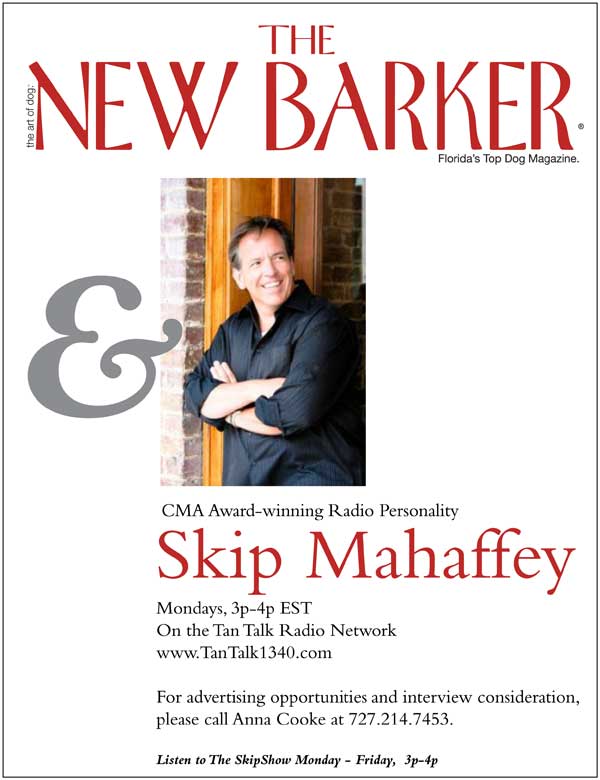
Be sure to tune in to The New Barker segment of The SkipShow with CMA award-winning radio personality, Skip Mahaffey on Monday, April 16. Our special guest will be comedienne and animal advocate, Elayne Boosler. We’ll talk to her most likely about four decades of bad hair days, why she thinks Facebook is a clocksucker, her upcoming Florida shows in West Palm Beach and Sarasota, and of course her Tails of Joy foundation. The SkipShow airs between 1p and 2p EST, and streams live on the internet.
By now, many of you have noticed: We didn’t have much of a Winter here in Florida. And, as a Floridian who truly loves tropical weather, I am certainly not complaining. But an unseasonably warm Winter in Florida does present other problems, mainly a proliferation of bugs. So, as we prepare to put out the Spring issue of The New Barker, we are gearing up to tackle fleas, ticks and other critters that will just plain bug us and our companion pets if we are not prepared. In our Dog HomeFront section, we’ll have tips and ‘todes on dog friendly landscaping.
The Spring issue of The New Barker will feature some amazing dogs at play and at work. And, thanks to our contributing rover reporters from all over the state, we’re featuring dog friendly events and stories from the Panhandle to the Palm Coast, Miami and the Florida Keys, Dunedin to DeLand. Our dog social calendar was pretty full this first quarter of 2012. And the next few months are shaping up to be ultra busy with dog events across the state. While we print a three month calendar in each issue, our online calendar is updated at least once a week. Be sure to sign up for Weekend PupDates, The New Barker email blast that goes out about two times a month, letting you know about the hottest dog friendly events, and venues in Florida.
The Spring issue will also feature opportunities to win dog friendly getaways, some pretty impressive gift items, and gift certificates at some of Florida’s favorite places to dine. As a lifestyle magazine, we will be featuring unique perspectives on the AKC Eukanuba National Championships, the Florida Classic Clusters in Brooksville, and of course our annual trek to New York City for the Westminster Kennel Club Dog Show. Oh, and find out how your dog could become our bikini-clad, pull out centerfold in the Summer issue.
One of our favorite feature pieces in the Spring issue involves Manatee County Animal Services, and their promise to be a No Kill community by the end of 2012. Thanks to their county commissioners, the public and folks like Chris Weiskopf, they are well on their way. Some other towns in Florida are working on following suit with Manatee County, while others are taking a wait-and-see attitude. Meanwhile, dogs continue to die in shelters across the state, despite the number of rescue groups willing to step up and help out. And while you might expect many of the deaths to be Pit Bull-related, count Yorkies, Dachshunds, Chihuahuas, Dalmatians and Boxers among the statistics. In this issue we welcome a contributing original feature from Nathan Winograd.
Thanks to the Humane Society of Manatee County and Realize Bradenton, we are bringing the creative team behind An Act of Dog to Florida. Meet Mark Barone and his partner Marina Dervan, and come see some of the poignant work Mark is painting. He has committed the next two years of his life to painting the portraits of 5500 dogs euthanized in shelters across the country. Why 5500? That is the average number of dogs euthanized – every single day in this country. The couple will be in Bradenton during The New Barker co-hosted The Artful Purpose Art Show, March 24. The show coincides with the Annual Paws in Motion walk on the riverfront for the Humane Society of Manatee County. And, both events take place in the same vicinity and general timeframe (8a-2p) as Downtown Bradenton’s Saturday Morning Farmer’s Market.
One last piece of business before I sign off and jump back on production. Since July of 2011, I have had the extreme pleasure of being part of a radio program produced by CMA award-winning radio personality, Skip Mahaffey. While I still get flummoxed and tongue-tied (thank goodness for Skip’s uncanny ability to recognize my deer-in-the-headlights look) we are having a lot of fun. Our live interviews have included Elvin Bishop, Nathan Winograd, Guy Gilchrist,Dr. Marty Becker,Victoria Stilwell and Aaron Tippin to name but just a few. Recently, we had a young man who was inspired by his Jack Russell to help raise money and awareness for Canine Cancer. When Spiro Cromwell’s dog, Jack was diagnosed with cancer, he was sad, but wanted to do something for all of the other dogs living with cancer. He became involved with the National Canine Cancer Foundation, and has raised a little more than $2,000 over the last two years.
Spiro, his mother Emerald and their new puppy Murphy visited with us in the studio for a live interview. At one point, we lost contact with the production booth and with Skip who was on Skype. Our producer came into the booth trying to figure out why our computers were not receiving a connection. Turns out, Murphy, the puppy that he is, chewed through the wires. Live radio – you just never know what’s going to happen next.
Spiro, upon discovering that his dog, Murphy chewed through the wires in the studio during the airing of The SkipShow with The New Barker.Spiro, Emerald and Murphy recently visited with The New Barker during the airing of The SkipShow radio program.
CBS RADIO Tampa Bay (WSJT-FM, WYUU-FM, WRBQ-FM, WQYK-FM and WQYK-AM), brings Pet-A-Palooza back to Coachman Park in Clearwater on Sunday, March 11th. The day is filled with pets, food, vendors, interactive booths, live music and more.
The goal of Pet-A-Palooza is to adopt animals and increase the awareness of the rescue causes in the Tampa Bay Area. This year, the Animal Based Charities’ Adopt-A-Thon Alley will be filled with over 30 rescues and shelters, see the fill list of shelters and rescues on below. We have also received a generous donation of 36,000 meals of Halo Spot’s Stew through Free Kibble, for the rescue groups involved in the event. Information on this donation can be found at play987.com/freekibble.
Entertainment and activities will include Twig the Skateboarding Sheltie and Puppy-in-Training Chili, The Upper Suncoast Dog Training Club, the Tampa Bay Lightning Rolling Thunder and the Tampa Bay Rays Street Team and Raymond. Plus, multiple performances from The Canine Stars, a world famous, world class group of dogs working who have been featured on Animal Planet.
Live music will fill the park all day long. There will also be an acoustic performance from American Idol Season 10 fan favorite, James Durbin, closing out the day at 4pm. James Durbin was known for “bringing heavy metal to the ‘American Idol’ stage” last season by performing Queen and Muse songs and then by singing onstage with metal legends Judas Priest during the final episodes. Durbin ultimately placed fourth on Season 10 of the ratings juggernaut, going that far due to his “rawk” edge, his unbridled emotion, his undeniable swagger, his powerhouse voice and his God-given talent, all of which meshed into a potent cocktail that allowed him to stand head and shoulders above a sea of pop singers.
Tickets are available through Ticketmaster or at Coachman Park on the day of show for $5, tickets can also be purchased, service charge-free at area business, a full list is available at CBSTampa.com/PetAPalooza. A portion of the proceeds will be donated to Animal Based Charities to support their efforts to find every one of our furry friends a happy home.
The History of Pet-A-Palooza:
The inaugural “Pet-a-Palooza” premiered on Saturday, April 15th, 2000 in Las Vegas and attracted over 4,000 pet lovers and 1,500 dogs. It has since grown to attract over 15,000 pet lovers and 3,000-4,000 dogs. Additionally, CBS RADIO Tampa Bay has worked with over 40 different animal rescue groups and non-profit organizations to adopt animals and increase the awareness of the rescue causes. Pet-a-Palooza has grown into a national platform across multiple CBS RADIO markets.
About Animal Based Charities: Animal Based Charities, Inc. is a 501(c)3 not-for-profit organization that supports Tampa Bay animal rescue groups. ABC’s mission is to support animal rescue groups with their fundraising efforts, media awareness and adoption event exposure. ABC provides the groups with these tools so they can concentrate on what they do best — rescue and adoption. You can find more information on Animal Based Charities, Inc. at www.animalbasedcharities.org/
Rescues Involved in Pet-A-Palooza 2012
ABC Animal Based Charities
All Dog Rescue of Florida
Animal Friends Society
Akita Rescue / A New Leash on Life
Boston Terrier Rescue of FL
CARES Brooksville Rescue
Cat Crusaders
Dalmatian Rescue of Tampa Bay
DARE To Rescue
Dunedin Doggie Rescue (Dog-eden)
English Springer Rescue America
Feral Fanciers of Polk County
Florida Big Dog Rescue
Florida Parrot Rescue
Friends of Strays Foster
Humane Society of Florida – Citrus County
Husky Haven of Florida
Internet Miniature Pinscher Service
League of Humane Voters-FL
Limbo Chihuahuas-Chi Mix-Small Dog Rescue
Manatee Doberman Rescue
PAWS Rescue Group
Pibbles To The Rescue
Pinellas County Animal Services
Pit Bull Happenings.com
Pet Pal Animal Shelter
Pug Rescue of Florida
RUFF; Rescued Unwanted Furry Friends
Rugaz Rescue
S.A.F.E. Saving Animals From Euthanasia Society of Florida
Save Our Strays
Siberian Husky Rescue of FL
Southeast Beagle Rescue
Suncoast Basset Rescue
Suncoast Seabird Sanctuary
We Care For Paws Foundation
Pet-A-Palooza 2012 is sponsored by Mastro Subaru and Halo: Purely for Pets. The New Barker is the official Dog Magazine of Pet-A-Palooza.
CBS RADIO, is one of the largest major-market radio operators in the United States. A division of CBS Corporation, CBS RADIO operates 130 radio stations, the majority of which are in the nation’s top 50 markets. CBS RADIO owns and operates WSJT, WLLD, WYUU, WRBQ, WQYK FM/AM in Tampa.
This Saturday, February 25 marks the fourth year The New Barker will be covering the Jack Russell Terrier Races at the beautiful Little Everglades Ranch in Dade City. What follows is an excerpt, which first appeared in the Spring, 2008 issue of The New Barker about these fine, funny, fearless little dogs:
On a cool, sunny, rather perfect day for a stroll, dogs and horses of a very special stripe were queuing up for much more than a walk in the park. Just north of Dade City, a spectacularly colorful dual racing event brought The New Barker dog magazine out of its urban confines, to cover the Little Everglades Steeplechase Jack Russell Terrier Races. The dogs compete on a 150-foot straight course that has several hurdles over the length of the track. We had no idea what we were in for, but from the looks of the crowd and the electric atmosphere, we knew it was going to be special. About an hour before post time, Jack Russell’s were everywhere, getting prepped for the upcoming heats—the excitement was palpable—and I needed to get close to the action.
The gentleman wore a baseball cap and dark sunglasses, and watched as I approached the Terrier racecourse. “You with the media?” he asked, very matter-of-factly. Still not quite accustomed to that question, and a little intimidated by his imposing stature, I answered, “I’m with The New Barker.” He chuckled and told me the best way to photograph a Jack Russell race was to aim the camera through the cut out where the dogs, chasing the lure, would be barreling through at the end of the race. He pointed at the ground-level opening he was referring to, which was about a foot in diameter. I would have a bird’s-eye view of the dogs running straight at me. However, it meant I would need to lie on the hay-covered dirt, precious camera propped up by my elbows, aim and shoot. As the dogs neared the entryway into the catch pen, I would have to use my own judgment as to when I would roll to one side to keep from being trampled by the crazed little guys. “They get pretty wild and don’t stop, so you’re going to have to move fast to get out of their way,” he said. Another thing I needed to be concerned with, he told me. The lure was attached to a string and pulled lightning-fast by a pulley behind us. The string and the lure would be coming through the same little hole that the dogs would be running through. “Get too close to that, and it’ll cut right through your clothing and into your skin,” he cautioned me. Then he looked at me and asked, “Interested?” Was I ever!
Jack Russell Terrier Races, Little Everglades Ranch, Dade City, FL. Photograph by Anna Cooke, The New Barker.
He lifted the rope and helped me climb over the bales of hay that contained the makeshift six-by-six holding pen. “My name’s Darren Shiver, by the way.” “Nice to meet you Darren,” I answered. He introduced me to his wife Fran, whom I’d spoken to earlier in the week by phone. Also in the catch pen were eight students from Zephyrhills’ Heritage Academy School, who volunteered to catch the terriers as they came racing through the opening. Thankfully, each dog would be wearing a muzzle to keep from harming each other or their handlers. If the dogs bumped into one another, they would get into a scuffle.
Nevertheless, the dogs were pumped with excitement by the time they reached the end of the race in the catch pen. To the dogs, that furry lure was their prized fox and most of them were focused on nothing else but catching it. Fran had a walkie-talkie so that she could talk to the race volunteers at the starting line, letting them know when we were all ready on our end for the next race. She also tabulated the results of each race.
The first few races were open to amateurs. Those were called training heats. To the delight of their humans, the Jack Russell Terriers who had never done anything like this before were allowed to partake in the fun. Some dogs took to the race instinctively, while others didn’t have a clue. Uncomfortable with the muzzles and confused by the commotion of the cheering crowd, a few dogs had to be coaxed by their owners to finish the race. This was done on several occasions by the human jumping onto the track and coaxing their dog with, “Come on, let’s go, you can do it!” after the race had been completed by the other dogs.
As the official races were about to begin, we learned that each dog could race up to six times during the course of the day. The dogs were grouped by size, between the standards and the talls. For example the talls — all dogs over 30 centimeters at the shoulders, would race together.
The first sets of 100-meter races were on a straight, empty track. Chasing a fox lure, each dog would race in a heat and their placing was determined by which final they would draw. For instance, if a dog ran first in his heat he drew into the first’s final, if he ran second, he drew into the second’s final and so on. Up to eight dogs could compete in any one race. After the 100-meter flat heats and finals came the 100-meter hurdles, where the dogs chased the lure while jumping over a series of hurdles. There were twenty-six races throughout the day and just one or two close calls from my vantage point.
As the day wore on, I became a little more brave with each race, waiting until (what I thought) was the last minute. One dog ran into my index finger as I tried rolling out of his way. But I didn’t mind. To be down on the ground watching six to eight dogs as they bore down on me was almost mesmerizing and incredibly exhilarating. During the following two weeks, I would look at the bruise on my index finger (which hurt like the dickens) and smile at the memory of my experience. While I may not have gotten the best photographs, I had the best seat in the house, by far.
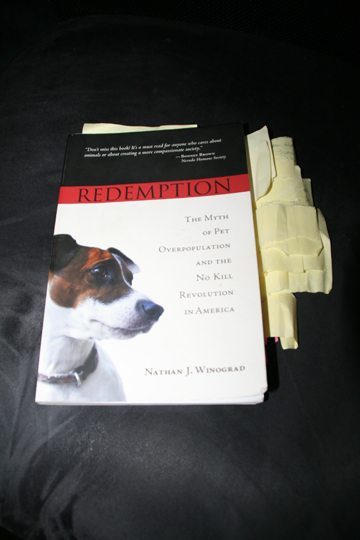
It was a veritable who’s who of Tampa Bay dignitaries and dog lovers at the Westshore Marriott on Saturday, February 4. More than 250 folks attended the Save 90 Conference, featuring Nathan Winograd. The New Barker, a proponent of the No Kill Movement, and one of the sponsors of the event, first featured a review of Nathan’s book, Redemption, in 2008. It was the book that started the No Kill Movement. Meeting the (in my humble opinion) rock star who is Nathan Winograd was indeed a pleasure, and an honor.
Anna Cooke's well-worn copy of the book, Redemption by Nathan Winograd, autographed by the author on February 4, 2012.
He was in town at the invitation of Linda Hamilton and Frank Hamilton, both with Animal Coalition of Tampa, a low cost spay/neuter clinic in Tampa. Pacing the floor before the conference, getting in the zone, it was clear Nathan was on a mission. You see, Hillsborough County Animal Services is searching for a new director, and the Hamiltons are hopeful that the timing of Winograd’s visit will effect the selection process to the degree that no-kill advocacy is a requisite qualification for the job.
Animal Coalition of Tampa set the playing field: The game plan is Save 90 and their star player would be Nathan Winograd. On Saturday, February 4, it was Nathan’s job to get a solid foothold in the game, landing Save 90 on at least first base. Tough, since it’s safe to say some in the crowd were skeptical. But Nathan has seen his share of naysayers throughout his career. Indeed those past naysayers would be part of his presentation, complete with audio sound bites. Tampa Bay was ready to hear Nathan Winograd.
Linda Hamilton opened the conference with remarks that were both humorous and compelling. Then, via a taped video, Kris Weiskopf, chief of Manatee County Animal Services gave an eye-opening review of their mission and promise to be a No Kill Community by the end of 2012. Kris introduced Nathan, who held the audience’s attention for the next two-and-a-half hours. Did I say held our attention? The man not only held it, he lassoed it; reeling us in, making us laugh, cry, and then had us thinking long and hard about taking chances. Chances that will make a difference to the bottom line. The bottom line of saving money and most important, saving lives. What’s not to like about that?
After The New Barker reviewed Nathan’s book, Redemption in 2008, he contacted me and asked if I would like to send autographed copies of his book to shelter directors in Florida. I gave him the name of several shelter directors, and he made sure they knew the autographed books were sent on behalf of The New Barker. Not one shelter director acknowledged receipt of the book. Although, one director did let me know, indirectly via the shelter’s communications director that the book was not well thought of, and would not be read. Almost four years later, all but one of those directors was in the audience on Saturday, February 4 for the conference.
Why the change of heart, Cynthia Smoot of Fox-13 News asked me? My answer: The No Kill Movement is a movement whose time has come to Florida. Manatee County Animal Services made the pledge with full support from the County Commissioners. Other Florida counties are contacting Manatee County, wanting to learn how they too can become a No Kill Community. Linda Hamilton has made trips to Manatee County to meet with Kris Weiskopf and his staff. It’s a movement that can no longer be ignored, or ridiculed. The No Kill Movement has reached the masses, and the people are responding.
Not everyone applauded Nathan on Saturday, nor did every person stand during several standing ovations. But, his words, statistics, and photographs provided substantial proof that the No Kill Equation works. The majority of the audience was convinced that Hillsborough County should become a No Kill Community. His words did not fall on deaf ears. When Nathan was finished, Rick Reidy, Hillsborough County Commissioner Ken Hagan’s legislative aide, stood up to address the audience on Hagan’s behalf. Reidy told the audience that Hagan would recommend to the Board of County Commissioners that Hillsborough County Animal Services take the necessary steps to become a no kill facility.
Animal Coalition of Tampa's Frank and Linda Hamilton; Save 90 guest speaker, Nathan Winograd;Fox-13's Cynthia Smoot.
Nathan listened to Reidy and watched the crowd as they jumped to another standing ovation. A smile was barely visible on this thoughtful man’s face. Yes, we’re in the game because of Animal Coalition of Tampa and Manatee County Animal Services. And, yes Nathan Winograd got us on base. But we’re not in the home stretch yet.
The community must get behind this, and let the county commissioners know how important the issue of No Kill is to them. Join the Alliance to Save 90 by going to www.save90.org. Attend the monthly meetings, held the first Tuesday of each month; the first one on February 7 at the Tampa Tribune Auditorium. Make sure elected officials embrace the decision by the community that the killing of companion animals housed in shelters and animal services, is not okay. Make sure elected officials hire a compassionate and competent individual at Hillsborough County Animal Services to lead the plan. The new hire must be able to embrace the No Kill Equation.
It’s been said that once you know, you can’t un-know. In 2010, while researching the Greyhound dog racing industry in Florida for a piece that would appear in the spring 2010 issue of The New Barker, we were overwhelmed by what we didn’t know. Our biggest discovery, back then, was finding out that dog tracks were closing all around the country. It appeared that as a society, we had became complacent about dog tracks. They have been in communities since the 1920’s. Our grandparents and parents have been supporting this industry by going to the track and betting on the races. We’ve been told through the years that these beautiful Greyhounds are at their prime getting to run as they love to do. We see exit signs directing us to the track, newspaper ads and TV commercials that extol the grace and speed of this magnificent dog. It just seemed like something that has always been.
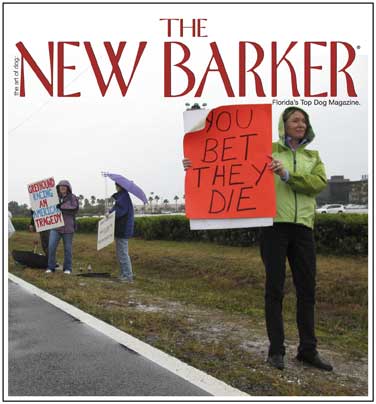
Protesting Greyhound Racing at a Florida Track.
But sometimes, if you stop and look at something familiar, you find that what you accept as common just doesn’t make sense anymore. Fortunately for this ancient breed there have been people who stopped and looked at dog racing for what it really is and have refused to accept it. Because of advocacy, education and economics, dog racing is losing it’s following and tracks are closing around the country. At the height of the dog racing industry in the early 1990’s, there were 54 tracks in the U.S. As of January 2010, Florida had the largest number of active tracks housing 13 of the 24 still operating. Today, Florida is one of only seven states where pari-mutuel dog racing remains legal and operational.
Of course, dog racing is nothing more than a business and with business comes the bottom line and matter-of-fact decisions. Normally those aren’t bad business qualities. What makes this problematic is that this industry’s sole commodity is a living, breathing, feeling being that has no choice of opting out. The business is cyclic. Produce, exploit, dispose, repeat. The industry has very little oversight and plenty of ways to work around the system. The reality of this cycle is that it involves the production of sentient beings and the ultimate disposal of same. In addition to racing and the operation of kennels and tracks, there are several things that exist behind the scenes to keep this business profitable.
To get winners, the industry must breed the winners. The puppies are raised, trained, and screened to determine if they are racers or eligible for other uses, if not, they are killed before being registered. If a dog is a racing dog, it’s career may last between two to five years. Their performance determines which track they go to first. If they are good racers, they go to good tracks. As their performance declines, they are moved to smaller, less profitable tracks. This shifting of locations happens continually until their racing days are over. In the eyes of the business, this commodity is only profitable if it is racing at good tracks and winning. If that’s not the case, the cycle determines that the dog needs to move on to make room for one that will perform. It would be nice to think that all retired racers go to rescue groups and find their forever homes, but that percentage is small compared to the number of dogs that leave the track. There are other qualities of the breed that determine their next placement. After racing, a dog can be sent to a breeding farm to produce multiple litters for three to four years. It takes 600 to 1,000 racing dogs to support one track. Those are just racing dogs. Many thousands of dogs must be produced to supply tracks with 1,000 good racers.
The atrocities of puppy mills have come to the forefront over the last few years, thanks in large part to people like Oprah Winfrey and Ellen DeGeneres. Yet, according to industry breeding reports, published in The Greyhound Review, 77,852 litters were registered by the National Greyhound Association in the twelve-year period between 1989 and 2000. Multiplying these litters by a [low] average of 6.52 pups per litter results in a minimum total of 507,596 greyhounds born in this twelve-year period. Greyhounds are tattooed by three months of age and individually registered by 18 months.
Listen to Christine Dorchak, President of Grey2K USA talk to The New Barker on The SkipShow, about a hopeful change coming to Florida Greyhound Racing. Show airs January 9 between 3p & 4p EST. http://www.tantalk1340.com.
We, as a society are becoming more educated about the number of dogs euthanized each year in shelters across the country, thanks in large part to Nathan Winograd and the No Kill Movement. As a result, we are demanding a change, and the No Kill Movement is moving forward. And yet, of the 507,596 Greyhounds born in the aforementioned twelve-year period, only 395,545 were individually registered — a discrepancy of 112,051 [22%] puppies and young dogs that were culled [killed] from the system before the age of 18 months. Because rescue of young farm dogs is extremely rare these culls are presumed dead. A comparison of the published numbers against the estimated combined number of dogs that are still racing (40,000), alive on breeding or training farms (30,000), and dogs that have been adopted (113,000), indicates that close to 325,000 greyhounds, including the culled puppies, have died between 1989 and 2000. That is approximately 27,000 dogs per year for that twelve year period.
The fact is, the racing dogs are owned by a business. The owner of the dog decides what’s next for each dog at every stage of their lives. Have no doubt that the decisions made are best for the business, not the dog.
Because of Greyhound advocates like Grey2k USA, Greyhound racing is coming to an end, and a much larger number of dogs are finding homes through rescue groups. However, as long as dog racing exists, thousands of greyhounds will be thoughtlessly and inhumanely exploited and killed every year. Now you know.
The New Barker is Florida’s top dog lifestyle magazine, reaching more than 40,000 dog lovers each quarter in print. In its sixth year of publishing, every cover of The New Barker features an original piece of art by a different Florida artist.
The current issue of The New Barker dog magazine has a list of some of the organizations in Florida that help provide assistance to families who are unable to feed their pets. Now, more than ever, it’s such an important service, that we have included the list below to be shared. Please feel free to add to the list.
Providing pet food to those who are struggling to make ends meet, also helps ensure the pets will remain with their families. The Humane Society/SPCA of Sumter County just told us that their outreach program, Kibbles on Wheels had to expand their need of donated food from one year ago. Last year, Kibbles on Wheels required 1600 pounds of food per month to meet the community’s needs. This year, they are averaging 4,000 pounds of food per month to meet the community’s needs. They are currently helping 100 families per month, and that number appears to be growing.
Earlier this year, a fund raising event hosted by Trinity Regional Rehab Center helped raise funds and food for Cindy’s Pets of Pasco County. This outreach program is part of Pasco County’s Meals on Wheels program. When volunteers discovered that many seniors were giving a portion of their food to their pets, Cindy’s Pets was created. Just this week, we received a phone call from Cindy’s Pets. They wanted to let us know that food was being donated as a result of the story that appeared in a recent issue of The New Barker.
In 2010, Florida Studio Theatre of Sarasota partnered with Wet Noses Dog Boutique and The New Barker to help raise food for the Humane Society of Sarasota County’s outreach program. It was a simple promotion with a simple request: during the two-week run of the play Sylvia, A.R. Gurney’s play about a dog, ticket holders were asked to bring a bag or a can of un-opened dog or cat food. The promotion raised 1500 pounds of food, enough to cover the program’s needs for three months. But even more important, it raised the awareness level in Sarasota that such a program existed, and furthermore, that it was even needed.
In 2009, Teresa McSheffrey, the Western Florida Territory Manager for WellPet helped to arrange for a delivery of 1700 bags of dog food to the Humane Society of Tampa Bay. The Food Assistance Program, called Casper’s Cupboard, is available to any pet owner in need of help. They keep the process simple. “It’s very hard for many people to ask for help,” said Sherry Silk, Executive Director of the Humane Society of Tampa Bay. “They are good, hardworking people who suddenly find themselves in very unfortunate circumstances. We want to keep the dignity of those in need intact.”
The food arrived on March 12 via tractor trailer. Secure Onsite Storage donated a portable storage unit to hold the food, which was on 28 pallets. That’s a lot of food to unload, so volunteers and staff, including Sherry Silk, formed a line from the trailer to the storage unit. The atmosphere was pure amazement at the generous offer from WellPet. As the group was finishing their task of stacking the food, a man pushing a cart loaded with what looked like everything he owned, including his dog, stopped just outside the chain link fence. As he watched the activity, he covered his dog from the sun with a damp towel. One of the male volunteers picked up a big bag of dog food and hoisted it over the fence to the man. No questions asked. The sudden silence made the scene even more moving.
There but for the grace of God go I.
The following is a short list of outreach programs available through local shelters and organizations. Please contact your local shelter or animal services and ask if they have a program similar to one of these. So, again, while you’re out and about shopping, consider purchasing an extra bag or can of dog or cat food and making a delivery to your local shelter. You don’t have to get it there before Christmas. How about making it your New Year’s resolution and deliver it before the end of the year. And keep it on your resolution list throughout the year to make a delivery at least one time each month.
The year has certainly flown by. I suspect publishing a quarterly magazine makes the year go by even faster, with deadlines looming, people eagerly awaiting their subscription, and advertisers to satisfy. It’s a pressure that’s exhilarating, and one that I wouldn’t give up for the world. A long time publisher and a mentor to me, Aaron Fodiman, recently celebrated Tampa Bay Magazine’s 25th anniversary. He told me, “I sat back and realized, that’s around 150 magazines we’ve published, which means that’s around 150 deadlines we thought we’d never live through.” Amen, Aaron. And congratulations to you, Margaret and staff on a job well done. Here’s to another 150 deadlines.
The dogs in our home also seem to be reminding us how quickly time moves along year after year. Is it possible that more than six years have gone by since The New Barker dog magazine was just an idea? The years have grayed Rita the MinPin’s muzzle. We notice flecks of gray on Dougie’s coat. Chloe remains our perpetual puppy, never seeming to age even though she is around 12. In fact, she seems to have become livelier lately as she and Dougie, our Scottie, spar and play together. A special thanks to Dunedin Dog Rescue for finding Dougie, an unplanned adoption for this household, but a wonderful addition, nonetheless.
The biggest reminder of time adding years to our lives is my Zoe, my shadow, my one special lifetime dog. I remember bringing her home almost 14 years ago. She was so small, so soft and oh, so sweet. She is still all that, and more to us. Her presence brought a spring in the step of our old Golden Retriever, Elmo all those years ago. He hung on another four years and we credit Zoe for that.
Now, Zoe is the old dog in our home. She moves slower, is hard of hearing and has trouble with her vision. Other than that, she is in good health. She loves to eat (she’s not fat, she’s fluffy, you know), and enjoys being around people and other dogs. She’s always been very sociable. Lately though, I’ve noticed, as she sleeps in her bed under my desk, how she doesn’t stir when things are going on around her. While the other dogs are vocal about going outside or wanting to eat, there is Zoe, still sound asleep with hardly any movement and no sound emanating from her. Sometimes, I walk up softly to lean over her, just to make sure she’s still breathing. A couple of times I’ve had to put my hand on her body or my ear close to her mouth just to make sure. My heart skips a beat at those moments.
Zoe always has to be by my side. If she wakes up and I’m not in the room, she’ll come looking for me, using her strong sense of smell, nose to the ground, to search me out. As soon as she spots me, I swear her eyes light up, she opens her mouth as if she’s smiling, and she comes running towards me. I love to hear the patter of her paws on the floor running after me to keep up.
We will always have more than one dog in our home. The transition of bringing a new dog in to learn from the other dogs is such a wonderful experience. You don’t realize it’s happening. One day, you notice how the dynamics have suddenly changed and everyone is living in harmony. Of course, it wasn’t all of a sudden. Dogs, who are said to love us unconditionally, come in and out of our lives in what seems to be a short life span, compared to our own lives. It’s been said the reason is, they’re trying to teach us to get it right. That is, to finally love unconditionally, to stop and smell the breeze, to enjoy the moment.

 An exhibit at the Widener University Art Gallery in Chester, Pennsylvania, called “RMS Titanic: 100 Years” acknowledges that the other stories of the dogs did not have such happy endings. One story was of William Carter, a Philadelphia coal magnate who was traveling with his family, which included his two children and their two dogs, Lucy (a King Charles Spaniel) and an Airedale. In order to persuade his children to board a lifeboat, he told them the dogs were safe. The family survived, but the dogs did not. John Jacob Astor IV and his wife also lost their two Airedales, Kitty and Airedale. A Fox Terrier named Dog was reported lost in the tragedy as well.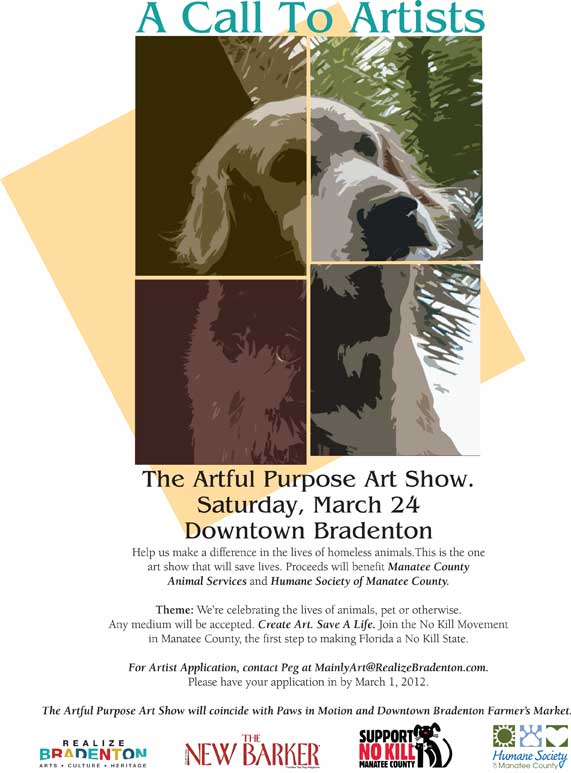





 The Art Of Dog.™
You must be logged in to post a comment.