Unconditional Love. It Works Both Ways.

How much money would you spend on your dog’s medical care? The following appears in the current/winter issue of THE NEW BARKER. It is the story of Zack, a Lakeland Terrier, and his devoted human, Stella. Today, sadly, we learned of Zack’s passing this week. Rest in peace, Zacky. This edition of Weekend PUPdates is dedicated to you.

***********************************************************************

Vitiligo is a condition in which the skin loses melanin, the pigment that determines the color of skin, hair and eyes. If the cells that produce melanin die, depigmentation occurs, causing patches of white irregular shapes to appear on the skin. It usually starts as small areas of pigment loss that become larger with time, striking any part of the body and anyone, regardless of race. The condition is not life-threatening or contagious, but alters the life of the patient physically, limiting sun exposure to avoid severe burning and blistering. It can also have an extremely emotional effect on the patient, especially children.

When Stella Pavlides developed vitiligo, she was only 22 and had just given birth to her son, Greg. The cosmetologist with flawless skin suddenly looked like a patchwork quilt, as she describes it. “I’ve had people refuse to take money from me,” said Pavlides. “They think what I have is contagious.”

After learning there was no cure, and that between four and five million people in the United States are afflicted with the condition, Pavlides contacted the Vitiligo Foundation. She wanted to help fund research to find a cure for vitiligo and became a faithful donor. When the animal advocate discovered that animals, including dogs, were being used for research and testing, she was conflicted. “I wanted a cure for vitiligo, but I wanted more humane research.” She asked the president of the foundation to consider going the humane route after discussing her concerns with the now late Dr. Thomas B. Fitzpatrick, Chairman of the Department of Dermatology at Harvard Medical School and Chief of the Dermatology Service at Boston’s Mass General. She was turned away.

The Clearwater resident then traveled to Gainesville to meet with Wayne McCormack, associate professor of pathology and laboratory medicine at the University of Florida College of Medicine. McCormack told Pavlides that if she provided the funding for the research, he would use donated blood and skin from people with vitiligo, not animals.

Since 1995, the American Vitiligo Research Foundation Pavlides founded, has given around $200,000 toward vitiligo research at UF. The money comes through fundraisers and donations.

To say this woman is unstoppable in whatever she takes on is a gross understatement. Even baseball legend Tony La Russa, who founded the Animal Rescue Foundation (ARF) in 1991 with his wife Elaine, said of Pavlides, “She is a dedicated, hard-working person, devoted to her causes. She is also an avid animal lover. I admire her tenacity and drive as well as her determination to overcome obstacles.” Pavlides’ own rescue Airedale, Alex, was one of ARF’s first mascots.

In February of 1999, Pavlides adopted another dog, Sophie, a Lakeland Terrier. Several months later she received a phone call asking if she could foster another Lakeland Terrier who was just a puppy – one of Sophie’s puppies, in fact. Where Sophie was sweet, kind, high-spirited and loving, Zack was the exact opposite. He was aggressive, suffered separation anxiety and self-mutilated in addition to a host of health issues that would surface several years after Pavlides adopted him.

Pavlides allows herself to wonder, once in awhile, whether she would have adopted Zack had she known about his issues beforehand. One thing is certain: this determined, tenacious woman never gave up on Zack once she committed to bringing him into her home.

She did all the right things. Neutering Zack seemed to help with some of his aggressive behavior, but not to the extent she had hoped. She hired a professional dog trainer who told her he had trained many dogs and was certain he could train Zack. After Pavlides invested a lot of money for Zack’s training sessions, the trainer told her the dog was not trainable. Pavlides then took Zack to a licensed dog psychologist. She attended a presentation at the Humane Society of Manatee County by Cesar Millan. She purchased and read his book and applied his theories on Zack. Nothing seemed to help with her dog’s anxiety or aggressive behavioral issues.

Eventually, Pavlides accepted Zack for the dog he was. She realized his aggression and anxiety were all fear-based, and vowed to never put him in a position to fail ever again.

Zack’s physical issues began to manifest when he was five years old. He had surgery to remove cataracts in both of his eyes. He has suffered from chronic allergies, ear infections, and extensive seizures. His self mutilation involved spinning and biting his tail to the point of requiring surgery. He has seen almost every kind of veterinarian specialist within the Tampa Bay Area. At The University of Florida in Gainesville, he was seen by specialists in dermatology, ophthalmology, acupuncture, neurology and a licensed dietician.

Zack’s veterinary bills are currently more than $80,000. That does not include the money Pavlides has spent around her home to help keep her dog’s allergies in check: having the grass removed and replaced with cement; replacing her carpet with tile; providing Zack with a special daily diet of fresh cooked tilapia, salt-less peas and cream of rice.

The point at which we, as pet owners, determine enough is enough is a different decision for each of us. Factors will include the dog’s overall health and well-being, the bank account balance, and our own ability to cope with the situation.

There was a time, in the not so distant past, where euthanasia was the only solution for our pets’ suffering from chronic disease. Dogs have moved from the backyard doghouse into our homes, living as part of the family blend. We have come to learn how diet plays a role in the health of our dogs. Veterinary medicine has vastly improved over the last 10 years, offering pet owners a multitude of options.

We move forward and base our decisions on all the facts presented to us. Living with dogs takes a certain amount of patience, devotion and lots of faith.

It has been almost two years since Zack has had a seizure. Pavlides credits Dr. Gregory Todd at Animal Hospital of Dunedin, and his recommended combination treatment of acupuncture and Chinese herbs. “Zack’s indomitable spirit has been a great ally in overcoming his health challenges. But, none of it would be possible without Stella’s unwavering commitment as a pet parent, to a lifetime of love and care,” said Dr. Todd.

Pavlides knows that without each and every veterinarian and caregiver in Zack’s life, he would not be here today. Through her own trials and tribulations, as Pavlides puts it, Zack is now 16 years-old and has become a very kind, loving soul. To her, Zack has been worth every penny spent, every tear shed.

"Our last picture together," said Stella, shown here holding Zack.
“Our last picture together,” said Stella, shown here holding Zack.

What Do Our Dogs Think Of Us?

The following, by Anna Cooke, first appeared as a feature in the Spring 2011 issue of The New Barker dog magazine.

Many of us who live with dogs probably don’t really want to know what they’re thinking. To know may bring in the realities of life like dealing with what they think of us. Who needs that extra burden? We already have to cope with what our parents, siblings, significant others and business associates think of us. It’s one of the reasons we love dogs so much. We believe everything they have to say to us is said through their eyes. And of course, it’s nothing short of adoration and unconditional love, right? Our dogs are sentient beings with a conscience and feelings. They are intelligent and many people believe, they live with a purpose and set goals. The Reverend Nedda Wittels, M.A., M.S. believes that dogs make life choices. Maybe that’s why we don’t really choose dogs, rather they choose us.

It seems that every one in the animal world can tell a story of how they loved and lived with animals since they were very young. Jo Maldonado is not much different. As a young girl she would try to save the fish her father caught. In her teens she took dog-training classes and won ribbons with her devoted companion Rex; in her 20’s she rode horses and in her 30’s and 40’s she volunteered with German Shepherd Rescue in Pennsylvania doing canine assessment and fostering.  And, for almost 30 years she lead a successful career as a publicist, owning her agency. But it wasn’t until she and her husband moved to Florida and her children had moved on with their lives, that a continuous odd series of events forced her to change her life’s path. Volunteering at local shelters and seeing the infinite line of discarded animals, and almost losing one of her dogs, led Jo to follow her animal passion and give back to the community.

“Three years ago I realized that I was not following my soul’s purpose, not fulfilling what I was supposed to be doing with my life. I was hospitalized twice, broke my hip, had two surgeries, was in two car accidents and almost lost two members of my family.” But it wasn’t until a series of events involving animals that Jo finally listened to what some other worldly force was trying to tell her. There was the black bear that began appearing in her driveway on a regular basis. Then hundreds of crows began following her around. A woodpecker began “talking to her.” And one day the door to her china cabinet flew open spewing forth china from past relationships.

Jo began reading every book on animal communication and angel healing that she could find. After she completed several classes on the same subject matter, it became clear to Jo that her purpose in life was to work with her first love: animals. Her Centers for Animal Therapies is based on the theory that both sides of the brain are necessary to truly communicate with the animal world. “The left side of the brain is the fact based, scientific side, while the right brain is intuitive, innate and natural,” said Jo.

Animal communicators speak with pet companions who live with humans, oftentimes facilitating a change in varied situations. Why is the cat spraying? Why is the dog cowering or food aggressive? Each situation may have something in common with another situation going on within the pet’s home. For instance, when there is a fear problem there is generally a kidney problem that results in uncontrolled urinating in the house. By communicating with the dog, Jo can show their humans the relationship their dogs would like to have with them. How we live with our dogs can result in a positive or negative affect on them and ourselves.

No telepathic communicator is one hundred percent accurate all the time. The reasons for error may include a weak telepathic connection; the human client has emotional and/or mental blocks about the situation; or the dog may be choosing not to communicate fully. Reverend Wittels adds that each telepathic communicator can bring their own emotional and mental baggage to the situation: belief systems, expectations, past experiences or emotions. A good animal communicator will know how to leave their baggage behind in order to be a clear channel.

As with any professional, it’s good to have a rapport with them before delving into this area of you and your pet’s lives. We had been working and speaking with Jo for the past year on various projects. One thing lead to another, and it seemed almost a natural progression to agree to let Jo communicate with our brood: Zoe, a 13 year-old Cockapoo, her 11 year-old niece Chloe, our adopted MinPin Rita, and our most recent adopted addition, Dougie (pronounced Doogie), a two year-old Scottish Terrier.

There were four dogs and so it took Jo a little longer to assess the situation and discern their different personalities. “I took a deep breath before looking at each photograph you sent of the dogs,” said Jo, who told us she took classes to learn how to communicate through the eyes of an animal. “But dogs don’t like for you to look directly into their eyes. That is why I like to use photos,” she told us. “I pick up the physical characteristics and I pick up the soul. I try to get through the layers in order to connect and communicate.”

She began first by saying that each of these four dogs represents a characteristic in each human member of our household, in this instance a husband and wife. “It’s up to you to figure out those characteristics of you,” said Jo. From the pictures, Jo described the aura of energy emanating from each dog, which assisted in giving the following information. “Your life to them seems scattered. You’re in multiple places at one time. You seem to be going from point A to point B in an instant. You are way too busy and they’re picking up on that. I received a strong sense from the dogs that you are very tired,” Jo said.

For many dogs, a situation such as the one Jo described could be confusing to them, causing problems such as becoming the take-charge being within the household. The Alpha dog if you will. But in this instance the dogs all seem to have adjusted. “Each one of them knows their role within your family,” she told me. “And,” she added, “Your dogs are all very funny. They are just all real characters.”

Dougie

Dougie, the two-year old Scotty, knows exactly what he is supposed to do. He looks around at his humans and the other dogs and wonders why they don’t know what they’re supposed to be doing? He knows he is a purebred. In fact, somewhere in his lineage, there is a champion or two. So he demonstrates quite a lot of pride as if to say, “Of course I can do that. It’s exactly what I am supposed to do.” Jo said that if she were to humanize Dougie, he would be a career fisherman. “I could see him bellying up to the bar at the end of each successful fishing excursion,” she said. Dougie is a highly intuitive dog and would be excellent in agility. “Oh, he would be a natural,” said Jo.

ChloeTastesOrange

Chloe, the 11 year-old Cockapoo.“Dougie was pointing at Chloe when I was communicating with him. He told me that while he feels very grounded, Chloe is constantly running around in circles, figuratively. Yet, she thinks she’s the one that has it all under control. But she doesn’t.” Jo explained that she sensed a bit of a Napoleonic complex in Chloe. She is constantly reminding everyone that she is in control; she is in charge, but she isn’t, of course. “If she could talk to you, she would be a tattle-tail and rat everyone else out. Chloe does feel confused most of the time, but thinks that’s okay because her humans are confused and running around in circles too.” Chloe communicated with Jo in such a rapid-fire way that she was almost stuttering. “I have too much to do and too little time in which to do everything,” is what Chloe communicated to Jo. “Interestingly, Chloe and Dougie have similar personalities. If you were to put Chloe in another pack, the other dogs would find her annoying. But she is well-accepted in your pack.”

Zoe_Flowers

Zoe, the 13 year-old Cockapoo. “She tends to believe she is the matriarch of the family. I could sense her little quirks. She does like her food and is set in her ways. She has a sense of entitlement, that whatever she gets, the others should not be allowed to have because they are not as deserving as she is. She can get snappy, only to let others know that she does not approve of what they are doing. But she would never display any kind of aggressive behavior towards anyone, human or animal, within her pack.” Jo spoke to me directly about the next point. “Anna, Zoe feels that the two of you are one. She is content to follow you and be wherever you are.” And then Jo added, “Oh, I’m hearing from her again that she really does love her food though. She likes that crunchiness and soft combination you give her.”

Rita_Profile

Rita, a five year-old MinPin, found wandering the streets. “I like Rita very much. She has this I-am-cool-as-a-cucumber demeanor. She likes to check things out, like a private detective before getting all excited, unlike the rest of the dogs in your pack. She smirks at the other dogs as if they’re ridiculously out of control. If I were to humanize Rita, she would have red hair, red-painted fingernails and a cigarette dangling from her mouth. She’s like one of those cool people you may see at a party. You don’t know them, but you walk up to them anyway and compliment them on the shirt they’re wearing. Instead of saying thank you, Rita would answer, ‘Huh. You don’t really give a damn about my shirt now, do you?’”

So it appears we have an odd little pack, with a funny mixture of personalities, each one of them strong in their own way. They all have their quirks but everyone gets along, albeit grumbling along the way. Most important, they all seem to be functioning as a pack and each feels they have jobs, which is a good thing. “They are all who they are as long as they’re all with the two of you. And as long as you make sure what your expectations are of them, they’re all pretty happy,” Jo said.

Brat_Pack
The Cooke Brat Pack, photographed at Steinhatchee Landing Resort, soon after Jo Maldonado’s reading.

The dogs were all in agreement with one special request. “What they would like you to do is schedule more family time with them, altogether. They would prefer daily, but they’ll settle for weekly jaunts to a big fenced in field or park to run around.” I told Jo that we have a big backyard and take them out many times throughout the day. “No,” she answered, “They want family time. They want everyone in the car at the same time, to go somewhere together. And Chloe said not to forget the treats. That was a very strong communication to me. They want you to think about nothing but the present during these field trips with them.”

QUOTES:

“Somewhere in time, an animal’s soul has made a pact with the human’s soul to help them. I look at what I am doing as my privilege to be able to work with two beings, human and animal, to decipher what that help might be,” Jo Maldonado.

“People will spend hundreds of thousands of dollars to help their pets while totally ignoring the obvious to help themselves. We humans must recognize that we need to change to improve our own health and well-being. Through the voice of their pets, a person can help themselves,” Jo Maldonado.

“I’ve never found an animal who communicated to me that they hated their human. I know instantly when I go into that animal that there is a need for them to express themselves as to why they are here,” Jo Maldonado.

Jo Maldonado can be reached at jo@cat-edu.com or 386.279.0257


Think Progress. Think. Progress. Modifying Florida’s Dangerous Dog Law.

In June 2015, Padi, a black Lab mix, bit a four-year-old child. Despite the circumstances surrounding the incident, Manatee County Animal Services said they were required by state law to euthanize Padi, no exceptions. Manatee County citizens questioned whether or not Manatee County officials were correctly interpreting the law on how aggressive animals were handled. State Representative Greg Steube, R-Sarasota, filed legislation in August to change the state law, which currently says any dog causing severe injury to a person, which includes injuries resulting in stitches, reconstructive surgery or death has to be euthanized; no exceptions. Steube’s bill, which has been filed for the 2016 session, allows for exceptions. We asked Florida attorney Dionne Blaessing to interpret the wording of the proposed bill, as compared to the originally-written Dangerous Dog statute.

The revision of sections Fl. St.767.12, 767.135 and 767.136 essentially represents a reorganization of the concepts and a rewording of the language of the original Dangerous Dog Statute that has been in effect for decades. The new version clarifies the role of Animal Control, spells out the different options under the law and elucidates the availability of constitutional protections imbedded in the process of hearings and appeals. There are some actual changes to the law which will be expounded upon here.

Fl. St. 767.12 grants county Animal Control services the authority to investigate reports and/or incidents involving any dog that may be deemed dangerous. This section now clarifies that Animal Control has sole discretion in determining whether they, or the dog owner, will confine the dog during the investigation; during a hearing if requested by the owner; and through the appeal process if elected by the losing party. It now makes clear that during a hearing and an appeal, the dog cannot be destroyed, but must be impounded at the owner’s expense.

Dr. Gartenberg of Bradenton's The Pet Clinic hugs his dog Padi.
Dr. Gartenberg of Bradenton’s The Pet Clinic hugs his dog Padi.

Fl. St. 767.12 improves the explanation of possible defenses available for the dog. It expands requirements of the formal notice to owner, to include not only the final determination of the investigation, but also the penalty sought by Animal Control. It defines the timetable for owners requesting an initial hearing and requesting an appeal of the outcome of the hearing. The appeal is no longer to be heard in county court but must be filed and heard in circuit court.

Fl. St. 767.12 (5) outlines the responsibilities of the owner who elects to keep a dog deemed dangerous, once the hearing and appeal process has ended. This section remains the same in concept but is better organized and easier to understand.

Fl. St. 767.12 (6) has been added to clarify that if a dog determined to be dangerous in the investigation, hearing and appeal, caused severe injury to a human being, Animal Control may impose a penalty of humane euthanization. That proposed penalty must be clearly stated in the notice to the owner. Both the classification as dangerous dog and the penalty prescribed may be reviewed in the hearing, which will review all the evidence of the investigation and any defense. That may include revisiting testimony of all witnesses, affidavits and medical records used in determining the dangerous dog classification and the opted penalty.

Fl. St. 767.12 (7) exempts from this section, hunting dogs, show dogs and herding dogs when they are involved in legal activities, such as shows, trials, hunts, herding, et al, while engaged in the activity. However, a hunting dog previously classified as dangerous cannot hunt. Any dog exempted under (7), when not engaged in their sport or activity, are subject to Fl. St. 767.12 and all local laws.

Fl. St. 767.12 (8) explains the fine for violation of the provisions of Fl. St. 767.12.

Fl. St. 135 and 136 do a good job of rewording the former confusing statutory language. The new Fl. St. 767.135 addresses an attack or bite by a dog that has not been previously declared dangerous. Now, if the dog causes the death of a human, the dog will be immediately confiscated by Animal Control and held for a period outlined in the section to allow the owner to request a hearing and an appeal. The owner must act within the times prescribed by the section. And the owner will be liable for all costs of the confinement of the dog during the process.

Fl. St. 767.136 imposes a criminal penalty on an owner who is aware of the dangerous propensity of a dog, when the dog causes severe injury or death of a person, unless the dog attacks a person engaged in a criminal activity.

Fl. St. 767.16 fully exempts police dogs from this section. The section exempts a service dog used by a blind, deaf or disabled person, which bites a human or another dog, from a quarantine period if the dog’s rabies vaccine is veterinarian administered and current. Quarantine is not the same as confinement for the infliction of severe injury or death of a human.

Note to readers: The following is a rule of statutory construction: Whenever you are reading a statute which includes a word or phrase that may have many interpretations, do not assume that your interpretation is correct. Instead, each act or chapter of law has a Definition section with the definition of words used in the section. See Fl. St. 767.11 (partially displayed below) for the definition of the term “dangerous dog” and the phrase “severe injury” et al.

Definition of a dangerous dog as defined in the current Florida Dangerous Dog statute: (1) “Dangerous dog” means any dog that according to the records of the appropriate authority: (a) Has aggressively bitten, attacked, or endangered or has inflicted severe injury on a human being on public or private property; (b) Has more than once severely injured or killed a domestic animal while off the owner’s property; or (c) Has, when unprovoked, chased or approached a person upon the streets, sidewalks, or any public grounds in a menacing fashion or apparent attitude of attack, provided that such actions are attested to in a sworn statement by one or more persons and dutifully investigated by the appropriate authority. (2) “Unprovoked” means that the victim who has been conducting himself or herself peacefully and lawfully has been bitten or chased in a menacing fashion or attacked by a dog. (3) “Severe injury” means any physical injury that results in broken bones, multiple bites, or disfiguring lacerations requiring sutures or reconstructive surgery.

******

If your dog is involved in an incident, please see a well-versed animal law attorney to understand your rights and responsibilities with regard to the administrative Animal Control process. That process will be separate and apart from civil liability for the victim’s injuries and your attorney should explain both issues to you.

Dionne Blaessing is a regular contributor to THE NEW BARKER dog magazine’s Paw Law column. She obtained her Juris Doctor with Honors from the University of Florida in 1994. Prior to becoming an attorney, Dionne’s 20 year background in veterinary science included serving as an emergency technician at the SPCA Angell Memorial Animal Hospital in Boston; Chief of Nursing for Boston Zoological Society; managing a local veterinary hospital in Pasco County. She has also served on the board of the Suncoast SPCA in New Port Richey for 10 years, including as the board president. Her practice is in New Port Richey, and she may be reached by calling 727.992.9114.

Positive Poodle Power.

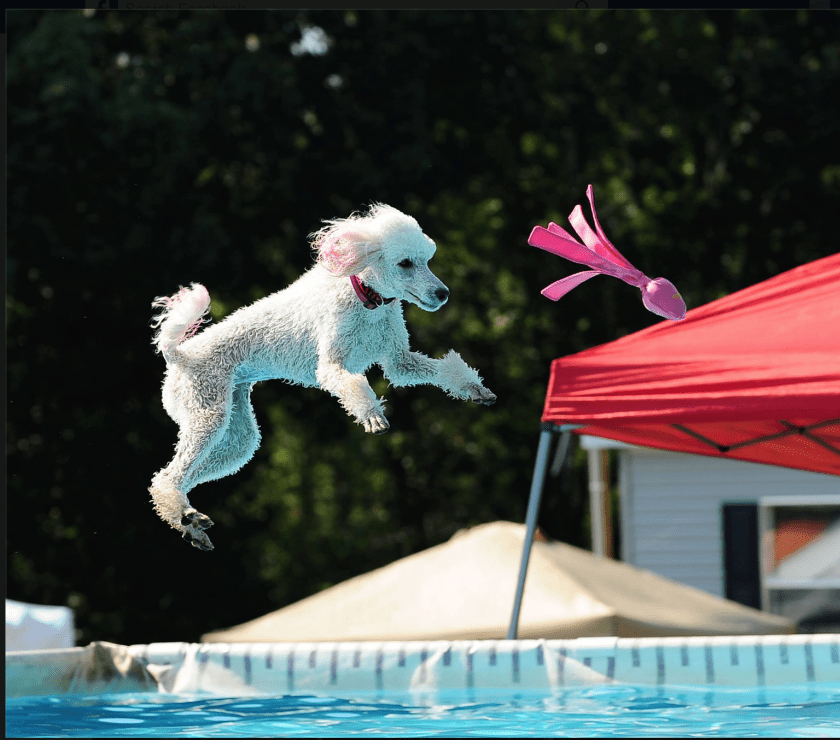
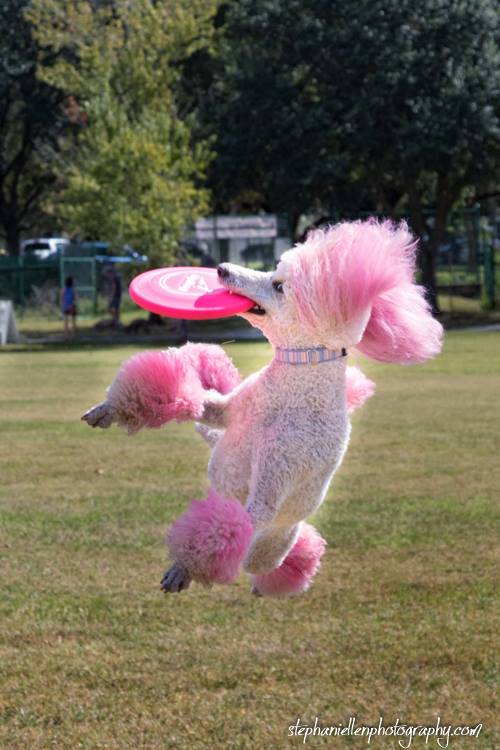
We first met Jolene, a beautiful white Standard Poodle, in Tampa at Woofstock, hosted by TampaPets.org. Her fur had been accented in pink to show her support for Breast Cancer Awareness. The following is an original feature from the winter 2015/16 (current) issue of The New Barker dog magazine, written by Anna Cooke.

At fifty years old, Barbara Mahoney decided to end her abusive marriage and sell her business. She knew the change would be good for her, but realized she was still not in a good place, emotionally. She recalled how happy she felt around her mother’s dogs while growing up, especially the Poodles. Now, she wanted a constant companion, someone who would give her unconditional love. A dog who would go swimming with her. Heck, maybe she’d even get into agility, she thought. Jolene came into Barbara’s life in 2011, and she decided to let the dog show her just what she wanted to do in the way of “work.”

Screen Shot 2015-11-30 at 7.02.43 PM

When she was just a year old, Jolene began her athletic career in dock diving. She received her canine therapy certification in water rehabilitation. She took the Southeastern Regional Division championship in her class, and all was good. Then, someone threw a Frisbee. Jolene ran after it, and caught it. She and Barbara were hooked. Barbara sought out competitions and talked to other people about Jolene’s talent. “I even found people to throw Jolene the disc when I broke my clavicle,” she said. “I didn’t want her to stop having fun while I was laid up.” The duo’s devotion to the sport and hard work quickly paid off. Jolene became the only World Qualifying Standard Poodle in the sport.

“Working with dogs in activities like disc and agility enriches and completes our relationship with them,” Barbara told us. “Jolene is an exceptional Poodle, but she is also an incredible disc dog.”

12074882_1075108625834821_1841632994579153371_n

Barbara and five other people formed Up Dog Challenge, an organization they hope will inform dog lovers how “awesome this sport is,” she told us. The group’s goal is to provide a non-intimidating forum where people will feel comfortable asking questions about the sport. Go to an Up Dog Challenge event and everyone involved is approachable and enthusiastic about the sport. “We want more people to know how fun this is,” added Barbara. “All ages and skill levels are welcome. All breed types, size, and shape. We’ll even teach you how to throw a disc so that your dog will catch it. We have trainers that are very good with newcomers to the sport. They explain how your dog thinks and will train you to throw the disc in a way that maximizes your dog’s success. We want to optimize that play for you both.”

Dogs are happiest when they have something to do, when people play with them. “Happy dogs equal happy people,” said Barbara. “Look what Jolene did for me. She changed my life.”

MORE: 2016 marks the 42nd consecutive year of competitive canine disc sports. The first annual UpDog International Finals will be held March 18 – 20 in Brooksville, Florida at Florida Classic Park (5360 Lockhart Road). Qualified teams must pre-register by Sunday, January 31. For more information, visit UpDogChallenge.com

This story originally appeared in the current issue of The New Barker dog magazine.

Santa Claus Uses A Shopping Guide.

Yes, it’s true. Even the greatest gift giver in the world does the research to make a list. For dogs and dog lovers on his list, he’s been known to refer to The New Barker dog magazine for ideas. So take heart, gentle human gift giver – for the dog and dog lover on your list, who seem to have everything they need (each other), here are some unique ideas from The New Barker, of course.

Dog lovers with a sense of humor. Clothing, like this t-shirt that plays into the Star Wars craze right now, with just the right touch of dog. Available at The Doggie Door in Winter Park (407.644.2969). Or maybe the dog lover on your list is into craft beer. How about this hoodie, available at Pet Food Warehouse in St. Pete (727.521.6191) and Earth Pets Organic in Gainesville (352.377.1100).

BarkSide_WomanDogBeers_Hoodie

Dog lovers with a sense of style. Nothing says ‘put together’ like the accessory of a scarf. The fashionista on your list will appreciate this cosmo-PAW-litan scarf with dog silhouettes. Available in assorted color combos of grey/blue, grey/peach or grey/light green. One Lucky Dog in St. Pete (727.527.5825).

21215-20_1_

Dog lovers who are tea connoisseurs. Add a little whimsy to their tea and crumpets ritual with these whimsical hand-painted ceramics. Cats In Bloom Tea For One tea pot and mug designed by artist Sharon Bloom. Catzilla Covered Butter Dish designed by artist Candace Reiter. Both are available at Pawsitively Posh Pooch in St. Pete (727.892.9303).

TeaButterDish_Cats

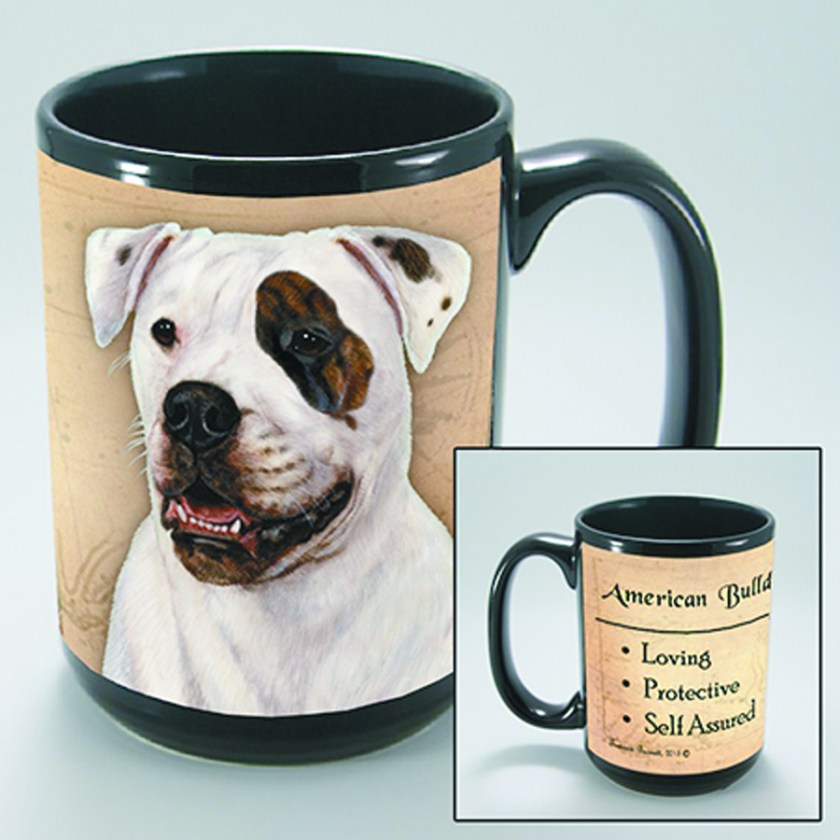
Dog lovers who insist on at least one cup of java before heading out for their power dog walk. How about a breed-specific coffee mug? Beautifully hand-painted, the details bring out each breed’s characteristic. Available at Fluffy Puppies, Clearwater (727.446.7999).

Coffee_Mug

For the homebody dog lover. How about dog art, underfoot with a machine washable accent rug? They’re so reasonably priced, you’ll want to buy one (or two) for yourself. Each rug is artist-inspired. The bright colors won’t fade through many washes and will stand up to heat, cold and sunlight. Available at Pet Food Warehouse, St. Pete (727.521.6191).

Dog lovers who sleep with dogs. Nothing shows off someone’s sense of humor, style and love of home than a well-made bed, accessorized with dog-themed pillowcases. 300 thread count for extra softness. Made in the USA. Available at One Lucky Dog, St. Petersburg (727.527.5825) and Sweet Sage Cafe & Boutique, North Redington Beach (727.391.0453).

Dog lovers who love to dress their dogs (big and small). EZ Reflective Royal Elegance Harness Vest. No choke design – pulls on chest, not the neck. Designed for easy on/easy off (not over the head). High quality quick release buckle with reinforced D-ring and reflective safety striping. Available at Fluffy Puppies, Clearwater (727.446.7999). For big dogs, visit Dade City’s Dog Mania & Cats to see their line of unique, hand-crafted clothing and accessories. Dressing up is not just for the little ones, anymore. Dog Mania & Cats (352.467.9622). Visit their beautiful new store on Meridian Avenue.

buy_dog_red_royal_elegance_smallfile_vest__60554.1412797698.1280.1280

For the dog lover who is also a romantic. You must see and touch this beautiful collection of vintage hinged trinket boxes to appreciate them. Made of sculpted resin, decorated with enamel and 24 karat accents; bejeweled with Swarovski crystal. Each one is worthy of holding precious keepsakes. Available at Pawsitively Posh Pooch, St. Petersburg (727.892.9303).

IMG_3731

For the practical dog lover. There’s no shame in being practical, and practical doesn’t have to be boring, right? Anyone who has ever owned a Dog Gone Smart Dirty Dog Rug has gone back to purchase more. We love using them just outside the shower area for a spa-like feel underfoot. Millions of microfiber strands create an extra large super-sponge for use just about anywhere in your home. Place them in crates; under food and water bowls to keep water and kibble in place. Plush, velvety soft and easy to wash. Non-slid backing helps it stay in place. Available at all the shops listed above as well as: Animal House, St. Pete (727.328.0503), Fuzzy & Furries, St. Pete (727.954.3952), Pet Supplies Plus, Pinellas Park (727.415.8016) & Clearwater (727.453.9131).

DogGonsSmartRunnerGo forth and shop, fellow dog lovers. You have now been properly advised, and Santa can’t hold a cookie to your super shopping powers.
Zoe, My Heart Dog.

Zoe, a 17-year-old Cockapoo, crossed over the Rainbow Bridge this past week. She was the Perfect Pup, never wanting for anything. Her goal in life, every day, was to just be by my side.

Thank you to DocB and her tech, Wren, both with Helping Hands Pet Hospice for your assistance and reassurance. Thank you to Joyce with Natures Pet Loss, who kindly took Zoe’s body for aquamation. Also, thank you to the staff at Medicine River Animal Hospital who always took such good care of Zoe as a senior dog. And, a special thanks to Jennifer at Pet Styles By Jennifer in Dunedin for your kind words.

Zoe was my shadow, and there is an emptiness, for sure. But, she was the happiest dog I’d ever had the pleasure of loving, so it will be easy to remember what a joy she was.

http://www.smilebox.com/playBlog/4e444d7a4d6a63334d44493d0d0a&blogview=true

I Want A Purebred Dog.

Did you know that in Florida alone, almost every breed of dog has a rescue group? Volunteers donate their time and money to pull dogs from shelters, vet and foster them with the ultimate goal being to find someone that will want to adopt them. The volunteers also help with fundraising – soliciting for supplies, food and money. They attend community events with the adoptables to help socialize the dogs, give them exposure to the public and potential adopters.

Over the next couple of weekends, several Florida rescue groups are hosting their biggest fundraising events of the year. The money raised for each of these groups will help them care for the dogs currently in their care and to help save more dogs. If you’re thinking of adopting soon, consider visiting one of these events. Talk to some of the volunteers about the work they’re doing. You may find an opportunity to become a foster yourself – kind of a way to “test drive” a dog before actually adopting.

For the Seniors: Friday, November 13 – Wild West Casino Night. Ruth Eckerd Hall, 1111 N. McMullen Booth Road in Clearwater will be the site of this fun-filled benefit for Canine Estates. Live entertainment, gambling, silent auction, cash bar and hors d’oeuvres. This is a group that pulls smaller senior dogs from high kill shelters and nurses them back to health. To read more about what they do, visit www.CanineEstates.com

For the Corgis: Saturday, November 14 – Florida Corgi Picnic. Paradise Luxury Pet Resort in Palm Bay. Proceeds will benefit Corgi Aid. Visit http://www.CorgiAid.org for more information.

For the Dalmatians: Saturday, November 14 – Fall FestiDAL (formerly known as Dal-loween). Ferg’s Sports Bar & Grill, 1320 Central Avenue, St. Petersburg hosts the rescue group, Dalmatian Rescue of Tampa Bay. Silent auctions, drawings, games and doggie costume contest. Classic firetrucks. Live music. Nail clipping booth for the dogs. Oh, and Dal-licious treats. For more information, email DalDogEvents@msn.com or visit http://daretorescue.com

For the Boxers: Saturday, November 14 – Chili Cook-off. Second Chance Boxer Rescue Ranch, 6106 W. Knight’s Griffin Rd., Plant City. www.SaveABoxer.org

For the Poodles: Wednesday, November 18 – 2nd Annual Puttin’ On The Poodle. Michael’s On East, 1212 S. East Avenue in Sarasota will host Florida Poodle Rescue during this luncheon benefit. There will be an auction, shopping and lots of fun. Visit www.FloridaPoodleRescue.org

For the Dachshunds: Saturday, November 21 – 10th Annual Dox-A-Palooza. Sun-N-Fun Event Pavilion, 4175 Medulla Road, Lakeland. Billed as a “wienerful opportunity” to make a difference in the lives of fostered, adoptable Dachshunds. This festival-like event gets bigger every year and includes the ever-fantastic Wiener Races. Put on by the volunteers of D.A.R.E. – Dachshund Adoption Rescue And Education. Visit their website at www.DareToRescue.com

For the Boxers: Sunday, December 13 – 15th Annual Boxer Bash, hosted by Florida Boxer Rescue. The theme is Winter Wonderland and it all takes place at Wishing Well Barn, 4302 Pippin Road, Plant City. For more information on sponsorship opportunities, call 888.612.5782. This group has rescued and re-homed more than 4500 Boxers. For more information visit www.FLBR.org

The reasons people want to bring a dog into their homes are plentiful and varied – from teaching our children responsibility to wanting a companion. As the holidays approach, our wishes sometimes overtake common sense. The thought of watching a loved one unwrap a puppy or kitten might seem romantic or adorable. Sometimes, we succumb to the pressure of wanting to make someone so happy that we’ll seek out a solution that is not always the best choice. Please, don’t be tempted to buy a puppy from a store, when there are so many good dogs, puppies, cats and kittens available for adoption at shelters and rescue groups. Just visit the RESCUE page at The New Barker website to see a list of some of the shelters and rescue groups in Florida.

Lepto Who?

Photograph, courtesy of Paulette Keller.

By Paulette Keller. First published in The New Barker dog magazine, December, 2007.

On Sunday, he didn’t finish his dinner. Monday, we were at the vet. Tuesday, his urine turned dark and the blood work showed liver problems. Wednesday, he was admitted to the vet hospital. The search began – why were his liver and kidneys failing? Was he poisoned? Did he eat a toxic plant? Did he contract an infectious disease and in all cases, from where or what?

He was our senior dog, one of three, living a coddled life in urban Tampa Bay. He took neighborhood walks, visits to local parks and out of town vacations. He was never outside alone. He wasn’t a grazer, scarfing up garbage.

When our veterinarian mentioned Leptospirosis as a possible diagnosis, I was stunned. Wait, we immunized them for that, right? Well, not exactly…and so my Leptospirosis learning started.

FROM A FORGOTTEN DISEASE TO AN EMERGING CONCERN. A Leptosprirosis (Lepto) internet search will give you over 1 million sites. It has been around for a long time and is found in many species: in the wild, in livestock and in our cats and dogs. Lepto is also a zoonotic disease, which means that it can be transmitted from animals to humans. A pet vaccine has long been available (1970’s), but with side effects. Not just painful, but some dogs were hypersensitive with severe allergic reactions. Since the disease threat seemed remote, the vaccine was recommended less often. Lepto was not on the radar screen.

In fact, until recently, Tampa Bay Veterinary Specialists of Largo received zero referrals for Leptospirosis -affected pets. TBVS Internal Medicine veterinarian Dr. Gary Oswald indicated that now see 10 to 15 cases a year, coming from urban and unincorporated areas. This is a significant increase. The total Lepto caseload is actually unknown, as many pets, like our dog, are treated by their primary vet.

SO WHAT HAPPENED? The Lepto bacteria includes over 200 strains or serovars – but most don’t cause illness. The original vaccine targeted the two, then most common, disease-causing strains. Now other strains are showing up in infected animals and previously immunized dogs were not protected. Dr. Oswald stated that Tampa Bay Veterinary Specialists see few cats with Lepto, but the new canine cases present with both liver and kidney problems, a double hit. Lepto can be cured by antibiotics, a good thing, although the damage to liver and kidneys can cause long-term complications.

On the good side: more recent vaccines are now multi-valent and reflect the most common, disease causing strains. Those vaccines to date, have few side effects. The down side is that it probably needs to be given at least annually.

IS MY DOG AT RISK? Lepto is spread many ways: when your pet is in contact with contaminated water or soil or when infected animals shed the leptospires in their urine. Maybe you don’t go to fairgrounds for dog shows (think exposure to cattle, livestock) or on hikes in forests (deer). But we do meet up with wildlife, even in our counties’ most densely populated sections. Our homes merge up to our treasured parks and preserves and new developments spring up out of once rural or farmland areas. Lepto likes fresh water, preferably stagnant, so the good news/bad news with our current drought is that there is less standing water, but the Lepto concentration may be higher in those shrinking pools. How often have we seen our dogs step in water and later at home lick their paws? And a break in the skin is all it takes.

Lepto is not in salt water and not in anything chlorinated such as your pool or drinking fountain. So if you and your canine companion live in a beach condo or offshore in a boat, frolic only in the Gulf and are not around other animals, your dog might not need the vaccine. The rest of us need to evaluate our lifestyle, do some research and as always, talk with our veterinarian.

A HAPPY ENDING. Not every Lepto infected dog presents as dramatically as ours did; a flu-like illness is more commonly seen, with fever, lethargy and reduced appetite. New testing methods help with the diagnosis of this potentially fatal disease. The key to this and any illness is knowing your pet’s normal behavior. Since Lepto is infectious, we quarantined our canine family to our property for a month. No parks, no dog club classes, no walks. Every trip outside, I carried a Clorox-water spray bottle and disinfected each dog’s urine deposits. We were quite a sight. Our senior dog recovered at home with antibiotics and supportive care. Two years later, he remains on once daily nutritional liver supplements and continues to enjoy life.

We don’t have a leptospirosis vaccine for humans, but we can help protect our cherished companions. Think about that.

UPDATE: There has been a recent outbreak of Leptospirosis in South Florida. Check out this television report from WPLG Local 10, Miami News.

Web link information provided by Dr. Oswald of Tampa Bay Veterinary Specialists:

http://www.leptospirosis.org/

http://www.peteducation.com/

A Breed Apart.

Kamerion Wimbley Tackles Life Head-On…On His Own Terms.

Kamerion and Yogi take a break after a light workout in Tampa.
Kamerion and Yogi take a break after a light workout in Tampa, recently, to sit down and talk with Anna Cooke, editor of The New Barker dog magazine.

The average starting pay for a professional football player in the NFL is $1.9 million per year. 70% of NFL players are between the ages of 22 and 27. Players in that age bracket earn less than the NFL average overall. Most NFL players don’t make it to the age range when they can start making serious money. According to Business Insider, that age bracket, 28 to 35, earns an average of $4 million a year and up.

After nine years with the NFL, 31-year-old Kamerion Wimbley was ready to walk away from it all to spend more quality time with his family. He’d had a successful college career at Florida State University as one of the nation’s top defensive ends. He was drafted 13th overall in the 2006 NFL Draft by the Cleveland Browns and led the team in sacks during his outstanding 2006-2007 rookie debut. In 2010, Kamerion was traded to the Oakland Raiders where he proceeded to take the Bay Area by storm, both on the field and off with his community involvement.

When he made the decision to retire earlier this year, he was an outside linebacker for the Tennessee Titans, where he’d played since 2012. He posted on Twitter, “Although my wife and two young daughters have always been incredibly supportive of my career, I am looking forward to spending more meaningful time with them and never missing another big moment in their lives.”

In a team-issued statement, Titans General Manager Ruston Webster said, “We want to congratulate Kamerion on his NFL career. He is a true pro and a fantastic person. Not everyone gets to walk away from the game on their own terms, but he is doing that today, and with my utmost respect. I know he has a number of business ventures already and we wish him and his family the best in what lies ahead.”

Wimbley left a two-year contract worth more than $4 million in salary on the table. It turns out that Kamerion Wimbley’s business acumen off the field is just as precise and hard-hitting as his athleticism was on the field. Of the 10 successful business ventures he owns and/or is involved with, his favorite is Gold Label Kennels in Crawfordville, Florida. There, The American Bully breed he has always loved, is safely and responsibly bred. Gold Label Kennels also focuses on training, showing, rescuing and adopting The American Bully.

Wimbley’s love for The American Bully began as a youngster during years of watching the #WestminsterKennelClubDogShow on television. He was attracted to the look of the breed, no doubt: majestic, muscular and tough. “Love at first sight,” he recalls; then adds, “But, the real charm of the breed is their inner beauty. That’s what really made me fall in love with them. They may look tough on the outside, but inside, they are sweet and gentle dogs.”

He was already educating friends, family, colleagues and whoever would listen on the importance of responsible dog ownership when the news of Michael Vick and his Bad Newz Kennels dog fighting ring hit the media in 2007. Wimbley’s Cleveland Browns teammates, many of whom already had preconceived notions about the Bully breed even prior to the Vick incident, looked to him for answers. He took the opportunity to step up his efforts to inform the public and help dispel the stereotypical discrimination against bull breeds. As the media chose to focus on the negativity of the moment, Wimbley remained stealthily-focused on the positive. The survival of The American Bully breed depended upon it.

Any dog can be conditioned by its handler to become vicious – whether it’s through training and neglect – or abuse, such as chaining and isolating the dog outdoors, with little to no human contact. Any breed of dog is a product of his or her own unique situation. Their birth, upbringing, and training will play a crucial role in determining the dog’s behavior.

“Some people jump to conclusions without having all of the relevant facts about The Bully breed. The media plays a huge part in sensationalizing incidents with irresponsible dog owners and attempt to paint the entire breed with broad strokes instead of looking at individual dog owners,” said Wimbley.

He is committed to continue educating the public about responsible dog ownership, with his primary focus naturally being on The American Bully breed. A “pet project” of his is the Bull Breed Coalition Registry (BBCR), where he is one of the founding members and a hands-on director. The registry will offer more innovative options for a broader population of people, including through the use of social media.

“Social media is just now becoming big in the dog world. I am seeing a lot of information posted on Facebook, Instagram and even Pinterest. Through these new platforms, you can reach a whole bunch of people that have never even gone to a dog show, or owned a particular dog breed, but if they see a post on social media, it might pique their interest or they might become more inclined to attend a dog show. The messaging circulates a lot faster and you’re able to get a lot more viewers. It is one of our goals to use and maximize those channels that maybe the other registries aren’t using. We’re trying to be more innovative, getting more information out there about the breed that we serve,” said Wimbley.

Initially, the focus of the BBCR was historical documentation of the Shortybull, a new line of Bulldogs being bred to be smaller in size. Unlike a lot of other Bully breeds bred down in size, the Shortybull does not contain Boston Terrier or Pug in its bloodlines. The Shortybull is bred for its working ability and physical traits, and not solely on looks. The BBCR recently expanded its focus to provide accurate documentation and show experiences for five additional Bull Breeds: The American Bully, American Pit Bull Terrier, English Bulldog, French Bulldog, American Bulldog and the Olde English Bulldogge. Bully Breed enthusiasts have begun to focus more on conformation shows, considered crucial to the development and wider acceptance of the breed.

The BBCR focuses on breed standards as set forth by the founders of these breeds. It records pedigrees, issues policies for conformation dog shows and works to train judges who will uphold the honor of properly evaluating Bullys as show dogs.

On Dogs And Yogi. Dogs depend on us for, at minimum, food and shelter. They deserve much more. “Before taking a dog into your life or adding another one, think seriously about the commitment that dog ownership entails and consider if you will be able to fulfill your obligations as a dog owner,” said Wimbley.

Does your activity level align with that of the breed you are thinking about? Study the breeds to know which ones are the best for you and your lifestyle. Some dogs require a lot of exercise to be happy and healthy. If you’re not helping them burn that energy, they’re going to find ways to fulfill those needs and that may not be the most desirable option.

“When I played football, the tempo was not always the same. Some plays last four seconds, and others extend to 15,” said Wimbley. His workouts with Yogi were anything but routine. “One minute Yogi was trotting alongside me at a steady pace; the next minute he took off and I’m running after him, bolting up a trail or doing laps around a clearing.”

Yogi sprints ahead of Kamerion.

Wimbley considers Yogi an athlete, and as such, he is built for working. “He and I feed off each other’s energy. He’d motivate me during our workouts. If he was going hard, I wanted to go hard as well. Day in and day out, committing to and sticking with a regular workout is half the battle. Dogs are into routines.”

Wimbley learned the benefits of each type of food as an athlete at Florida State University. “Why am I eating this and what does it do for my body? It’s fascinating to find out how the quality of the energy you put into your body translates into your performance, whether you’re on the field or in an office.”

He has applied that nutritional knowledge to Yogi’s diet, carefully reading dog food labels to make sure the food has quality ingredients. He has always served Yogi portions that correspond to the dog’s weight and muscle mass. “I try to buy us both natural, organic food. No artificial flavors or fillers. No by-products for the meat source. I shop around the edges of the store and avoid the stuff in the middle – the food that has been tampered with.”

At 10 years of age, Yogi is an elder statesman now, but still just as physically fit as his human. “He continues to be an inspiration for me, both physically and mentally. He has an unwillingness to yield when it comes to competition, and he has fun the whole time he’s competing.”

Kamerion, a Florida resident, hopes to be attending the annual fundraising event for the Miami Coalition Against Breed Specific Legislation in Hollywood, Florida on Sunday, November 8. “Regardless of where you live, BSL is a concern for all dog owners. We should take every measure to prevent it. Or in the case of Miami-Dade, where any Pit Bull-like dog has been banned for 26 years, have BSL overturned, once and for all. We should also hold owners accountable for their dog’s actions,” Kamerion told Anna Cooke, editor of The New Barker dog magazine.

Are you a #FloridaDogLover? Please visit the Miami Coalition Against Breed Specific Legislation Facebook page, like them and let them know The New Barker, Florida’s top dog lifestyle magazine, sent you.

Catch A Wave & You’re Sitting On Top Of The World.

Pig shows his cool form. Photography by Tina VaLant.

Attention beach-loving dogs and their humans, the Hang 20 Surf Dog Classic will be Saturday, August 29, 8am-noon, at Carlin Park in Jupiter, Florida. Imagine four legged bikini-clad Bettys and plenty of canine surf action with tasty waves and cool rides.

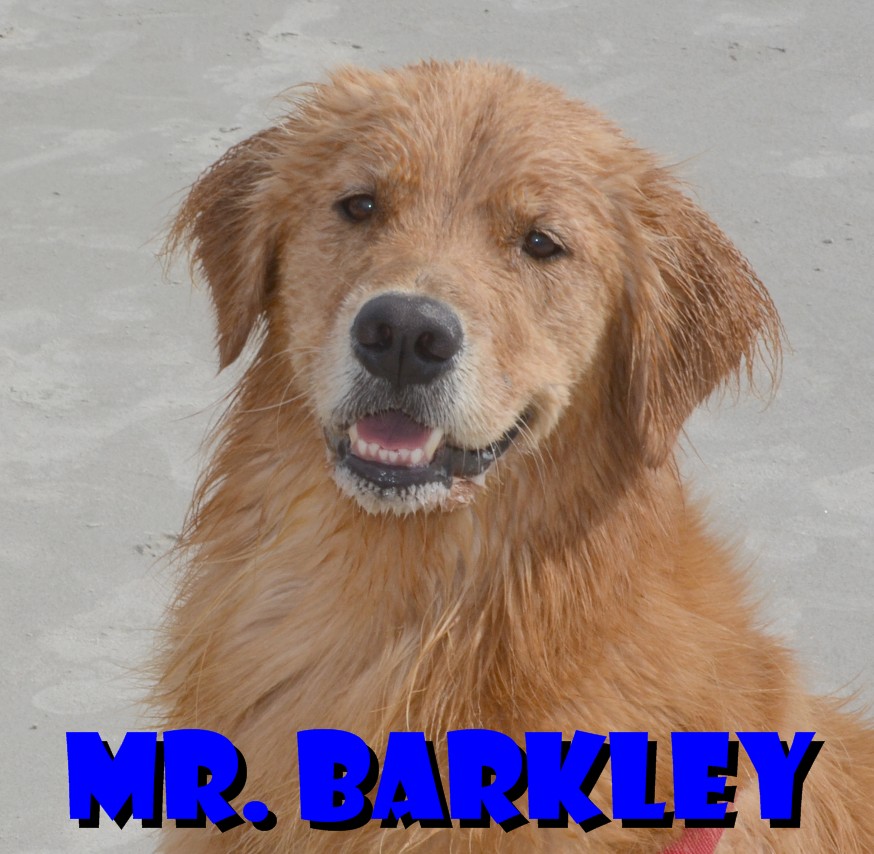
Well-known canine surfers who are planning to compete will include: Mr. Barkley, a Golden Retriever, who is also a therapy dog. Surf Pig, a rescued Terrier-tripod (shown above) Yes, you read that correctly, he surfs 15. Waldo, a rescued Terrier mix who splits his time between Sebastian, Florida and Eleuthera, Bahamas. Our South Florida rover reporter/photographer Tina VaLant will be on-site to cover the event for The New Barker. The weather, as of now, calls for partly cloudy skies. Surf should be good.

Safety First for our Surf Dog Champs.

Interesting In Teaching Your Dog To Surf: Advice to prep from the surfdogs: Get a surfboard and practice in a pool. Get comfortable. Sit, lay and stand on the board. Have your human gently push the board away, and slowly pull it back. This teaches balance and to use your back legs to steady the board, without the distraction of waves. When this all becomes easy, venture to the ocean on a calm day. Take it slow and work up to standing on the board and riding the waves.

Keep training sessions short and sweet. Always end on a good note. When it stops being fun that day––STOP. When you insist on doing something that your dog doesn’t enjoy you will break the feeling of trust between you and your dog. That can be irreparable. Safety first. Make sure your dog has a properly-fitted life vest, for ocean rides. Proceed slowly and pay attention that your dog isn’t becoming stressed. Bring plenty of fresh water and a bowl from home.

Hang Dog Surf Dog Classic will benefit Furry Friends Adoption & Clinic, a 501c3 not for profit organization located in Jupiter. Operations consist of a veterinary clinic, thrift store, adoption center, and ranch. Furry Friends provides an invaluable service to homeless animals to the northern Palm Beach/Martin county community. FurryFriendsAdoption.org 401 Maplewood Drive, Suite 10, Jupiter, FL 33548 561.747.5311.

Mr. Barkley