Love Heals All Wounds

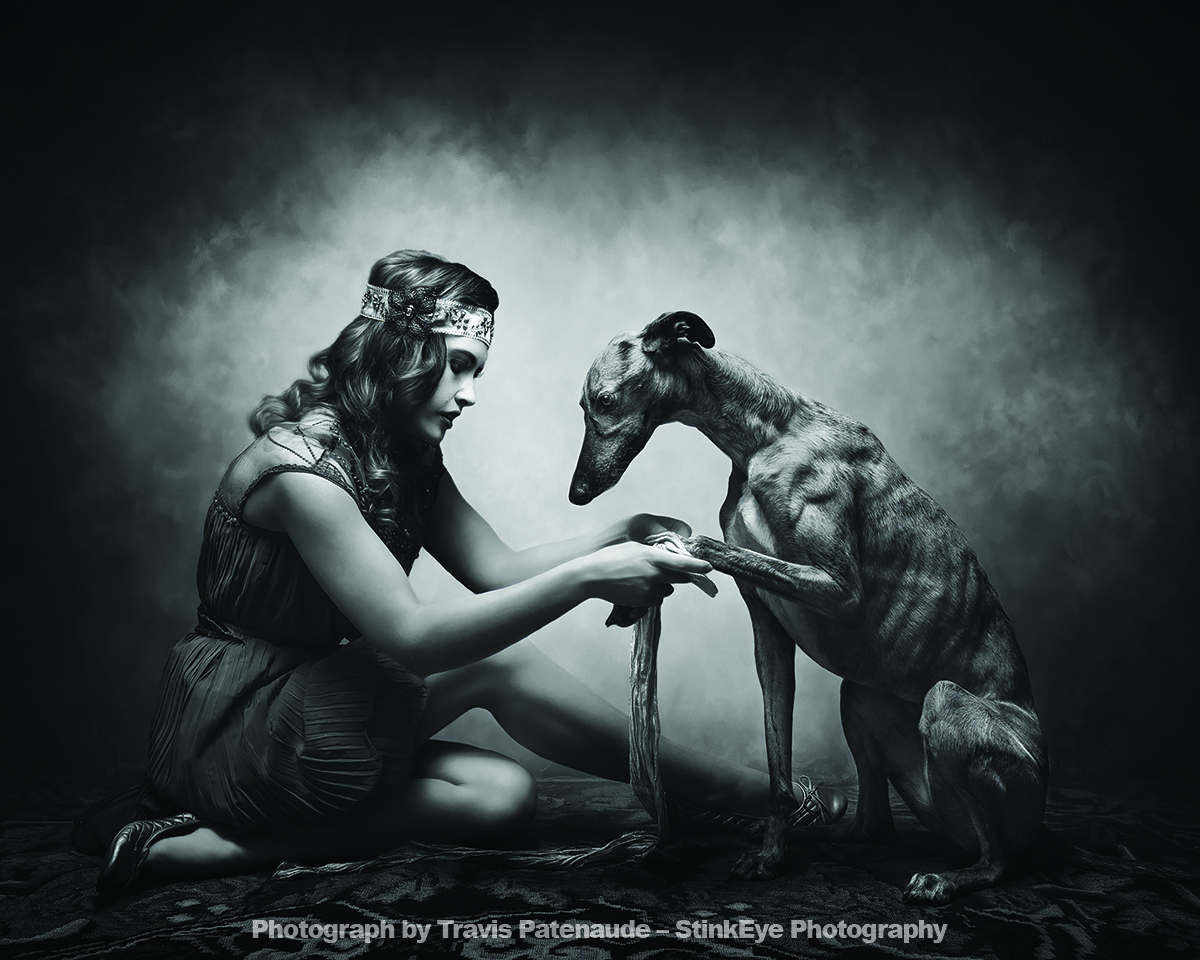
by Anna Cooke; photography by Travis Patenaude, Stinkeye Photography

In Spain, when a hunting dog fails at their sport, dishonoring the handler, it is a tradition, based in part on superstition, to destroy the dog. The Galgo Español was initially bred and raised to hunt hare and rabbit for food. Now they are bred for the pure sport and entertainment of their owners. The dogs are often killed in an unethical manner, such as by hanging, poisoning, drowning, or stoning, on the belief that, the more painfully a dog dies, the better luck the hunter will have the following hunting season. 

Many Greyhound rescue groups around the world have been working with rescue groups in Spain that focus on saving the Galgo Español and Podenco. Greyhounds In Motion, a rescue and transport non-profit based in Central Florida, has been working with Galgos del Sol, a rescue group in Spain, for several years. 

“Most people in Greyhound rescue quickly become aware of the plight of the Galgo,” said Tracy Branan Robinson, president of Greyhounds In Motion. She traveled to Spain a few years ago with two board members to help with rescuing 100 Galgos through Galgos del Sol.

Galgo Español, or Spanish Greyhound as they are commonly known, and the Podenco (which means hound in Spanish) are members of the Sighthound group, dogs that hunt by sight and speed instead of by scent and endurance. Despite their similar physical characteristics, the Galgo is not related to the English/Irish Greyhound. Many theories  place the lineage of the Spanish Galgo with descendants of the Irish Greyhound, bred with the Sloughi or Deerhound, all specifically created to hunt rabbit and hare. There are a number of different Podenco types (at least eight) but only the Ibizan Hound is recognized by the American Kennel Club.

In medieval Spain, the Galgo Español was a companion of the Spanish aristocracy. Spain’s national hero, Diego Diaz de Viva (El Cid), used Galgo hounds for hunting. Galgos were held in such great esteem at the time, that if stolen, the thief paid the penalty with his life.

In recent years, with so many Galgos ending up as street dogs, miserably roaming in search of food and water, they were looked down upon as trash by the general population. However, through education and awareness campaigns that confront the barbarity, the breed has become more popular among city dwellers in northern Spain.

Rescuing Galgos in distress is not always easy or possible. “We all know that someone who is cruel to an animal can become violent towards people,” said Anna Clements, the co-founder and director of SOS Galgos. “And unfortunately, hunting is widespread and popular in rural areas of Spain, so dealing with hunters is very unpleasant.” 

Originally, hare hunting was done only as a means for food. Later it was organized as a sport, the so called “carreras de campo” or field races. Courage, power and hunting techniques of the dogs are evaluated. The tradition and rules of such competitions can be retraced to the Roman Empire. Today, many Spanish Galgo owners belong to small racing clubs, which regularly organize their coursings. They are all eager to be the best in Spain. To accomplish this, they must win the Copa de Su Majestad el Rey (cup of the king) in the final of the Spanish coursing championship.

Galgos are intelligent dogs who learn the “game” of hunting. The hunters, known as galgueros, have established certain rules for hunting, and a Galgo may pay dearly with its life if any of those rules are broken. For example, if a Galgo takes a shortcut to catch the hare, the rules have been broken, and dishonors the galguero. In some cases hunters will severely punish their dogs for this behavior, believing that the dog’s descendants will learn from it.

The practice of using hunting dogs to kill prey in an open field is prohibited everywhere else in Europe except Spain. Under Article 13 of the Lisbon Treaty, there is an exception for prohibiting certain forms of animal cruelty that are part of cultural traditions, religious rites and regional heritage. Galgos are exempt from animal rights legislation in Spain because they are working dogs, not considered a family pet. This is similar to the legal status of dogs in the United States, where they are considered property—more akin to inanimate objects than living beings.*

Once the hunter feels his Galgo is of no use to him, he is allowed to discard and/or destroy the dog, as if she were no more than a broken tool. According to animal advocates working to change the laws in Spain, and rescue groups such as SOS Galgos and Galgos del Sol, an estimated 60,000+ Galgos and Podencos are abandoned, mistreated or killed each year. 

Once the hunting season is over, which runs from October through January, many of the dogs are either abandoned, killed or maimed. It once was tradition to kill the dogs by hanging them from trees. While hanging still occurs in  rural areas, the preferred less visible method is to throw the dogs down a well, or break their legs so that they cannot return home, leaving the dogs to suffer and die alone. Animal advocacy groups call it Spain’s Dirty Little Secret. (It is similar to a dirty little secret in the United States: after hunting season is over, many hunting dogs are left behind in the woods to fend for themselves. Wandering from the woods onto the highway, they are often hit and killed – ending up as nothing more than road kill).

The hunters still own many Galgos, and continue to allow uncontrolled breeding. Meanwhile, rescue groups manage to save, on average, as many as 2,000 of these dogs each year. Multi-sensory hunters, Galgos have large, highly-mobile prick ears, keen eyesight and an acute sense of smell. All have been bred with a combination of speed and agility with endurance for trotting rather than galloping. They are agile to the point they have been known to climb trees in pursuit of prey and can jump great heights from a stand. 

Podencos, perhaps due to their cleverness and persistent focus, are even more persecuted. Curious and clownish, they have a profound awareness of their surroundings and a sensitivity to their humans. Podencos reward their human companions with great loyalty, affection and are wonderful family members. 

Oftentimes, volunteers who meet the Galgos for the first time instinctively treat them like a Greyhound. “While they are similar in looks, they have their own unique characteristics,” said Robinson, Greyhounds in Motion. “In the United States, when rescuing a retired Greyhound racer, we’re pretty familiar with the circumstances of their past, and what they are accustomed to. But, by the time we meet a rescued Galgo, more often than not, they have been living on the streets, and no one knows what they’ve been through or how they’ve been treated.”
Robinson has always had a soft spot for the underdog; the senior dogs or those with health issues. “We pull the dogs that have been overlooked, for whatever reasons,” Robinson said. “And, we have no problem finding adopters and fosters who want to take in and help these special-needs dogs. We have people lined up to want to help.”

Street smart, Galgos love stimulation like games and chasing after thrown balls. Bred and built for endurance, the Galgo or Podenco make great running partners, unlike the Greyhound who mostly enjoys being a couch potato. 
“The one takeaway that stays in my heart,” said Robinson, “is how resilient these dogs are. If people could learn to let go of the past like these dogs are able to do, we would all be so much better off.”

*Within the United States legal system, dogs are considered property, limiting their legal protections from abuse and cruelty. The Animal Legal Defense Fund is working to elevate animals’ legal status above mere property.
Visit www.aldf.org/issue/animals-legal-status

This feature first appeared in issue 44 of The New Barker dog magazine, 2021.
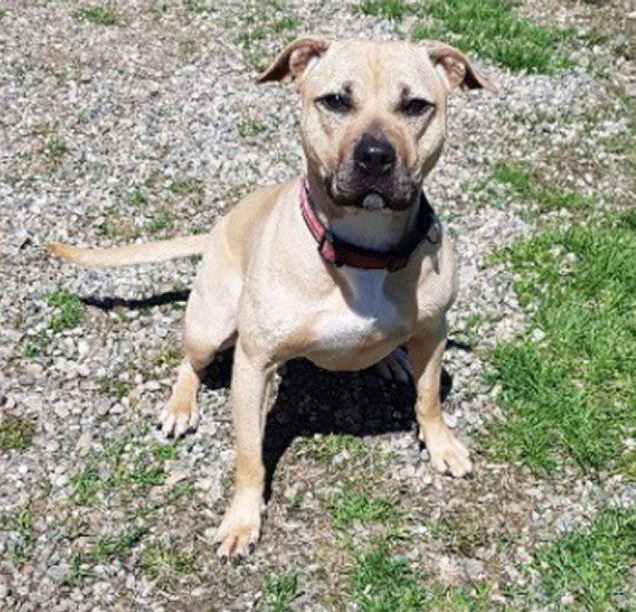
Florida Bound For A Fresh Start.

Eighteen of the original 21 alleged fighting dogs that were facing a death sentence in Ontario are coming to Florida for rehabilitation. They will live on a 12-acre farm run by Aimee Sadler, a renowned canine behavior modification specialist. Sadler has agreed to assume ownership of the dogs, who are scheduled to arrive on the farm some time in August. Fulltime staff is being prepared to care for the dogs over the next six months. Enrichment training will include daily walks, basic and more advanced training to help them integrate into play groups and allow the dogs to socialize with other animals and people.

The public journey for these dogs began in October 2015 when authorities seized a total of 31 “pit bull-type dogs” from a home near Chatham, Ontario. The raid led to animal cruelty and firearm-related charges against five people.

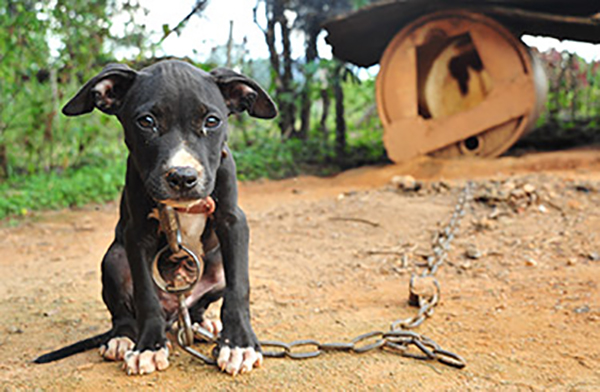
During the raid, officials found a grim scene in a building at the back of the property, behind a sign that read “Dirty White Boy Kennels.” Medical kits with injectable solutions and vitamin supplements, anabolic steroids, suture and skin staple kits, syringes, surgical tools, lists of names of dogs, training and weight schedules, muzzles, sticks and weight training harnesses, and dog-fighting contracts. All of the dogs were attached to chains that were tied to metal stakes in the ground. An inspector noted that “the majority of the adult dogs had severe scarring consistent with dog fighting. The scars were primarily located on the head, neck and forelimbs of the dogs.”

The dogs were transferred to the care of the Ontario Society for the Prevention of Cruelty to Animals (OSPCA). Three dogs were euthanized for medical reasons following the recommendations by to veterinarians. The remaining 28 were evaluated by the ASPCA which deemed 21 of the dogs a menace to society and could not be rehabilitated. The OSPCA filed a court application to have the remaining 21 euthanized.

Dog Tales, a dog rescue and horse sanctuary north of Toronto and Animal Justice, an animal rights organization, intervened in court. The judge denied their attempts to intervene this past December. In February, Dog Tales launched a publicity campaign called #SaveThe21. Celebrity endorsements came from Sir Richard Branson, actress Maggie Q, and Angel, a staff member of The New Barker dog magazine.

BransonMaggieQAngel_#SaveThe21

Dog Tales pushed for a second assessment earlier this year, which was a turning point for the dogs. “That second assessment has shown some slight improvement as a direct result of our daily care and some promise for rehabilitation,” said Jennifer Bluhm, deputy chief of the OSPCA. She called the Florida arrangement “almost unprecedented”, adding, “These dogs range in behaviors from extremely aggressive to unpredictable. They were bred to fight and trained to kill. A wagging tail is not always a sign these dogs are safe for interaction with other animals or people.”

Rob Scheinberg, owner of Dog Tales along with his wife, said he fought hard for the dogs because he owned a Pit Bull for 17 years. He is against Ontario’s breed-specific legislation that bans them. “It has been a long battle and I’m very happy that these dogs are getting this chance,” Scheinberg told The Canadian Press. He will be driving the dogs to Florida in a modified bus. “I think for most of them, the future is a good one. There’s a long road ahead for these dogs and we’re going to closely follow all of them.” Dog Tales will be funding the dogs’ rehabilitation, veterinary care, and food.

Dogfighting Ring 20170725

One Dog At A Time.

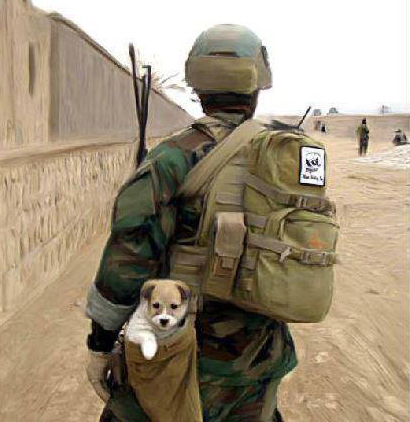
In 2006, during a tour of duty in the Afghanistan town of Now Zad, Royal Marine Sergeant Pen Farthing helped break up a dogfight. Located in Helmand Province, this was an area once described as the most dangerous place on Earth. Pen could not resist the soulful eyes of one of the street dogs he saved, whose ears had been cut off for fighting. He ended up befriending the dog and named him Nowzad.

Pen_Nowzad
Pen Farthing and Nowzad.

After his tour of duty ended, Pen went through a difficult process to bring Nowzad home to the UK. He quickly realized that he wasn’t the only one hoping to do the same. Pen founded NOWZAD, and soon began the process of reuniting dogs with the soldiers who had befriended them in war zones around the world, including Afghanistan, Iraq, Ukraine, Kuwait and Libya. Through donations, happy homecoming destinations have included USA, UK, Australia, Belgium, Canada, Germany, Holland, Italy, Spain, Jordan and South Africa.

Seven of the rescued street dogs have become fully fledged service dogs in the United States. The dogs are a much valued and loved lifeline to their veterans who have been diagnosed with PTSD. That these dogs endured a war zone like their handlers only strengthens the connection and understanding.

Service dog Hannah with Nate
Nate, reunited with Hannah through the efforts of NOWZAD. Hannah is now Nate’s service dog.

“As the troop sergeant in Afghanistan, I was there to motivate the guys and get them fired up again to go out and do the job. But no one was doing that for me,” said Pen. “My time with this dog was a way of de-stressing, collecting my thoughts and popping my head back in the game.”

KIA_TNB
Lexi, moments after being rescued. Sadly, Staff Sergeant David P. Day, 26 of Gaylord, MI, later gave his life in service with Fox Company, 2nd Marine Special Operations Battalion, during combat operations in Badges Province, Afghanistan, April 24, 2011.

Hope For Animals In A War-Tone Region. The charitable organization has reunited more than 900 dogs and cats with the soldiers. NOWZAD also runs the only animal shelter and clinic of its kind in all of Afghanistan. Currently, it is home to around 150 dogs, 40 cats and six donkeys. The modern veterinary clinic is staffed by a team of Afghan nationals. In addition to animal welfare education, NOWZAD’s mission at the clinic is the prevention of the spread of rabies. They are also implementing a humane trap, neuter, vaccinate and return program in Kabul for cats.

Who Rescued Whom? Often, the brave men and women serving their countries in war zones around the world, find themselves adopting a stray dog or cat struggling to survive. The animals end up providing a respite from war; a moment of peace, home and love. Leaving them behind, after their tour of duty is over, is unthinkable for many of these soldiers. NOWZAD arranges for the dog or cat to safely get to the Nowzad clinic where shelter and care are provided. They spay/neuter all rescues and provide any other required medical attention as well as vaccinations. Then, they carry out all necessary checks and paperwork to ensure the animal will arrive to its final destination, back in the arms of its loving warrior.

NOWZAD’s Policy Statement On The Import Of Dogs. There has been an increase of press speculation in reference to the irresponsible importation of dogs in the UK and the US. “It has been reported that more than 30,000 dogs were brought into the UK from the EU alone, with the majority coming from Romania, Bulgaria and Lithuania; many of which are via puppy traffickers or negligent organizations that do not adhere to the strict regulations that are required to import a dog or cat into the UK. Irresponsible dog importation poses a health and safety threat not only to the dog itself, but to other dogs and humans it may come into contact with. Many of the dogs imported are not a typical domesticated dog that easily integrates into a household environment; a fact not always communicated fully to a new owner,” states NOWZAD on its website.  While there have been numerous calls to prevent this international rehoming as standard practice, NOWZAD adds. “Whilst a complete ban would be unfavorable to us as it would prevent us reuniting soldiers with the dogs or cats, we strongly advocate the need for tighter regulations to prevent rogue importers who are detrimental to the hard work of reputable and responsible animal charities like ourselves.”

Cathy Kangas, who sits on the Board of NOWZAD says of Pen, “He has shown that one person can have an amazing impact, bringing good to an environment written off by many. NOWZAD is demonstrating what can be achieved when people from all walks of life and cultures cast differences aside and work toward a common goal.”

Adam_Freedom_2011
November, 2011/JFK Airport. With the help of American Dog Rescue, NOWZAD was able to make this emotional reunion possible between Adam and his battle buddy Freedom.

The New Barker dog magazine was first introduced to Pen Farthing and NOWZAD in 2011 by Florida’s own Arthur Benjamin of American Dog Rescue. Pen has written the bestseller “One Dog at a Time, Saving the Strays of Helmand.” The NOWZAD charity has support from animal lovers all over the world, including Ricky Gervais, who  donated the profits from one of his warm-up gigs, earlier this year. The warm-ups took place ahead of Gervais’ national tour of his stand-up show, appropriately called Humanity.

Why Do We Need National Dog Fighting Awareness Day?


dog_fighting_signs_A

Today, April 8, 2017,  is National Dog Fighting Awareness Day. The activity may seem out of place in our society, where dogs are considered family members. It’s also a felony offense in all 50 states.

Dog fighters often have dark and violent pasts, even though they may come from diverse social and economic backgrounds, investigators say. Doctors, lawyers, teachers and professional athletes have been arrested in federal animal-fighting busts in recent years. One characteristic all of these people have in common is a love for brutality and money.

Florida has a reputation for having a “prevalent” dog fighting problem even though detailed statistics don’t exist. It’s such a covert operation that it’s hard to measure. What is known, for sure, is that big money drives the industry, especially in breeding “bloodthirsty” bloodlines. Buyers in large operations pay between $5,000 and $10,000 for puppies in a champion bloodline. Of course, there is also money in the fight itself. Dog fighters are also motivated by power, according to Mark Winton, a criminal-justice lecturer at the University of Central Florida.

National Dog Fighting Awareness Day isn’t just another way to fill a calendar box; it’s a necessary measure to help stop one of the most horrific forms of animal abuse imaginable.

The following is an excerpt from a journalist’s account, who went undercover during a dog fight: “The crowd’s roar dulled to a hum as the next two fighters appeared. The previous match had been short, as one contestant quickly outmatched his opponent, mauling him badly and tearing off an ear. But this final fight matched two highly respected and feared combatants. They eyed each other warily as their handlers finished corner preparations. Spectators came to the edge of their seats, and fathers lifted children to their shoulders for a better view as the judge stepped to the center, called the dogs to their scratch lines and yelled, “Let ’em go!” A cheer arose as the dogs charged across the pit and violently slammed into each other, teeth flashing as they sought a vulnerable target.

The dogs came apart once, when the brindle appeared to give up, and turned for a moment. They were returned to their scratch lines and held. Both dogs were breathing hard and bleeding. “Let ’em go,” the judge called again. If the brindle failed to attack now, he would lose. But he was a game dog, and responded to an instinct bred into him over generations and nurtured through training. As the brindle charged across his line, his opponent’s handler released him with the encouragement, “Finish him, Bo.”

Tired and weakened by his wounds, the brindle was slow to meet Bo’s ferocious attacks. Bo grabbed the brindle’s right front leg in powerful jaws, bit and twisted. The “snap” of breaking bone was heard as the brindle was flipped onto his back, while Bo sought a better grip on his opponent’s throat. Remarkably, as the judge ordered the handlers to break the dogs, the brindle tried to crawl after Bo, still intent on fighting. His handler gently wrapped him in a blanket, saying, “No more, boy. It’s over.”

Writer Matthew Bershadker wrote in a Huffington Post blog, three years ago: “It’s not enough to see dog fighting as just a crime. Society discourages, yet tolerates a number of crimes – some are even glorified. But dog fighting is a deep stain on our national character, a cultural embarrassment we should all feel. This is not about just locking up bad guys; this is about doing everything we can to bring this nightmarish practice to an end. We can’t rest until it does. That’s why National Dog Fighting Awareness Day isn’t just another way to fill a calendar box; it’s a necessary measure to help stop one of the most horrific forms of animal abuse imaginable.”

To report dogfighting, call the following tip line: 1.877.TIP.HSUS

Here is a link for possible signs of dog fighting:

Dog_Fighting_Awareness_A