The Most Selfless Last Act of Love

by Anna Cooke for The New Barker dog magazine

Tying up the loose ends in a divorce is never as easy as turning the page of a book to proceed to the next chapter. There are compromises, lingering pain, words left unspoken. The one item the couple could agree on, once the divorce proceedings were in motion, was to share custody of the little dog who had been a big part of their life together.

But, like sharing custody of a child, the shuffling back and forth, and splitting expenses of their dog kept the couple uncomfortably connected. Their unresolved issues kept creeping back, every time they met to hand over the dog to the other. The resentment was escalating, and their dog was becoming adversely affected by the lack of continuity and the imbalance in his routine. So, it was determined that the ex-husband would maintain full custody of their dog. The breakup was finally complete, once and for all.

Their lives moved forward. She found stability in a newfound love, and the addition of two little senior dogs. Her ex had the occasional date, but his one constant was the little dog. 

A few years had passed when, one evening, she saw an email from the veterinarian of their once shared dog. The one thing her ex had forgotten to do was remove her as co-parent from the veterinarian’s records several years before. The email revealed that their little dog was gravely ill.

Her ex was inconsolable when she called him to inquire about the dog’s condition. When she visited, the little dog appeared not to recognize her, and that stung. Even though they had not seen each other in a long time, she thought he would still have some sense of who she was and remember her. As she stroked his fur and spoke to the little dog, he began to slowly wag his tail.

The two ex’s conferred over the dog’s prognosis with the veterinarian, once again sharing medical expenses, and spending what little time their dog had left, caring for him together. They discussed arranging in-home euthanasia. 

During that brief period of time, they opened up about what was going on in each of their lives. Communication was the one thing lacking during their marriage. Their mutual inability to openly convey feelings was the proverbial wedge that drove them apart. Now suddenly, over their dying dog, they were opening up to each other as never before. 

Back home, after a long day of juggling work and hospice care for the little dog, she fell into a deep sleep. In the dark of night, she was abruptly awakened by the sound of someone calling her name. It was so clear, she wondered if there was someone in her home, as she gathered her senses. Her significant other was traveling on business, and she was alone with only their two dogs by her side. Reaching for her phone on the nightstand, she saw the text from her ex. Their little dog was gone. 

After arriving at his home, they sat with their dog’s lifeless body and cried. Together, they thoughtfully made plans and agreed on what was to come next. Cremation. Two engraved paw prints and two boxes of ashes.

Recently recollecting with a friend on what had transpired over the course of that week, she realized it was their little dog who brought the necessary closure both of them needed to begin healing. She felt an incredible lightness of being as if a huge weight had been lifted off her shoulders. It was the love of one feisty, smart, adorable, and all-knowing little dog who died on his own terms, as his purpose in life had been fulfilled.

###

Love Heals All Wounds

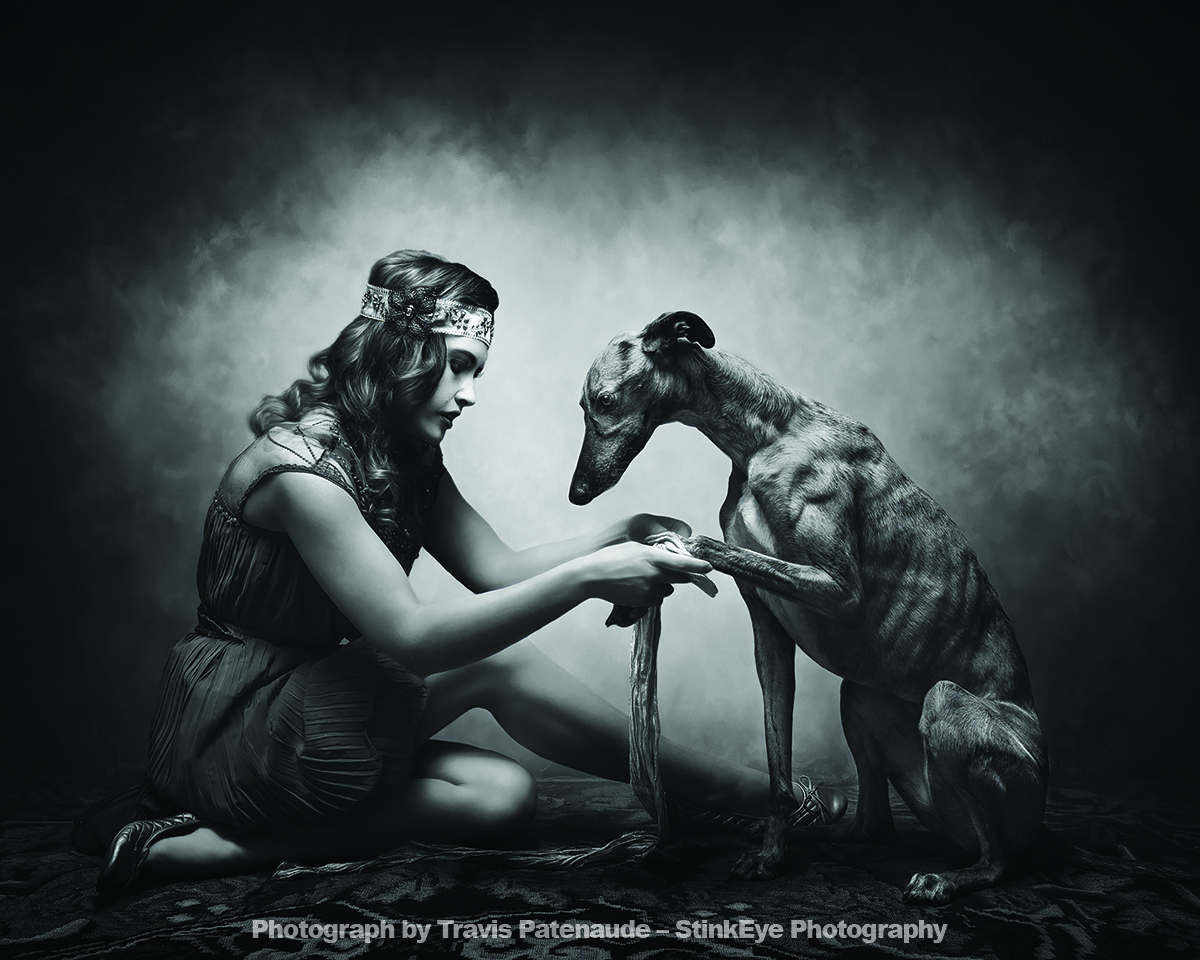
by Anna Cooke; photography by Travis Patenaude, Stinkeye Photography

In Spain, when a hunting dog fails at their sport, dishonoring the handler, it is a tradition, based in part on superstition, to destroy the dog. The Galgo Español was initially bred and raised to hunt hare and rabbit for food. Now they are bred for the pure sport and entertainment of their owners. The dogs are often killed in an unethical manner, such as by hanging, poisoning, drowning, or stoning, on the belief that, the more painfully a dog dies, the better luck the hunter will have the following hunting season. 

Many Greyhound rescue groups around the world have been working with rescue groups in Spain that focus on saving the Galgo Español and Podenco. Greyhounds In Motion, a rescue and transport non-profit based in Central Florida, has been working with Galgos del Sol, a rescue group in Spain, for several years. 

“Most people in Greyhound rescue quickly become aware of the plight of the Galgo,” said Tracy Branan Robinson, president of Greyhounds In Motion. She traveled to Spain a few years ago with two board members to help with rescuing 100 Galgos through Galgos del Sol.

Galgo Español, or Spanish Greyhound as they are commonly known, and the Podenco (which means hound in Spanish) are members of the Sighthound group, dogs that hunt by sight and speed instead of by scent and endurance. Despite their similar physical characteristics, the Galgo is not related to the English/Irish Greyhound. Many theories  place the lineage of the Spanish Galgo with descendants of the Irish Greyhound, bred with the Sloughi or Deerhound, all specifically created to hunt rabbit and hare. There are a number of different Podenco types (at least eight) but only the Ibizan Hound is recognized by the American Kennel Club.

In medieval Spain, the Galgo Español was a companion of the Spanish aristocracy. Spain’s national hero, Diego Diaz de Viva (El Cid), used Galgo hounds for hunting. Galgos were held in such great esteem at the time, that if stolen, the thief paid the penalty with his life.

In recent years, with so many Galgos ending up as street dogs, miserably roaming in search of food and water, they were looked down upon as trash by the general population. However, through education and awareness campaigns that confront the barbarity, the breed has become more popular among city dwellers in northern Spain.

Rescuing Galgos in distress is not always easy or possible. “We all know that someone who is cruel to an animal can become violent towards people,” said Anna Clements, the co-founder and director of SOS Galgos. “And unfortunately, hunting is widespread and popular in rural areas of Spain, so dealing with hunters is very unpleasant.” 

Originally, hare hunting was done only as a means for food. Later it was organized as a sport, the so called “carreras de campo” or field races. Courage, power and hunting techniques of the dogs are evaluated. The tradition and rules of such competitions can be retraced to the Roman Empire. Today, many Spanish Galgo owners belong to small racing clubs, which regularly organize their coursings. They are all eager to be the best in Spain. To accomplish this, they must win the Copa de Su Majestad el Rey (cup of the king) in the final of the Spanish coursing championship.

Galgos are intelligent dogs who learn the “game” of hunting. The hunters, known as galgueros, have established certain rules for hunting, and a Galgo may pay dearly with its life if any of those rules are broken. For example, if a Galgo takes a shortcut to catch the hare, the rules have been broken, and dishonors the galguero. In some cases hunters will severely punish their dogs for this behavior, believing that the dog’s descendants will learn from it.

The practice of using hunting dogs to kill prey in an open field is prohibited everywhere else in Europe except Spain. Under Article 13 of the Lisbon Treaty, there is an exception for prohibiting certain forms of animal cruelty that are part of cultural traditions, religious rites and regional heritage. Galgos are exempt from animal rights legislation in Spain because they are working dogs, not considered a family pet. This is similar to the legal status of dogs in the United States, where they are considered property—more akin to inanimate objects than living beings.*

Once the hunter feels his Galgo is of no use to him, he is allowed to discard and/or destroy the dog, as if she were no more than a broken tool. According to animal advocates working to change the laws in Spain, and rescue groups such as SOS Galgos and Galgos del Sol, an estimated 60,000+ Galgos and Podencos are abandoned, mistreated or killed each year. 

Once the hunting season is over, which runs from October through January, many of the dogs are either abandoned, killed or maimed. It once was tradition to kill the dogs by hanging them from trees. While hanging still occurs in  rural areas, the preferred less visible method is to throw the dogs down a well, or break their legs so that they cannot return home, leaving the dogs to suffer and die alone. Animal advocacy groups call it Spain’s Dirty Little Secret. (It is similar to a dirty little secret in the United States: after hunting season is over, many hunting dogs are left behind in the woods to fend for themselves. Wandering from the woods onto the highway, they are often hit and killed – ending up as nothing more than road kill).

The hunters still own many Galgos, and continue to allow uncontrolled breeding. Meanwhile, rescue groups manage to save, on average, as many as 2,000 of these dogs each year. Multi-sensory hunters, Galgos have large, highly-mobile prick ears, keen eyesight and an acute sense of smell. All have been bred with a combination of speed and agility with endurance for trotting rather than galloping. They are agile to the point they have been known to climb trees in pursuit of prey and can jump great heights from a stand. 

Podencos, perhaps due to their cleverness and persistent focus, are even more persecuted. Curious and clownish, they have a profound awareness of their surroundings and a sensitivity to their humans. Podencos reward their human companions with great loyalty, affection and are wonderful family members. 

Oftentimes, volunteers who meet the Galgos for the first time instinctively treat them like a Greyhound. “While they are similar in looks, they have their own unique characteristics,” said Robinson, Greyhounds in Motion. “In the United States, when rescuing a retired Greyhound racer, we’re pretty familiar with the circumstances of their past, and what they are accustomed to. But, by the time we meet a rescued Galgo, more often than not, they have been living on the streets, and no one knows what they’ve been through or how they’ve been treated.”
Robinson has always had a soft spot for the underdog; the senior dogs or those with health issues. “We pull the dogs that have been overlooked, for whatever reasons,” Robinson said. “And, we have no problem finding adopters and fosters who want to take in and help these special-needs dogs. We have people lined up to want to help.”

Street smart, Galgos love stimulation like games and chasing after thrown balls. Bred and built for endurance, the Galgo or Podenco make great running partners, unlike the Greyhound who mostly enjoys being a couch potato. 
“The one takeaway that stays in my heart,” said Robinson, “is how resilient these dogs are. If people could learn to let go of the past like these dogs are able to do, we would all be so much better off.”

*Within the United States legal system, dogs are considered property, limiting their legal protections from abuse and cruelty. The Animal Legal Defense Fund is working to elevate animals’ legal status above mere property.
Visit www.aldf.org/issue/animals-legal-status

This feature first appeared in issue 44 of The New Barker dog magazine, 2021.

The Canine Challenged Christmas Card

by Patricia Misiuk, a volunteer for the SPCA Florida in Lakeland

Like oil and vinegar, kids and cameras seldom blend well. Add a 75-pound German Shorthaired Pointer to the mix and challenges multiply exponentially.
In 1953 at the age of seven, I shared my childhood with two brothers; a four-year-old human named Jimmy and a two-year-old, four-pawed sibling called Jack, better known as the stealthy stealer.

Thanksgiving erupted in chaos as relatives flitted about and Mom, in her haste to mash potatoes, placed the 22-pound turkey to cool on the sideboard. Jack, with a seamless swipe, grabbed the bird and devoured all but the carcass and then washed it all down with his favorite beverage, water from the toilet bowl.
While a bloated Jack was burping and succumbing to a tryptophan coma, Dad was plotting our annual holiday greeting. Yes, a non-Currier and Ives card featuring not snow but song. 

Simplicity and moderation never factored into Dad’s lexicon of life.  During pre-digital days, seven decades ago, props for our family photo shoot included bagpipes, a Rolleiflex camera secured on a tripod, countless rolls of film, a hymnal, flashbulbs whose intense light would bounce off the moon, and last but not least, boxes…many boxes…of Milk Bones.

 A two-biscuit bribe coaxed Jack onto a low table between Jimmy and me. To paraphrase Cecil B. DeMille, we were ready for our closeup, er, closeups.
Jimmy and I shared a hymnal and pretended to sing while Dad played the bagpipes, enticing Jack to howl.  Mom clicked the cable release as hissing flashbulbs blinded us.

“I can’t see,” Jimmy whined.
“Jack looks like a rocket,” Mom commented, reaching into the bag of treats.

Frustration accelerated as the photo session wore on Jack’s Pavlovian response to anticipating treats.  Strings of slimy saliva landed on the hymnal.
Patience went out the window as we three blinked, sighed and yawned during endless takes.

Murphy’s Law––if things can go wrong, they will––dominated when film jammed, flashbulbs either exploded or failed to activate, the shutter release kicked into overdrive, and Jack passed enough gas to heat our house all winter.

“I think I got a winner,” Dad exclaimed several rolls of film later.  Music (but not from strident bagpipes) to our ears.

“Take Jack out for a run,” Mom said.  “He’ll need to go.”  An understatement considering the two empty boxes that once contained Milk Bones.

Next came Dad’s journey into the unknown, the laundry area repurposed as a darkroom, to develop film.  Running a faucet or flushing the toilet was off limits since unwavering water temperature was paramount to successful photo outcome. Following a series of steps culminating in photos emerging in chemical baths, only one image passed muster for our unique holiday greeting.

As Mom was addressing envelopes and licking three-cent stamps for postage, Dad was conjuring up the theme for our family’s 1954 holiday greeting. The scenario and logistics, while thankfully not set in stone, involved fitting Jack with a reindeer costume and anchoring him on a Radio Flyer sled.  Jimmy and I would hold on to Jack for dear life while Dad secured a ladder for our ascent to the roof. ###

For A Moment Of Forever

by Anna Cooke, Editor in Chief, The New Barker

Early on in our relationship as a couple,traveling at the spur of the moment was how Steve and I enjoyed our lives. Pack a bag, jump in the car or catch a plane to go somewhere for a couple of days or a week. Nothing, especially no one, to hold us back. We often never made reservations for accommodations until after we’d reached our destination. And back then, there was no such thing as Google. Risk-taking adventurers, whether it was to Key West or Lake Tahoe. 

Then, one day in the mid 80s, the most remarkable thing happened, just after the new year. Needing a break from the post-holiday blues, which had crept in like one of our sudden Florida winter storms, we decided to run some Saturday errands at a nearby plaza. Brunch afterwards was our motivator, so expediency and efficiency were key. We split up, agreeing to meet back at a designated spot within a short period of time. 

I finished my errands first, and sat down to people-watch. Steve arrived a few moments later with a look of consternation. “You have got to follow me and let me show you what I’ve found,” he said. 

As we entered the pet store, I noticed the mostly empty cages lining the walls to the right and left of us. Sure signs of successful holiday sales for the proprietor. A Siberian Husky crouched uncomfortably in one of the cages that was much too small for her growing body. She looked right at us with the bluest eyes I had ever seen. She was beautiful, even with the splotches of missing fur on her face – from mange, the store owner said.

He had already told Steve the dog would be shipped back to the Midwest breeder where she’d been born to let them deal with her. He repeated his message to me in an ominous tone that I can still hear, 44 years later. 

“Nobody bought her over the holidays, and I’m not spending any more money to continue caring for her,” he said. “She’s grown out of her puppy cuteness. And, no one will buy her now.” 

Quite the sales tactic. I wondered if he had used it on all his post-holiday customers. Nevertheless, it worked on us, and all plans, including brunch, were diverted. Life, as we knew it, had just changed forever.

We named her Clouseau, because like the bungling beloved police detective, her lack of judgment often led to her sticking her nose into places it should never have gone in the first place. She lived with us for 10 years, and we continued treating her mange on the occasions it returned. Steve called her Little One.

Back then, we weren’t familiar with mange, and we definitely had never heard of puppy mills, which have been around since just after World War II. Today, after publishing The New Barker for almost 18 years, I can certainly tell you a thing or two about puppy mills, now, and why I will continue to support the passing of local ordinances and state laws to phase out the retail sale of puppies in stores. 

Every dog who comes into our lives takes up a spot in our hearts that lasts forever, long after their beautiful physical beings are gone. Writer Ernest Montague wrote that a dog is just asleep in our hearts, therefore, a dog never really dies. And, that sudden occurrence of the memory of a dog who’s been gone a long time? Well, that’s the dog’s wagging tail pounding, wap, wap, wap on your heart, stopping by to say hello.

I’m never sad when this happens. On the contrary, it will remind me of a funny moment or an endearing trait of the dog who’s paying a visit to my heart. Sometimes, the memory is so strong, I can conjure up the familiar fragrance of the dog’s fur. That is the power of a dog’s love, and as you’re reading this, I know you know what I’m talking about. Looking back over the years, and the relationships we have shared with our dogs, I realize how each one of them has shaped the evolution of The New Barker dog magazine. And each dog, since our first publication in 2006, continues to inspire me. They have taught us so many lessons, some of which we fail to recognize right away. But, it does feel that with each new dog experience, the time we have with them, somehow continues to improve us as humans.

Thank you Clouseau, Elmo, Zoe, Chloe, Rita, Dougie, Midnight, Angel, Greta, Nellie, Henry, and Teddy.

Steve serenades Clouseau, aka Little One. He’s probably singing The Beach Boys Little Surfer Girl with the opening line: Little surfer little one.

An Unsavory Partnership? You Decide

by Anna Cooke

UPDATE on May 8, 2025: This article was first published in October 5 2023. Despite what the SPCA Tampa Bay sends out in press releases or posts on social media, they continue to work in support of the puppy mill industry by partnering with Sunshine Puppies, Pinnacle Pet and Petland.

There’s a Trojan Horse rolling into the Tampa Bay Area. Who’s being used to hide behind whom is yet to be determined. Being open-minded and having frank discussions on out-of-the-box ideas and strategies are good tools to have in the animal shelter world.

The SPCA Tampa Bay is about to launch For All Dogs, a pilot program that involves a partnership with Sunshine Puppies (a retail store that sells puppies in the Tampa Bay Area) and Pinnacle Pet (one of the largest brokers of puppies in the country). In fact, after a year of discussions between the three entities, the partnership has already essentially been consummated. Earlier, this year, several retired breeder dogs were imported from commercial breeding enterprises (CBEs) in the Midwest to the SPCA Tampa Bay for adoption purposes.

Not everyone wants to adopt a shelter dog. Some people want a specific breed, others want a puppy. When that’s the case, through the partnership’s program, SPCA Tampa Bay will direct shelter visitors to Sunshine Puppies to purchase a puppy. In turn, Sunshine Puppies is planning to place kiosks in their two Pinellas County store locations that will feature the adoptable dogs at the SPCA Tampa Bay.

The partnership came about after the Pinellas County Commission voted to prohibit any new stores from selling puppies and kittens in June, 2022. The commission did not grant animal advocates’ pleas to shutter the six existing stores currently selling puppies in the county. Sunshine Puppies is one of the businesses grandfathered in.

CBEs, more commonly known as puppy mills, engage in systematic neglect and abuse of animals, leaving severe emotional and physical scars on the victims. One in four former breeding dogs have significant health problems, are more likely to suffer from aggression, and are psychologically and emotionally shut down, compulsively staring at nothing. 

Quite a few of the CBEs that supply Sunshine Puppies with puppies have had multiple USDA and state violations including: Cedar Ridge Kennels in Neodesha, Kansas (the owners could not locate the last recorded date for annual heartworm and fecal float testing for 236 dogs. In 2018, the owners surrendered more than 140 dogs to a shelter, many of whom were either ill or near death); Shady Grove Kennels in Kansas (62 adult dogs, 42 puppies; build up of dried dirt and feces on the raised dog crates); Sean’s Puppies in Missouri (breeding dogs and selling puppies without the required state license); Puppy Travelers in Missouri (multiple violations including 24 puppies seized from a Puppy Travelers transport vehicle outside a Petland store in Florida in 2018. The puppies were found with “urine, feces, and no water” in their cages. Many of the puppies were sick.)

Pinnacle Pet is connected to Puppy Travelers as a combination puppy broker/transporter. They are under the legal business name Sobrad, LLC and are associated with a number of different names, including Bateman Diversified and Northeast Transit, all listed under the same Neosho, Missouri address. Sobrad, LLC was cited by the USDA in 2015 for an incident involving puppies overheating on a transport vehicle. Nine puppies died.

Why would a shelter – in a geographic area of Florida where the municipal shelters are almost always at-capacity, in a state that is number four in the United States with the highest euthanasia numbers of healthy adoptable dogs – want to align themselves with entities known to be associated with the puppy mill business? Is it good business, or just good PR?

Martha Boden, CEO of the SPCA Tampa Bay, has spoken in front of city and county commissioners against the retail sales of puppies and kittens over the last 10 years. In 2022, after the Pinellas County Commission voted to prohibit any new stores from selling dogs and cats, Boden was quoted in a Tampa Bay Times article, noting that the abuse at large-scale breeding operations is well-documented and that retail stores help prop up that industry. “In fact these businesses are helping to create the demand for mass-produced puppies by misrepresenting what has happened to those animals, their parents and their siblings before they even arrived at the store,” Boden said in the Times’ article.

Why the change of heart?

The answers were presented to The New Barker  during a three-hour meeting recently with Martha Boden; Dan Cohn, the owner of Sunshine Puppies; Chris Fleming, the co-owner of Pinnacle Pet; and Missy Hurley of B2 Communications, the PR firm for the SPCA Tampa Bay. The following numbered points were discussed during the meeting to help justify the pilot program, For All Dogs, and the partnership between the three entities. My responses, for the purposes of this article, are in bold.

1) Florida will never pass statewide legislation to stop the sale of puppies and kittens in retail stores. “It just won’t happen,” said Boden. “For 20 years the animal advocates and puppy retail store owners have been on opposite sides, fighting. And the only ones suffering are the dogs. It’s time we work together to affect change – to really make a difference.” This was a combined quote between Cohn and Boden.

From the Editor: 10 years ago the industry would have said no state was going to ban the sale of puppies in pet stores. Now, seven have. There is no long term future in this puppy selling pet store business model. They’ve lost several of the biggest states in the nation and more are to come. Animal advocates are continuing to make a huge impact on puppy mills.
In January 2022, a bill was introduced in Florida, misleadingly presented as an animal protection bill. Florida House Bill 849/Senate Bill 994 contained meaningless regulations that would not protect animals, but would prevent local governments from enacting future ordinances to prevent the sale of puppies in their communities’ stores. The lobbyist who fought for the bills was funded, in large part, by Luis Marquez, president of Petland Florida and Petland Texas. The bill did not pass, thanks to a groundswell of support from animal advocates alerting their Representatives.
Prompted by community interest in shutting down the puppy mill pipeline, cities and counties across the country have adopted local laws to end the sale of dogs and cats in stores. Profitable and successful pet stores in the U.S. do not have to sell dogs and cats, and people are taking notice. More than 80 municipalities in Florida have passed ordinances banning the retail sale of puppies, kittens, dogs, and cats in pet stores.
Michigan just passed legislation to ban the retail sale of commercially-bred animals in pet stores, to take effect in 2025. The Oregon Legislature voted in August 2023 to stop any additional pet stores in the state from selling puppies or kittens and phase out these sales in existing stores.  The state of Washington passed a similar law in 2021. Illinois and New York in 2022. Maryland in 2020. California enacted a similar law in 2017.  Louisville, Kentucky just passed an ordinance to ban the sale of dogs and cats in pet stores and outdoor spaces like flea markets.
The passages of these laws nationwide have decreased the number of USDA licensed puppy mills by 1/3 with an average number of 87 adult dogs per kennel in 2012 and 57 in 2022.  Nebraska Department of Agriculture records show that half of the state’s commercial dog and cat breeders have left the business. 

2) Last year 9 million dogs were acquired by people. Of that number, less than 5% were purchased from a pet retail store. The numbers are so low that there is no way bringing in two or three dogs every so often through this chain will affect pet adoptions at SPCA Tampa Bay and Pinellas County Animal Services. Adoptions are still the number one way people acquire dogs.

3) Give the community what it wants and give them options. Through the partnership’s program, people can opt to purchase a purebred puppy or adopt a purebred retired breeder dog or imperfect puppy. People will now be able say, without shame or guilt, that they adopted their purebred puppy from the SPCA Tampa Bay.  “It’s a shame that people who purchase dogs feel guilty they didn’t adopt the dog,” said Fleming. “We’d like to help change that perception through this pilot program.”

Added Boden, “Nothing against the block-headed dogs, we love them just as much as anyone else. But bringing in dogs and puppies like Pomeranians, ShihTzus – you know – the dogs that the public really wants to adopt, will help bring more people to our shelter, and really that’s what it’s all about, isn’t it?”

From the Editor: Actually, no it’s not what it’s all about. The underlying mission statement of private shelters is to protect the animals. Giving the public what you believe they want with options makes you a retail store. 

4) The results of  a recent study conducted by Purdue University are the basis for a nationwide certification program that establishes “rigorous standards for breeders.” Canine Care Certified will be a “blue ribbon standard” for the CBEs currently working with Pinnacle Pet, who has invited them all to participate. It is not a requirement, merely a suggestion from Pinnacle Pet. For a nominal annual fee, an independent contractor will inspect the CBE’s facility to make sure they are in compliance with the Purdue University checklist in order to receive the Canine Care Certification. Retail stores, like Sunshine Puppies, will then be able to market that their puppies come from breeders who have been Canine Care Certified – much like most retail stores have already been doing with the USDA.

From the Editor: When it comes to inspecting puppy mills, the USDA standards are pretty low, so efforts to raise the bar aren’t going to put a strain on the way a CBE runs its business. 

5) Pinnacle Pet, the puppy broker, created A Dog’s Dream, a 501(c)(3), to take in the retired breeder dogs and imperfect puppies, then transport them to SPCA Tampa Bay. The dogs will be transported across country in the same vehicles used to transport puppies to retail stores for inventory. Pinnacle Pet will be reimbursing the breeder for the cost of vaccines and standard veterinary care for a puppy. The breeders will not be compensated for turning over the retired breeder dogs to Pinnacle for adoption purposes. As per the SPCA Tampa Bay’s longstanding protocol, no special treatment will be given to the dogs and puppies that come in through A Dog’s Dream. In other words, their adoptability will not supplant the existing dogs in the shelter available for adoption. To date, only retired breeder dogs have been transported to the SPCA Tampa Bay for adoption.

From the Editor: Regarding transporting the dogs to SPCA Tampa Bay in the same vehicles that ship puppies to pet stores. The CDC said there are sanitation problems at every link of the chain in the commercial pet breeding industry. That is why pet store puppies are often sick. 

6) Currently, through the partnership, Sunshine Puppies is working with the SPCA Tampa Bay medical staff. SPCA Tampa Bay veterinarians visit Sunshine Puppies once a week to perform exams on the puppies. Any sick puppies are transported to SPCA Tampa Bay’s medical facilities to be treated. Regarding the kiosks Cohn wants to place in his stores, he said that some people who visit his stores may not be able to afford the price of the puppies in his inventory. Additionally, he said he has had people visiting who have asked about the availability of adoptable dogs. 

From the Editor: In the meeting, it felt as if the overall consensus for animal sheltering was “if you can’t beat ‘em, join ‘em.” This felt similar to the initiative presented during the 2022 Humane Society of the United States (HSUS) national conference in Orlando. One of the conference’s speakers presented reasons for why shelters should consider either breeding their own puppies and/or at least working with breeders to supply puppies in their shelters. The idea was tabled, at least for the time being, after the information became public, and the rescue community and animal advocates became vocal against the movement.
Shelters – municipal or private – have no business getting into breeding dogs.  For that matter, neither do rescue groups.

7) Boden and staff flew out to Missouri to several CBE facilities with Pinnacle Pet. “The facilities were beautiful,” said Boden. “And we learned that they run their kennels very similar to the way we run our shelter.”

From the Editor: Was this the best use of shelter funds? Didn’t anyone on the board question this?  The SPCA Tampa Bay has capable staff and a budget to develop and create marketing campaigns to showcase its adoptable dogs and programs. They can continue to think outside the box with programs that partner with municipal shelters and rescue groups. And, if there comes a time that there are no more shelter dogs to adopt, then they should be prepared to have programs in place that will ensure families stay together.
In this regard, why did the SPCA Tampa Bay recently opt out of Pinellas County Animal Services low cost spay/neuter program? It was because they felt it was costing them too much money and interfered with their paying clients.  The voucher program is an important and much-needed community service that includes a partnership with Friends of Strays, Humane Society of Pinellas and Pet Pal Animal Shelter. 
Again, where are the board members on this initiative with Sunshine Puppies and Pinnacle Pet? It is somewhat understandable why employees and volunteers aren’t speaking up. The culture at many shelters has been “if you aren’t with us you’re against us.” Those who work and volunteer at shelters are being fired for saying something that doesn’t sit well with the administrative staff. Even board members are afraid to speak up for fear of being booted off the board. 
If this program rolls out, don’t be fooled by the way it is presented. The facts will be twisted in their favor. Don’t believe for a minute that the efforts animal advocates have made over the last 10 years at the legislative level aren’t making a difference. Don’t believe that it will only be two or three dogs, every once in awhile, and that municipal shelters like Pinellas County Animal Services won’t be affected. If no one speaks up against this initiative, it will become multiple dogs being imported from puppy mills. Once this pipeline is opened, how much damage will be done before it’s closed? 
A private shelter like the SPCA Tampa Bay is a business that can run its operations as it wants. It relies on the support and donations from the community and corporate business partners. Do you think this initiative and the shelter’s beliefs behind it align with yours? To effect change, the community must speak up. Ask questions. Put your thoughts and concerns in writing. And this is not conjecture. Pinellas County government is complicit with all of this, looking the other way, and allowing the importation of puppies sourced from puppy mills.
SPCA Tampa Bay, there are so many other opportunities in our community with which to form partnerships that would better benefit animal welfare.

Additional Facts: In August, nearly 270 at-risk dogs and cats were taken out of over-crowded Florida shelters and flown to shelters in New Jersey and New Hampshire. *Clear the Shelters and Greater Good Charities. Why are we importing any dogs from anywhere when this state is over-capacity? Outside of a natural disaster or emergency to assist neighboring states, we should be taking care of the animals on our own turf. While huge strides are being made to clear our Florida shelters, others are importing dogs from other states and countries.

Options? The community already has options. Here is an example: In June, Florida Little Dog Rescue in Osceola County was looking for foster homes for 14 Doodle puppies they obtained from Florida breeders from four different litters. The 14 puppies did not sell and the breeders did not want them, and that gets expensive for the breeder. “When you sell a puppy in the state of Florida, the law requires that you have to provide a health certificate,” said Laurie Johnson, director of Florida Little Dog Rescue. “Every four weeks in the state of Florida, you have to go and get that health certificate renewed if you’re selling puppies. So, if the puppies don’t sell immediately, it mean repeated trips back to the vet and that isn’t financially profitable for the breeder.”

In November 2021, the ASPCA assisted with the rescue of more than 500 hundred dogs from a U.S. Department of Agriculture (USDA)-licensed commercial dog breeding facility in Iowa. Breeder Daniel Gingerich was licensed by the USDA in 2019, but the agency didn’t inspect his facility until 2021. When the USDA finally did the inspection, they found many animals suffering: dogs hidden from inspectors, ongoing disease outbreaks like parvovirus and distemper, heat distress, lack of water and food, dead and dying dogs–over 200 violation of the Animal Welfare Act in total. Documents filed with the state of Florida show that nearly 40% of Florida’s puppy-selling stores imported dogs from Gingerich’s puppy mill in Iowa.

Small in Stature and Stout of Heart with Impeccable Manners

by Anna Cooke

Remember riding the merry-go-round, and the feelings you had as a child as it whirled around? There were the colorful lights and the bejeweled horses. The scenery in and around the ride coupled with the music felt surreal and enveloping. As the merry-go-round gained speed, reality collided with the imaginary. Nothing else mattered except that moment of being temporarily transported into another world. The scenery beyond the perimeters of the merry-go-round simply disappeared into one dreamy landscape of color, reminiscent now of Van Gogh’s Starry Night in the traveling exhibition, The Immersive Experience.

A few weeks ago, before it officially opened to the public, we were invited to attend a private showing of Lonely Dog, The Immersive Experience. Standing in the middle of a 360-degree cavernous theater in Orlando to take in the surround sounds and artistic visuals had a very similar effect to the childhood memory of the merry-go-round all those years ago. Through the power of technology, static artwork morphs into larger-than-life displays of movement, creating a participatory-like experience that is jaw-dropping.

Based on the paintings by New Zealand artist Ivan Clarke, and a novel he co-wrote with Stu Duval, Lonely Dog is the story of a troubadour, who sings his own songs of protest against oppression. Lonely has been bullied, run out of town by some bad cats, rejected, and hunted. All he really cares about is his music, the guitar on his back, and the love of his life. By the way, Lonely is a dog whose opposing thumbs make his guitar-picking legendary. Our protagonist goes from hound to hero in a heartbeat playing his Houndskiffle Blues, as it’s referred to in the story.

Clarke’s paintings of anthropomorphic dogs and cats have been animated to create a cast of characters, each with unique traits and foibles. The permanent exhibition transports its viewers into a stunning visual adventure on the life of Lonely Dog, “a misunderstood orphan who overcomes bullies to become a legend whose music heals a divided society of posh cats and working-class dogs in the fictional place of Alveridgea.”

Bringing Clarke’s vision to life was inspired by one simple black and white sketch of Lonely Dog, years ago spotted by one of the show’s producers. “When I saw that image of Lonely, I had to learn more about  the artist,” said Cliff Dew. “When I found out there was a novel, of course I had to read it, and could not put it down until I finished it.”

Rob Pearlman, who co-produced Lonely Dog alongside Dew, said Ivan Clarke was first inspired to paint Lonely Dog’s dream world when he left home for vacation. “He imagined what his own dog was doing in his absence,” said Pearlman.

Around 200 pieces of Clarke’s original artwork have been animated and projected across 35 projectors to create the Lonely Dog Immersive Experience. All set to an original soundtrack, parts of the 30-minute show are narrated by singer/songwriter Geoff Pearlman, who is Rob’s brother. Geoff also sings and plays guitar on the Lonely Dog soundtrack.

Four years in the making, production began a year before the pandemic and continued throughout the lockdown. About 185 people from around the world collaborated in the creative process and production. Thanks to technology, artists worked remotely on computers to create the CGI and 2D Animation. Communication was accomplished through the use of Zoom and Facetime. All in all, there are more than a million pixels of illumination in over a million frames of video, bringing this beloved story to life.

Lonely Dog Immersive Experience is a grown-up’s turn at the merry-go-round, a timeless memory to be shared by the entire family.  Orlando has a new attraction, dog lovers, and this one is unforgettable.

Official Trailer

In addition to the immersive experience, the ticket price includes:

An art gallery showcasing 40 pieces of artwork by Ivan Clarke.

Virtual Reality Lounge – Guests will fly alongside Lonely Dog on a journey that soars through the skies and dives into the depths of the sea.

Selfie Salon – Participants can snap a photo alongside a couple of Lonely Dog’s characters to share on social media.

Art Studio – Aspiring artists may leave behind their own works of art for display.

Music Lounge – Scheduled live entertainment by local area artists.

Merchandise – Main lobby is also a veritable array of sights to purchase for the dog, art and music lover.

Details:

Monday through Saturday: 11am – 9pm

Sunday: 11am-7pm

4900 International Drive, Orlando (an outparcel located on the property of Premium Outlets).

Ticket Price: $34.57 per person

Only trained service dogs are permitted.

To purchase tickets, call 844.566.3593 or visit www.lonelydogorlando.com

NOTE: $1 of every ticket sold will be donated to Happy Trails Animal Rescue and their Community Resource Center, a Central Florida 501c3. www.happytrailsanimalrescue.com

#Orlando #Entertainment #DogLovers #OrlandoAttractions #PremiumOutlets #LonelyDog #Music #Art #ImmersiveExperience

Cleo, The Dog Who Loved Pelicans

by Bonnie Georgiadis

We were excited about getting 61 winged pelicans. They were to be displayed in a sanctuary along the Weeki Wachee River as an additional point of interest for patrons enjoying the Wilderness River Cruise at Weeki Wachee Springs. The Suncoast Seabird Sanctuary donated them to us because they were overcrowded with pelicans that could never be released back into the wild. A great deal of care was taken to select the right location for The Pelican Sanctuary. The existing steep slope was terraced, complete with gently sloping sand, ramps and tropical landscaping. An enormous shallow pool was constructed for swimming and a fence was added all the way around. A walk-in freezer and a tub for thawing fish was put in behind the scenes. It was quite a big deal to prepare for them.

Then came the grand opening. Ralph Heath, the ubiquitous founder of the Suncoast Seabird Sanctuary, brought most of his staff and several trucks full of animal flight crates, loaded with one-winged pelican amputees. The seabirds were injured as a result of fishing line accidents, when fishermen would cut their line if it became fouled in the branches of mangrove islands. The line would wrap around a bird’s wing (not only pelicans). Unable to fly, they would hang there until either someone found them or they starved to death. So these birds arriving at Weeki Wachee were the lucky ones. They all marched, or I should say waddled, single file down to their swimming pool. About half of them kept right on going past the pool and waddled up to the fence along the river, climbed up the chicken wire which was attached to the split rail fencing and jumped into the river. The current in the river is pretty strong. The pelicans paddled as fast as they could with their webbed feet but couldn’t make any headway against it.

We all dashed for our cars, rushed back to the attraction (about a mile away) to get the work boat and some long handled catch nets. Meanwhile the maintenance men added another rail to the fence to make it taller. What a day that was. Scoop up a pelican, rush back to the pen, put birds into the pen and hurry back to get another one.

The office was getting phone calls from residents eight miles down-river about pelicans floating by. At the end of the ordeal we took a beak count and there were still 61 of them. Whew.

A few months passed and the Bird Department was becoming accustomed to the routine of going down to the pen every afternoon, thawing 80 pounds of thread herring and hand-tossing them to the pelicans. We hand-fed them so we could study their physical condition. They were fed 80 pounds during the summer months, and double that amount in the winter. They were hungrier when it was cold. The type of fish we fed them would change with the seasons, based on whatever smallish fish was available in the marketplace.

Our troubles began on a freezing January night. The natural predators of pelicans (raccoons, opossums, et al), saw their appetites also increase with the cooler weather, and our birds were easy prey. They couldn’t fly or get up high as a normal pelican would. They were nesting on the ground and couldn’t defend themselves. The captain of the first Wilderness River Cruise of the day, called me and reported that he saw a dead pelican in the pen. I found the bird partially eaten. Three days later another one was killed the same way. We had an electric hot wire installed around the fence but the raccoon or opossum, whichever it was, would dig under the exclosure.

At the time, we were practicing wild bird rehabilitation for birds of prey at the attraction. When we received any water birds, a local farmer was brought in to shuttle them down river to the Seabird Sanctuary. On one of my visits to his farm, I drove into the farmyard and was horrified to see dead birds and pieces of dead birds scattered about the yard. The farmer told me that they usually had two large dogs on guard, but a week earlier one of the dogs had disappeared. Last night, the remaining dog, still despondent over the loss of his friend, and shaking from the bitter cold outside, was allowed to come inside for comfort. The predator or predators struck. There were chickens and ducks, geese, a peacock and a turkey. All torn apart. It’s not Disney World out here. Some critters just kill for fun.

As I drove away I kept thinking, everything was all right until the dogs were gone. A dog! That’s what we needed at the pelican pen. I was lucky there was already an existing ten foot high chain link fence encircling the outer perimeter of the smaller fenced pelican area.

And I had the dog. Gretchen, a Doberman Pinscher, was a trained guard dog. Except the night watchman said she was afraid of noises and when he gave the command, “Go search” she wouldn’t leave his side. But that didn’t matter. It’s the scent of a dog that would keep the predators away.

It worked. All was quiet for many months until Gretchen dug in under The Sanctuary fence and chased the pelicans. She didn’t harm any of them. They injured themselves trying to get away from her. One drowned in the pool during the stampede. If Gretchen got in once, she’d do it again. It was too enticing. I had to find her another home and get a new dog.

Fortunately, one of the girls in the Bird Department, Dana Proger, was looking for a home for Cleo, a Pit Bull mix. I’d heard about the reputation of Pit Bulls, but this dog always looked like she was smiling, and I needed a dog bad. I decided to give her a trial run. Lucky dog, lucky me, lucky pelicans. Cleo had found her calling.

The boat captains would notify me when Cleo was barking. She only barked when she had a reason. She would bark at anything that wasn’t a pelican. She barked at vultures if they perched too close to the pen. She barked if a great blue heron sat on a fence post. One time she barked so frantically I was called to go find out what was wrong. She met me at the gate and insisted I follow her. She went down to the outskirts of the pen, then ran back to me, back and forth. I followed her to the area and there was a pelican wedged with one wing under the fence, the other stub of a wing jammed under an exposed root. I never would have found her there. Cleo was licking that stub of a wing…that’s all she could reach. When I got the bird loose, Cleo walked along with me, licking the pelican’s feet as I carried the bird back to the entrance of the pen.

Another time a gentleman walked up to me at The Birds Of Prey Show Stadium and said, “I just got off the boat ride. Is there supposed to be a dog in the pelican pen?” I said, “Inside the pelican pen?”

When I got there, all appeared to be normal. The birds were waddling around in the pen and swimming in their pool. There was no sign of panic as there had been when Gretchen got in. They were not upset at all. And there was Cleo, laying down with her front paws crossed just inside the pen’s gate, gazing at her adored pelicans. I repaired the place where she had squeezed inside and she never tried to get in again.

There were no predator problems as long as we had Cleo present, but we did have a snake problem. One was eating pelican eggs. I tried setting a trap that was small enough for a snake to enter but it couldn’t exit if it had swallowed an egg. Then put a couple of chicken eggs inside. Never caught the snake. Then I found out why. The snake was too big to enter the trap.

Again, one of the boat captains alerted me that Cleo was barking. She greeted me at the gate and was more excited than usual. I noticed she had some blood on her sides and on her face. She circled toward a big clump of grass and back to me so I followed her. As I neared the tall grass I saw the head of a large snake rise above the grass to look around, then disappear back down. I examined Cleo’s face and saw two fang marks. I immediately put her in my truck and drove her back to the attraction office.

When I called the veterinarian he said to observe her for awhile and see if there was any reaction to the venom. Luckily she showed no signs of anything wrong, so I left her there and went back to the pen to see about the snake. By this time the snake was dead. It was a very large cotton mouthed moccasin. It’s midsection was perforated by Cleo’s teeth. The dog had whipped her head back and forth so violently that the snake’s innards were protruding from its mouth. That’s why Cleo had blood on her flanks.It was the snake’s blood.

That afternoon I skinned the snake to keep proof of how big it was. And proof of what a wonderful dog Cleo was. Don’t ever say anything derogatory to me about Pit Bulls. Cleo loved people, and would do anything to protect her pelicans. She was one treasure of a dog.

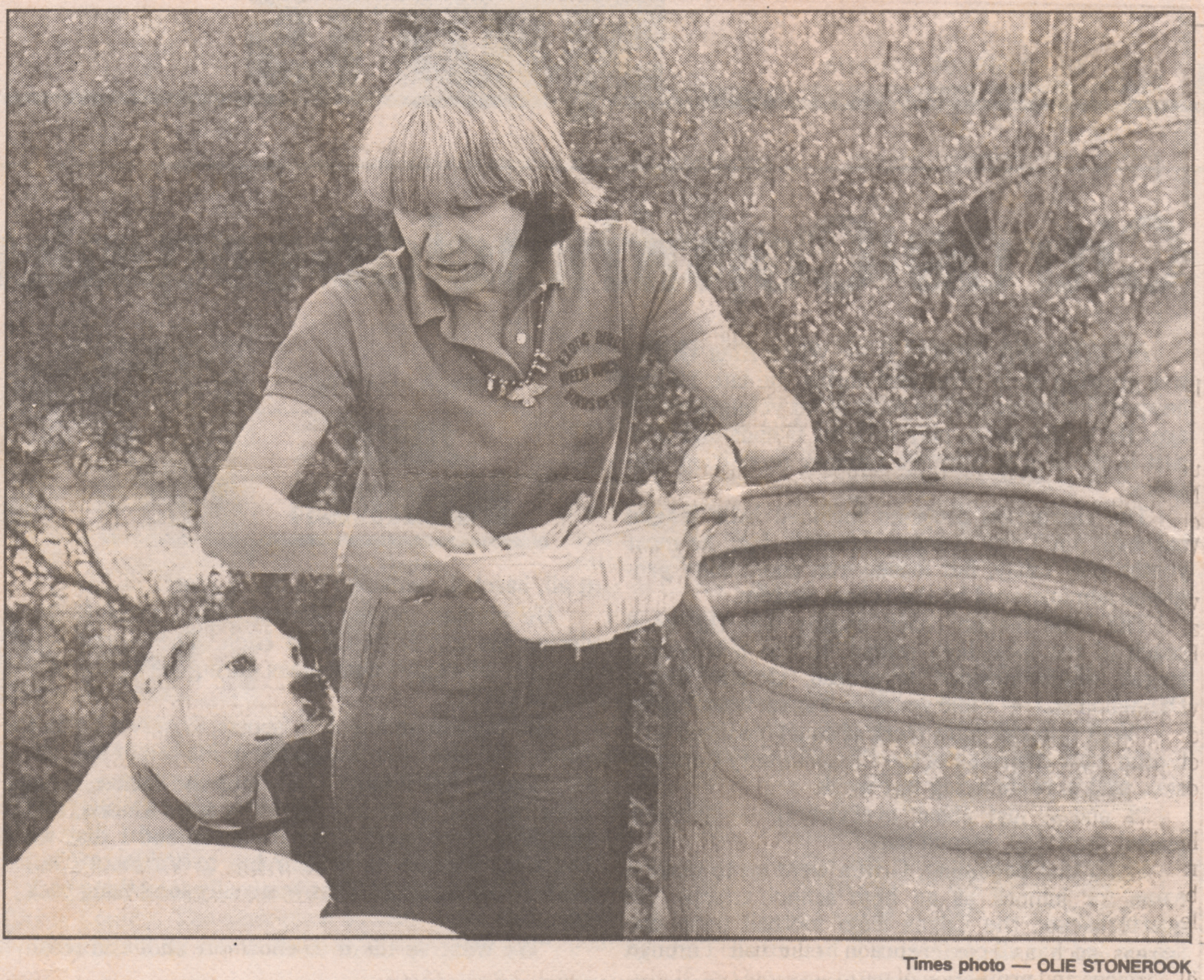
Cleo with Bonnie Georgiadis, supervisor of the Bird Department at Weeki Wachee Springs. Photo by Olie Stonerook, February 1987.

CITRUS COUNTY, IF NOT NOW, WHEN?

by Anna Cooke

Recently, we visited Citrus County Animal Services and met with Operations Supervisor Colleen Yarbrough, Citrus County Foundation for Animal Protection President Wanda Moak, Citrus County Board of County Commissioner Ruthie Davis Schlabach, and Citrus County Public Information Officer Veronica Kampschroer. The main focus of our discussions was the need for a new shelter. Then, we took a tour.

Money does not get a new shelter built. People do. Supporters, volunteers, staff and animal advocates who live in and around Citrus County are moving forward with a capital campaign. They are advocating loudly for a new building to replace the old, outdated and dilapidated one that has housed Citrus County Animal Services for more than 40 years. Not everyone is on board with the new shelter movement, even though it’s been a hot topic among county leaders, county commissioners and campaigning politicians for the last 20 years.

Years ago, around the time Citrus County Animal Services’ shelter was built, public animal shelter buildings were designed with the idea that a high percentage of dogs and cats taken in would be killed. Under such circumstances, the thinking was that the health and comfort of the animals was not a concern since they would not be in the shelter for long. Back then, efficiency was more important in shelter design than concern for the animals.

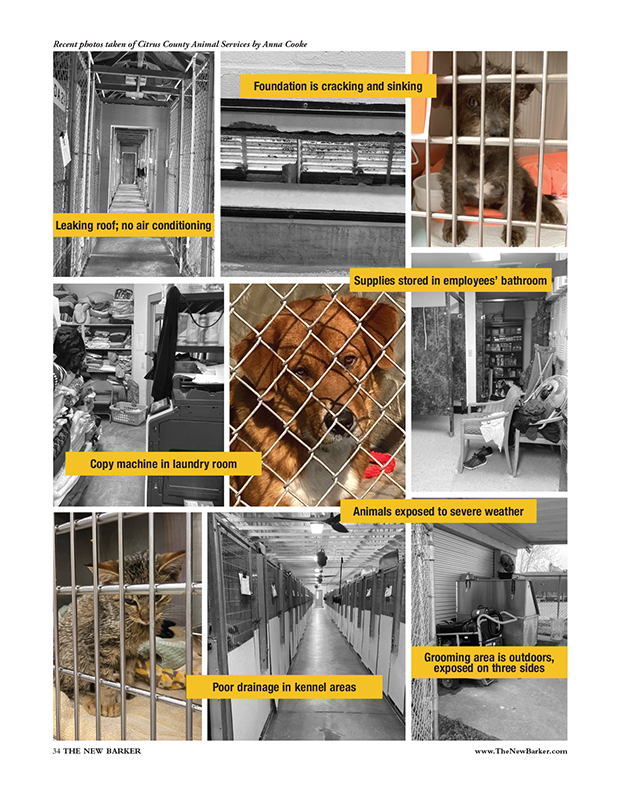
In Citrus County, there are some who feel the existing shelter is just fine the way it is. However, the way it is includes animals exposed to the elements (heat, cold, rain), cramped quarters for the animals and staff, a rotting roof, no designated areas to quarantine animals to keep the sick ones away from healthy ones, and a poor drainage system. There is more. If you are a resident of Citrus County, and you’ve never been to your municipal shelter, you should pay a visit. It will be eye-opening.

For instance, before animals are brought in from an impending cruelty case, Citrus County Animal Services staff and volunteers must immediately start creating makeshift quarantine areas. They build temporary kennels and move animals, equipment, supplies, and staff to accommodate the additional intake.
Providing a good customer experience in the existing building is difficult. There is only one entrance for the public to use. Imagine someone enters the shelter to
consider adopting a pet, while passing someone else exiting in tears after having their pet humanely euthanized. Two completely different experiences that occur often at the same time.

On campus, inside or outside, staff members and volunteers have no place to go to decompress. Kennel fatigue is real and these quiet areas are necessities, not
luxuries, to ensure the health and well-being of staff and volunteers. Building a new shelter is just as much about taking care of the humans who work and volunteer there as it is about caring for the animals. Educational and enrichment programs for children, like the reading programs found at so many shelters, are non-existent here. These are fundamental to teaching kids, among other things, the importance of responsible pet ownership. As it stands now, how can parents be encouraged to bring their child to an unsafe and unhealthy environment?

New shelters offer lots of natural light, entry areas that welcome the public, frequent air exchange, more space per animal, colony housing for cats away from dogs, and noise control. There are good reasons for
providing these basic amenities.

Right now, Citrus County Animal Services is a facility that is unsafe and unsanitary for humans and animals.

At least seventy percent of the community’s voters have expressed support for a new shelter. They have already raised more than one million dollars without the help of a big fundraising event to kick off a capital
campaign drive.

We have to wonder whether the other 30 percent, who are so against a new shelter, have ever visited Citrus County Animal Services? Do they even know what staff does to keep their community safe? And, are they aware of how encumbered staff are, doing their jobs in an outdated facility? Perhaps they don’t know that a municipal shelter’s first priority is to protect the public. Maybe they don’t realize the breadth of services the shelter is providing for the health, safety and well-being of the community.

Citrus County Animal Services, the only open-admission shelter serving Citrus County, takes in approximately 5,000 animals a year, regardless of capacity or reason for surrender. In spite of the limited space and resources, the shelter does not euthanize for space.

Since 2019, the shelter staff and volunteers have increased lifesaving measures to achieve a live release rate of more than 90% for cats and dogs. They have developed good working relationships with area rescue groups and other shelters as well as their local animal advocacy groups to make sure the adoptable dogs and cats receive the public exposure they need to increase adoptions.

Citrus County Foundation for Animal Protection (CCFAP) is a 501(c)(3) nonprofit organization that partners with the shelter to help increase adoptions and ensure the well-being of the shelter’s animals. They have raised funds to help cover certain medical care for shelter animals, including low cost spay/neuter procedures and microchip programs, and purchase medical equipment.

Shelter staff members are encouraged to take additional steps to help reunite a stray dog with their humans. This has been a godsend in an area that has a large older population, many of whom may not have access to computers and the internet to report and/or look for their lost pets.

Additionally, the shelter will hold onto a pet whose owner may be temporarily incapacitated. Those who are hospitalized, working through mental challenges and/or incarcerated can receive some assistance with their pets’ care. The mindset is to keep families together.

The shelter also manages eight pet food pantries around the county as part of the Community Food Bank of Citrus County for pet parents struggling to feed their pets.

“General capacity for our shelter is about 68 dogs and roughly 30 cats,” said Colleen Yarbrough, Director of Citrus County Animal Services. The shelter consistently sees numbers way beyond capacity. Overcrowding is not as a result of owner-surrenders, but more from animals confiscated during cruelty investigations, which appears to be on the rise. In a recent instance, the shelter took in 51 dogs just from one case.

After animals are confiscated as part of a cruelty case, they are often held at the shelter as evidence throughout the investigation. This puts an additional burden on an already overcrowded shelter. In another case, last year, officers
confiscated 43 dogs, three chickens and one pig – all in one investigation. The result was makeshift kennels and shelter animals living in the conference and break rooms. Climate-controlled storage units were added outside to house the overflow of animals. In the last 12 months alone, more than 200 animals have come through the shelter as a result of cruelty cases.

The public may not realize another service the shelter provides. Full forensic exams are conducted by shelter staff as part of ongoing cruelty investigations to help in building cases for successful outcomes.

While the expense to build a shelter without a veterinary medical suite may decrease the initial budget, it is important to look at the long term savings when those services remain in-house. Outsourcing veterinary medical needs has become a costly endeavor, and those costs continue to rise. Not to mention the level of care an on-site veterinary clinic would provide.

This staff is doing amazing work even with the lack of resources. Oftentimes, the place looks like a M.A.S.H. unit on the frontlines of a war zone. When a dog was brought to the shelter with three inches of bone exposed on her leg, staff did skin grafts and anything else that was needed to make sure her leg was saved.

Last year, veterinary students from Puerto Rico visited the shelter through a Maddie’s Fund program. The visiting students were able to experience how an outdated shelter with limited resources is able to function. Think about that. According to the Sato Project, there are an estimated 500,000 stray dogs roaming Puerto Rico’s streets and beaches with no access to food, fresh water or veterinary care. The drastically-strained municipal shelter system, which includes five shelters across all 78 of the island’s municipalities, has a combined euthanasia rate of more than 94%. Those veterinary students from Puerto Rico were sent to Citrus County Animal Services because of its poor condition in order to be better prepared to work within their own
limited environs.

Until we level the playing field between our municipal shelters and the public, we will continue to see a rise in unenforceable cruelty cases such as unattended chained dogs and dogs living in boxes outdoors. We cannot expect the public to provide better than the minimum care when it comes to space, shelter, food, and water for their pets when that minimum is all our municipal shelters have to legally provide the animals under their care.

The New Barker

Continuing to repair an outdated and dilapidated facility will only end up costing the citizens more – and that’s not only in money, but time, resources, and ultimately the lives of animals. It is not sustainable to keep running with such an old building. Animal management policies are essential to creating and sustaining humane communities. These policies should balance public health and safety with animal welfare needs.

Historically, municipal shelters have had it particularly tough when it comes to generating positive foot traffic. They’re competing with private shelters for adoptions and donations. Bringing a municipal shelter up to the 21st
century in terms of building, equipment and processes is paramount to remaining a viable community resource.

Marketing is key here. Educating the community with a clear message would be helpful. Inviting high-profile business leaders for a tour of the current shelter is an obvious first step. From a community standpoint, one cannot have a true appreciation of what their municipal shelter is doing until it is experienced firsthand.

“When people visit us for the first time, they leave surprised and amazed at the work we are doing with such limited resources,” said Yarbrough.

Shelter animals deserve safe, humane housing while they wait for placement. A new shelter building can be the capstone of a community’s continuing efforts to remain No Kill. Having amenities such as modern bathrooms and a kitchen are not luxuries, they are necessities. Give the hard-working staff and volunteers the tools to make their jobs easier and safer so they can focus their energy on the animals instead of shoring up a dilapidated building.

As the mission of animal shelters has changed, so too has their design needs. Today, new shelters are designed with the purpose of having animals leave the shelter alive, healthy and happy through the front door versus being
quietly euthanized and taken out the back door.

In A Year of So Many Whys and What Ifs, Someone Said, Why Not?

by Anna Cooke

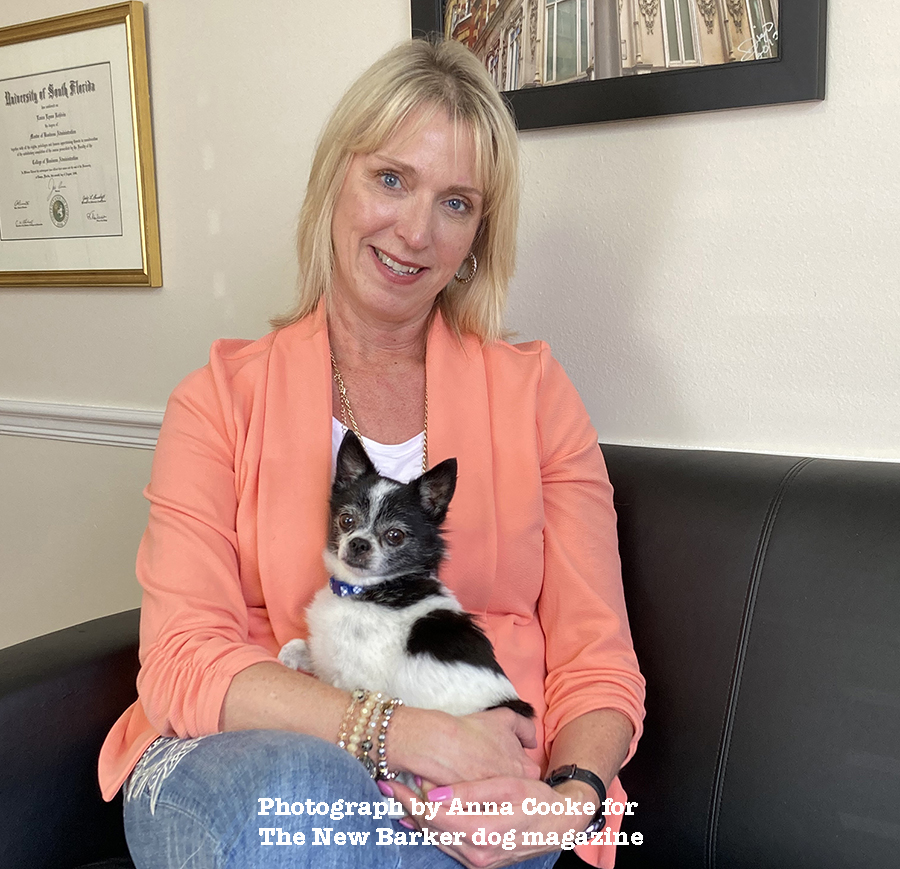
The heart is going to do what the heart is going to do, and one woman’s broken heart led her on a round trip journey of almost 3,000 miles to adopt a senior dog. When Laura Rehbein’s beloved dog Myra suddenly and tragically died, she was inconsolable. “Myra was imperfectly perfect,” said Laura, tearing up easily from the still-fresh hole in her heart. “She was a senior dog who came into my life four years ago. The small but mighty dog stole my heart from the moment I saw a picture of her.”

Rehbein was actually in the research process of adopting another senior dog as a companion for Myra when she unexpectedly died. “Myra was the pack leader without a pack,” Rehbein told us. In shock, Rehbein temporarily abandoned the idea of adopting another dog. “But, my house felt so empty. I have had a dog since I was twelve years old, and suddenly, I realized, I didn’t know what to do without a dog by my side,” Rehbein told us during a recent meeting at her Tampa office.

She soon resumed her search for another adoptable senior dog and came across an Apple Head Chihuahua at Dolly’s Legacy Animal Rescue in Lincoln, Nebraska. He ended up at the shelter after his human, with whom he had lived for years as a constant companion, died. A volunteer for Dolly’s Legacy pulled the dog, along with three other dogs, all of whom were found inside the home with the deceased.

Rehbein, who lives and works in the Tampa Bay area and has fostered for local rescue groups including Rugaz Rescue, put in her adoption application.  “I just saw that face looking back at me through the posted photos, and knew. But, in reality, he was so far away,” said Rehbein. “If it was meant to be…”

Within four hours of sending in her application, Rehbein received an email saying she had been approved to adopt the dog named Half Pint. She responded to the rescue group’s email remarking how fast their approval process had been. Their response to Rehbein was, “What can we say? We spoke with your veterinarian, and what she had to say about you convinced us you would be perfect for Half Pint.”

Rachele Walter, a volunteer for Dolly’s Legacy and Half Pint’s foster mom said, “We do vet checks on all potential adopters. If we find a good match, we will adopt across state lines as long as the adopter is willing to travel here to pick up the dog. We don’t do transports.”

After a Zoom call to meet Half Pint and speak with Rachele, Rehbein began making plans for her journey to Nebraska. She would fly into Omaha, where Rachele would meet and greet her with the dog, then she and Half Pint would return to Tampa, all in less than 24 hours. “No hotels. Just up and back. I knew that I would be pooped, but it would be one day, without having to miss work,” said Rehbein. She used her saved miles for the airfare, and her only out of pocket was for the pet fee on the return flights home.

From start to finish, the entire process including planning and traveling, took five days. Not for a moment did Rehbein have second thoughts. “I knew that if I didn’t do it now, it was never going to happen, especially with the holidays,” Rehbein added.

Friends followed Rehbein’s clandestine sojourn on her Facebook page. She only hinted at what she might be doing until revealing her secret through a video of Rachelle delivering Half Pint to her at the airport. Once home, a friend helped give Half Pint his new name, Levi, which is Hebrew and means united or “joined in harmony.”

“It came to me that every time I lose a dog, they take a piece of my heart with them. And, every new dog who comes into my life gifts me a piece of their heart. If I live long enough, all the components of my heart will be dog, and I will become as generous and loving as they are.”

Author unknown

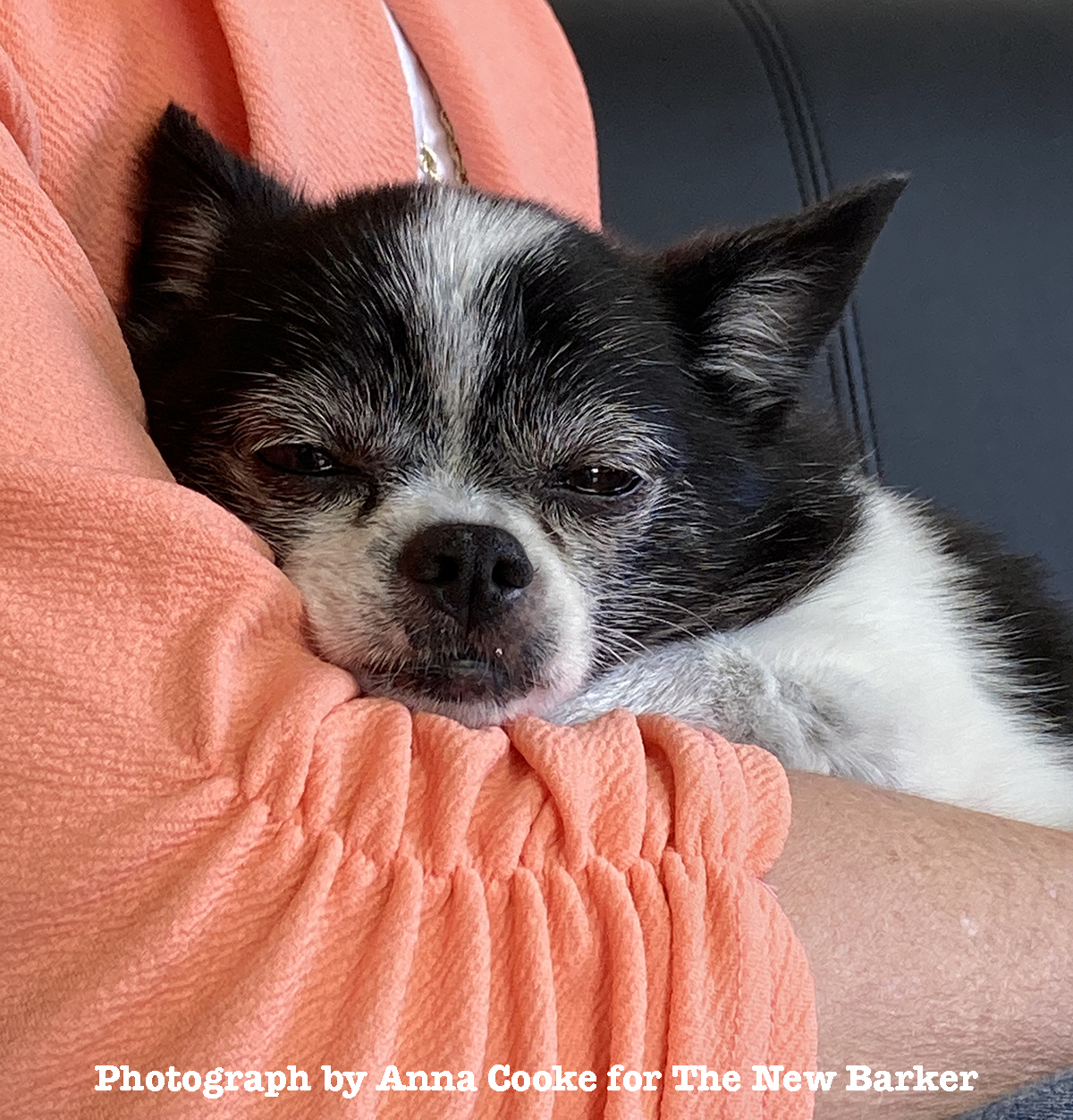
Rehbein (shown above with Levi) admits she has a soft spot for older dogs and Chihuahuas. Levi is 10, and she likes to say that he’s come to Florida to retire. “He will live his best life, riding in a convertible to go to the beach, coming to work with me or dining out,” said Rehbein. “I know some people will think, ‘how can she adopt a senior dog knowing he may may not be around for long?’ Well, we’re all going to die. We cannot control that outcome. Who knows how long Levi will be with me. Maybe eight years? Maybe two. However long, this well-mannered, chilled senior dog will now have the best years of his life. Levi came into my life at this moment for a reason,” said Rehbein.

About Dolly’s Legacy Animal Rescue: Dolly was rescued at age 11 by Kerri Kelly from a terribly neglectful environment along with 11 additional Pekingese. They were all ‘show breeders’ and had champion bloodlines and trophies. Sadly, the breeder stopped caring for them and placed them in crates in a furnace room where they lived 24 hours a day. When rescued, they had burns on their bellies from laying in their own waste, ulcerations on their eyes causing some of them to be blinded, and severe matting of their coats that was pulling on their skin. Kerri immediately bonded with Dolly and knew the sassy Peke was meant to be hers. Dolly lived for just 2-1/2 more years. Dolly’s Legacy Animal Rescue was founded by Kerri Kelly on what would have been Dolly’s 14th birthday, August 9th, 2013. Your donations will continue to help this all-volunteer rescue group’s efforts. www.DollysLegacyAnimalRescue.org

Some Things Bear Repeating

By Anna Cooke

In recent conversations with fellow dog lovers, we’ve discovered many are not aware that certain frogs, palm tree nuts, and blue-green algae are dangerous and potentially deadly to our dogs. While we’ve written about these subjects before, we thought there’s no time like the present to repeat ourselves.

Every year, during the summer, we’re faced with these dangers in the great outdoors, even in our own backyards. Sometimes the descriptions are so gross and creepy, it’s any wonder we ever step outside with our dogs. In reality, we’ve been living with these potential dangers for years. Our dogs may have gotten into and/or tangled with one of these, and faced death without our ever knowing what happened. As pet parents, we are becoming more aware of our surroundings, subsequently preventing our dogs from being poisoned or worse.

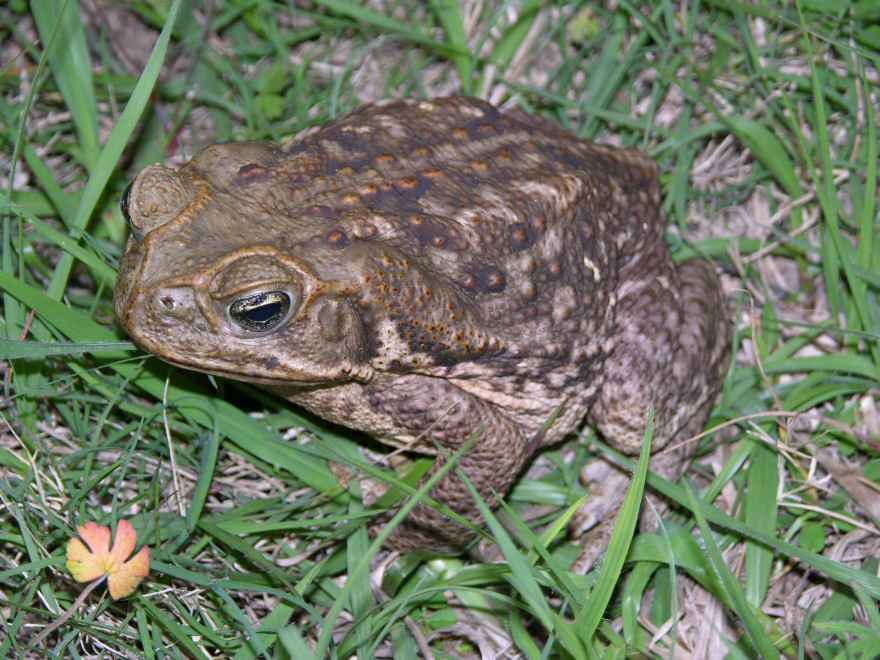
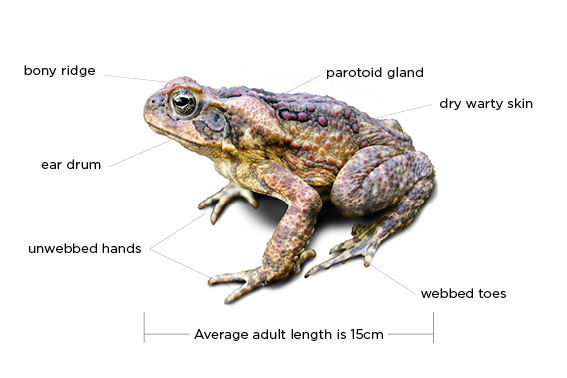
1) Bufo or Cane Toad –  This is a large, nonnative amphibian, poisonous to most animals that try to bite them. Let’s just call them giant ugly frogs, okay? Cane toads are reddish-brown to grayish-brown with a light-yellow or beige belly and can be uniform in color or have darker markings around the body. They have enlarged glands behind the eyes, which angle downward onto the shoulders. The glands secrete a potent milky-white toxin (bufotoxin) as defense against predators including domestic pets.

If your dog bites or swallows a cane toad, she can become sick and die in as little as 15 minutes without proper treatment. Symptoms may include frantic or disoriented behavior, brick red gums, seizures, and foaming at the mouth. If you see these symptoms, follow these steps:Wash toxins forward out of mouth using a hose for ten minutes being careful not to direct water down the throat.

Click here to listen to what a cane toad sounds like. You’ve most likely heard the sound in your backyard or during your evening walks with your dogs.

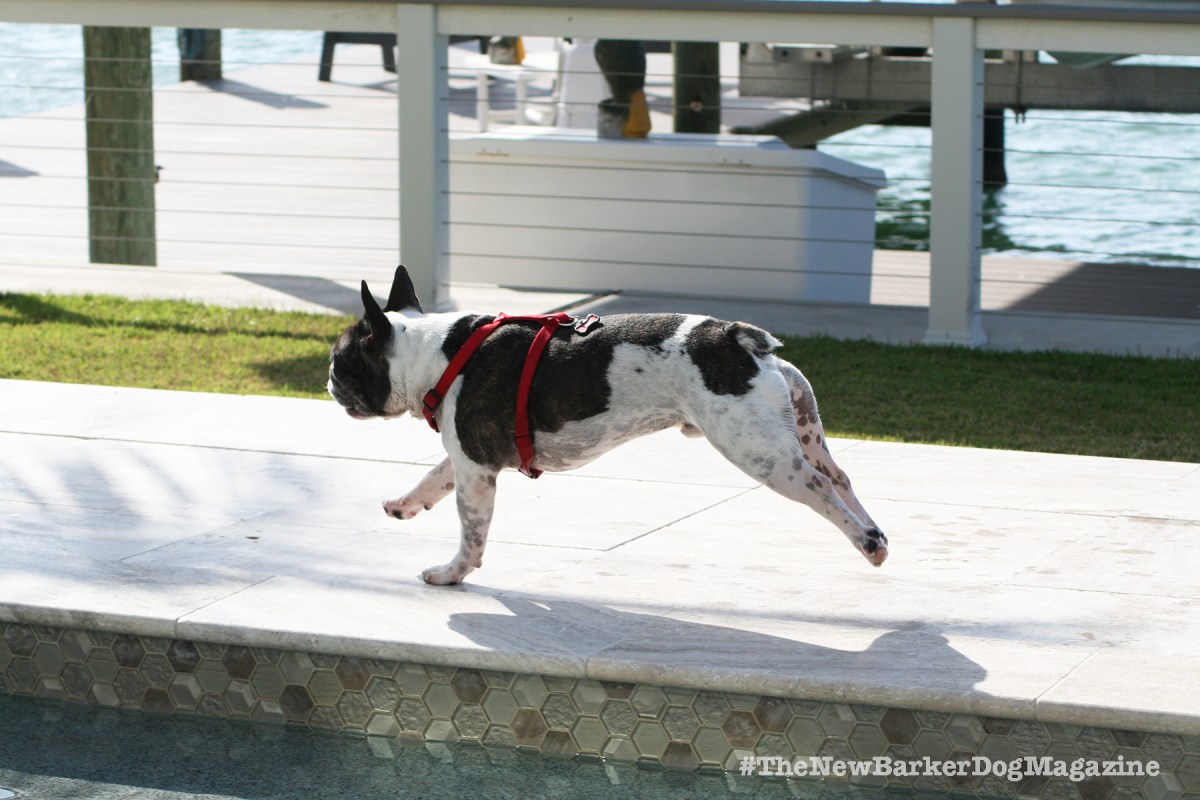
2) Sago Palms and Their Seeds – On September 14, it will have been a year since Shorty’s untimely death as a result of ingesting a sago seed (sometimes referred to as a nut or date). “It’s been my mission to bring awareness on the simple things like a sago palm seed that could kill our dogs,” said Marsha Droste, Shorty’s mom. Marsha and her husband Ed were walking their two Frenchies, Pete and Shorty, in their neighborhood, where sago palms are part of the landscape. They had no idea of the toxicity of the sago seed. Within two days of rushing Shorty to a critical care emergency veterinary hospital, Shorty was gone.

Shorty Droste prior to his untimely death from ingesting a toxic sabal palm seed.

Dr. Tina Wisner, a veterinary toxicologist with the ASPCA said that since 2017, calls to their national poison hotline about sago cases have shot up 79%. The seeds contain something similar to cyanide. It’s not just the seeds that are toxic either. The entire sago palm plant is also toxic. A single sago palm seed can kill a medium-sized dog. Gastrointestinal signs include hypersalivation (drooling), abdominal pain, reduced appetite, vomiting and diarrhea. Signs of liver damage also include vomiting, diarrhea, abdominal pain and reduced appetite, as well as increased drinking and urination, dehydration, lethargy, weakness, jaundice (yellow cast to the skin, mucous membranes and whites of the eyes) and ascites (fluid in the abdomen).

There is neither a specific test nor a specific antidote for sago palm toxicity. Lab work, with elevated liver values, low protein, low blood glucose, anemia and evidence of reduced clotting, may not show changes for 24–48 hours after sago palm ingestion. If sago palm ingestion is suspected, it is important to take your cat or dog to a veterinary clinic as soon as possible, rather than waiting for clinical signs to develop. Treatment for sago palm ingestion focuses on decontamination and supportive care and medications to reduce the effects of liver damage.

The prognosis for dogs or cats that eat sago plant parts depends on the amount of toxin ingested by body weight and how quickly treatment is instituted. Smaller dogs and cats are more severely affected compared with larger animals that ingest the same amount of plant parts. The sago palm toxins are concentrated in the nuts or seeds and just 1–2 seeds can be fatal to a medium-sized dog. Reports of survival rates from sago palm ingestion vary, with one study of dogs that ingested sago palm parts reporting a 50% mortality rate.

3) Blue-green algae – In August 2019, we posted a warning on The New Barker social media pages from two pet parents who lost their three dogs to blue-green algae poisoning in just a matter of hours. The post was shared 8,500 times. Through their grief, Melissa Martin and J Denise Mintz shared their story.

“If you search ‘blue-green algae,’ you see pictures of nasty water,” said Melissa. “That is false! The place our dogs played for their last time was crystal clear except for what appeared to be debris from foliage. Do not let your dogs near standing water. Our Westies didn’t even get in the water, but played in the mud at the edge.”

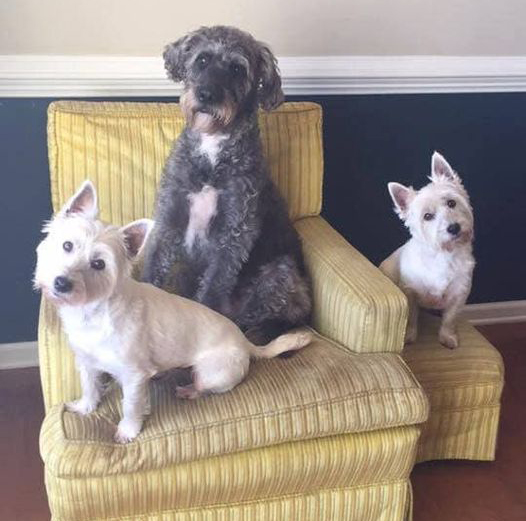
Shortly after returning home from their walk, and playing in the pond, Abby began seizing, followed by Izzy. All three dogs were rushed to the veterinarian. Abby and Izzy, the two Westies, were struggling to breathe and continued seizing. “We decided to let them go together peacefully. In the process, Harpo started to go downhill,” said Melissa.The family was advised that Harpo was suffering from liver failure and internal bleeding. “I talked to Harpo and asked him to let me know,” said Melissa. “He did. I held him and told him how awesome he was, and reminded him of all the lives he touched. Then we let him go.”

Abby, Harpo and Izzy before their untimely passing from ingesting toxic blue-green algae

Later this week, we’ll give you some information on Leptospirosis and salt water toxicity in dogs. This information is not meant to scare you into not doing anything with your dogs. We simply want our fellow dog lovers to be aware of your surroundings. Many of you already know about the potential for alligators in almost any body of water, and to stay clear from the lake and river banks. We are aware of the increase in coyote sightings within our neighborhoods.

The more we’re outdoors exploring our surroundings, the opportunities for our dogs to get into something they shouldn’t increase. Keep your eyes and ears open. Also, know the closest emergency or urgent veterinary care facility near you. Have their numbers handy. And, here’s a good link to keep in your cell phone: the Pet Poison Helpline. The ASPCA also has a free mobile app for animal poison control. Check out the overview on this link. NOTE: Neither of these links will ever replace the expertise of a veterinarian.